

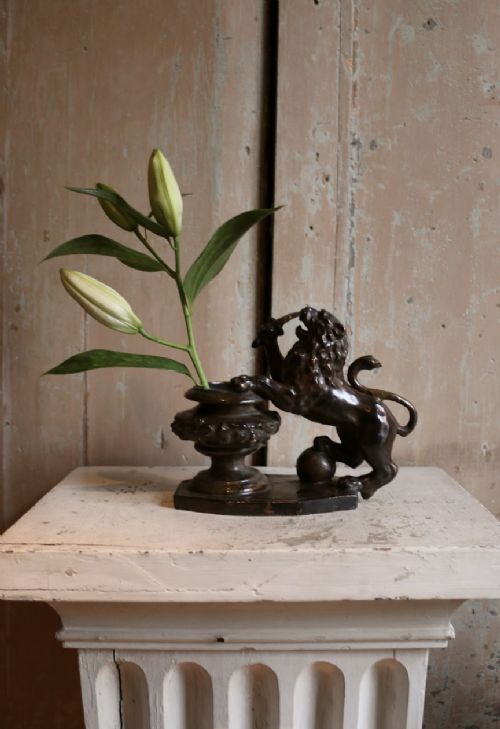


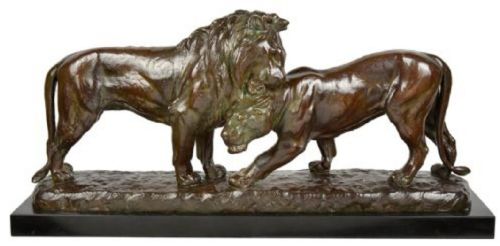

Desk Ornament Bronze Lion
These desk ornament bronze lion pieces bring fierce classical majesty and weight to any study table.
Desk Ornament Bronze Lion
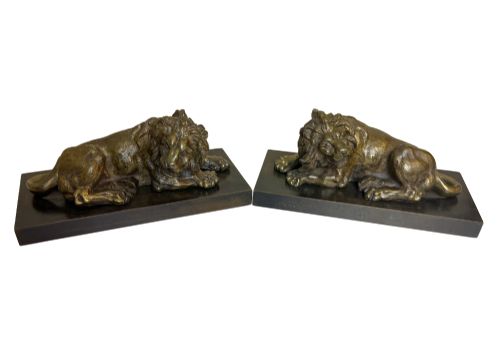
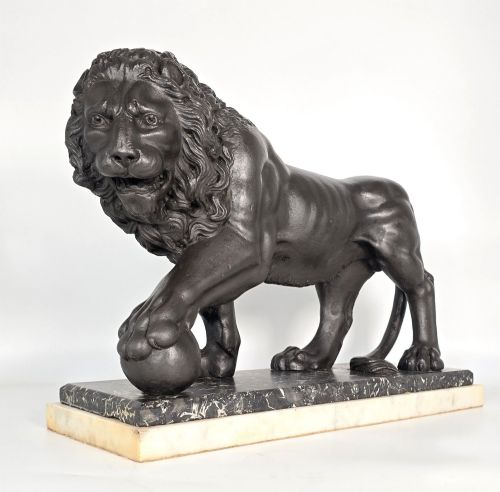
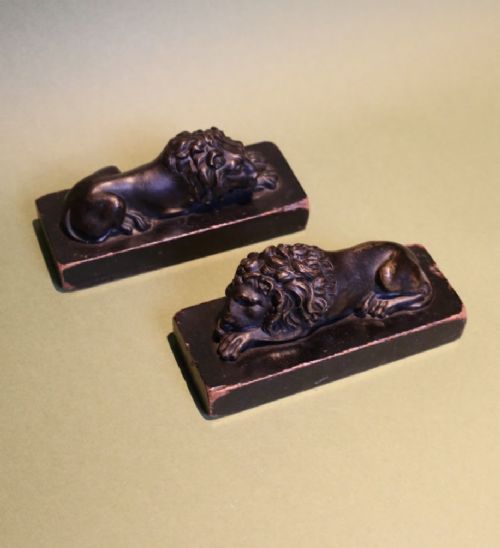
A desk ornament bronze lion piece is typically a sculptural study or functional inkwell cast during the nineteenth century, often reflecting Neoclassical or Grand Tour tastes. Buyers searching this phrase seek tangible links to antiquity, usually encountering subjects like the Medici or Canova lions resting upon marble or onyx plinths.
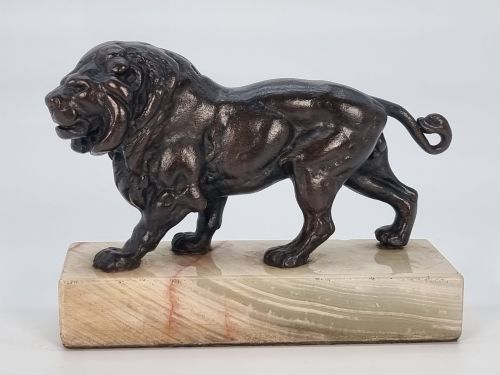
The selections range from paired seated guardians to prowling beasts and inkstands. Most examples date from the Victorian era and the early twentieth century, drawing heavily on French Animalier traditions.
Earlier seventeenth-century inkwells and Georgian Venetian interpretations occasionally appear alongside these nineteenth-century works. These pieces served both decorative and utilitarian purposes on grand writing desks.
How they were made
These sculptures are produced through metal casting techniques, creating substantial forms in bronze or patinated metal. The resulting figures often display rich patination developed over decades.
Many sculptures are mounted directly onto heavy stone supports such as marble or onyx bases. These plinths provide stability and contrast with the dark metal of the lion figures.
Listings feature bronze and patinated metal sculptures mounted on marble and onyx bases.
What varies in quality
Quality rests primarily on the sharpness of the casting and the sensitivity of the sculptural detail in the mane and musculature. Superior examples capture tension and anatomical accuracy with great clarity.
The choice and finish of the supporting stone base also influence the overall character of the piece. Well-matched marble or onyx plinths complement the proportions of the bronze animal above.
Louis Riche·Al Barye·Barbedienne
The Desk Ornament Bronze Lion Glossary
- Animalier
- A nineteenth-century artistic movement focused on the realistic portrayal of animals. Sculptors in this tradition studied living beasts closely to capture naturalistic movement.
- Grand Tour
- A traditional trip through Europe undertaken by upper-class young men in the eighteenth and nineteenth centuries to collect art and antiquities. Souvenirs often included small bronze replicas of famous Italian monuments and sculptures.
- Medici Lion
- One of a pair of marble lion sculptures in Florence, one original Roman and one modern companion by Flaminio Vacca. These iconic beasts inspired countless scaled-down bronze copies for scholarly desks.
- Patination
- The surface coloration and sheen acquired by bronze either naturally through age or artificially through chemical treatment. This finish protects the metal and defines the visual depth of the sculpture.
- Neoclassical
- A Western cultural movement drawing inspiration from the art and culture of classical antiquity. It values symmetry, proportion, and heroic subject matter.
Desk Ornament Bronze Lion: Frequently Asked Questions
What is a desk ornament bronze lion?
A desk ornament bronze lion is a small metal sculpture or inkwell depicting a lion, usually cast in the nineteenth century.
These pieces were placed on writing tables as decorative accents or functional desk accessories.
How were these bronze lions used?
They served primarily as decorative table sculptures or as heavy functional inkwells holding writing equipment.
Affluent owners displayed them in studies and libraries to signal classical taste and refinement.
How do I care for bronze?
Bronze requires very little maintenance beyond occasional gentle dusting with a soft dry cloth.
Avoid using harsh chemical polishes that can strip away the historical patination.
Are these pieces heavy?
Yes, genuine bronze sculptures combined with stone bases like marble or onyx carry considerable weight.
This heft made them ideal for holding down papers or serving as stable inkstands.