


Dark Bronze Lion Statue
A dark bronze lion statue brings weighty presence and classical discipline to a room, drawing the eye with sharp sculptural detail.
Dark Bronze Lion Statue
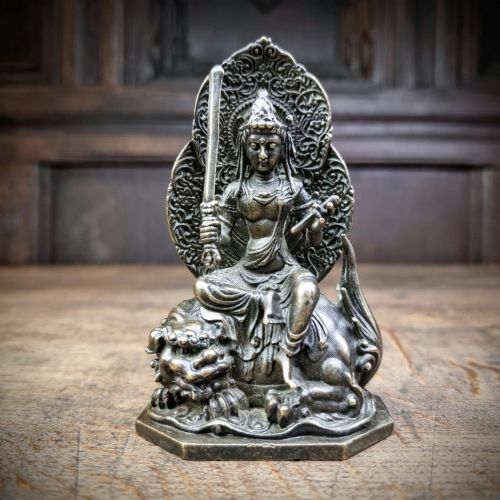
A dark bronze lion statue is a sculptural representation cast in metal, often mounted on a sturdy base of marble or onyx. These figures draw on historical motifs ranging from European Grand Tour souvenirs to Eastern temple guardians.
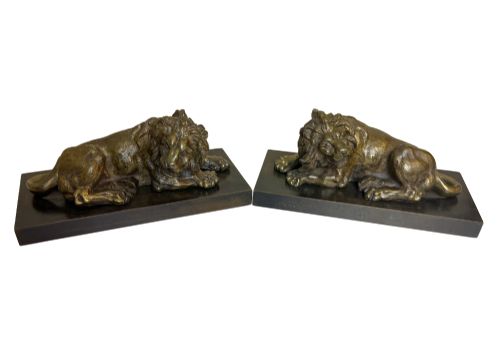
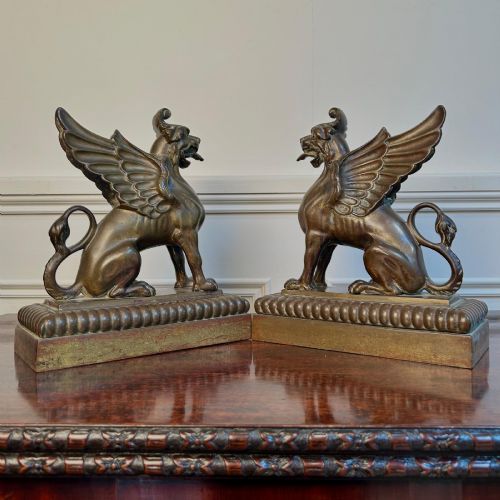
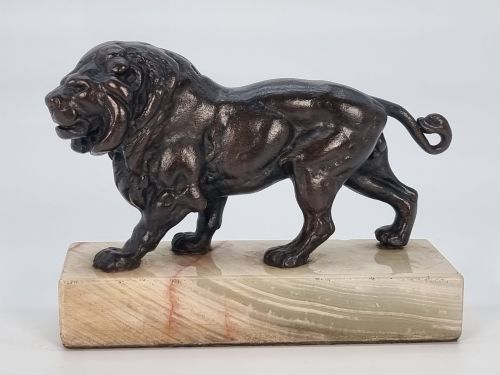
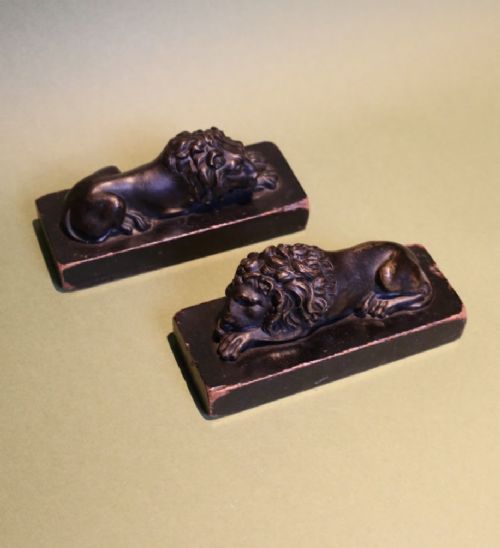
The pieces on this page span the nineteenth century and the early twentieth century, incorporating Neoclassical, Animalier, and Victorian Gothic Revival styles. Collectors frequently encounter pairs of resting lions, prowling figures, and fountain heads.
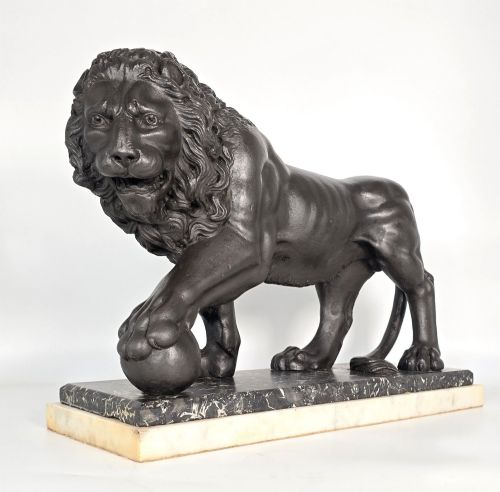
Many examples reflect specific classical precedents such as the Medici and Canova lions or regional traditions like Japanese Meiji period metalwork and Tibetan temple pieces.
How they were made
Foundries produced these sculptures using traditional casting methods, working molten bronze into detailed moulds that captured musculature and mane texture. Craftsmen then applied dark patination to the metal surfaces to create rich, deep tones.
Many sculptures were paired with plinths or bases made from contrasting materials such as marble, onyx, or wood, providing stability and visual balance. Some items also incorporate gold inlay or patinated iron elements to accent the primary bronze body.
Some nineteenth-century foundry lions wear expressions of such deep philosophical melancholy that they appear to be pondering the brevity of the Roman Empire.
What varies in quality
The integration of the sculpture with its base also marks the distinction between standard production and superior workshop output. Well-executed patination and signed foundry marks further elevate a piece by demonstrating professional authorship and careful finishing.
G. Gardet·Seiunsai Miyamoto Sei·Unno Shomin·Louis Riche·Al Barye·Barbedienne
The Dark Bronze Lion Statue Glossary
- Animalier
- A nineteenth-century artistic movement focused on the realistic depiction of animals, particularly predators in motion or repose. Sculptors in this tradition studied anatomy closely to capture authentic posture.
- Grand Tour
- A traditional trip through Europe undertaken by upper-class scholars and collectors to acquire art and antiquities. Smaller bronze sculptures of classical lions served as popular souvenirs from these travels.
- Medici Lion
- A marble sculpture of a lion guarding a sphere, originally paired with a mate at the Villa Medici in Rome. Replicas of these iconic guardians became common subjects for later bronze casters.
- Okimono
- A Japanese decorative object intended for display in a household alcove or tokonoma. These pieces often demonstrate exceptional metallurgical skill and intricate surface detail.
- Patination
- The process of applying chemical treatments or heat to the surface of metal to alter its colour and depth. A dark patina protects the bronze while giving the figure an aged appearance.
Dark Bronze Lion Statue: Frequently Asked Questions
Where should I display a heavy bronze lion?
These statues require a solid surface such as a heavy wooden sideboard, a mantelpiece, or a dedicated stone plinth to safely support their weight. Placing them in a study or hallway allows the dark metal tones to catch natural light effectively.
Ensure the chosen location has sufficient space around the sculpture so the profile remains unobstructed. Pairs look particularly striking when placed symmetrically on either side of a fireplace or doorway.
What is the difference between a Medici and a Canova lion?
A Medici lion rests one paw upon a sphere, a pose derived from the ancient marble prototypes guarding the Villa Medici. These figures traditionally symbolise vigilance and strength.
Canova lions follow the neoclassical designs created by Antonio Canova for the monument to Pope Clement XIII. They often display a calmer, more recumbent posture with crossed front paws.
Are these statues solid bronze?
Many nineteenth-century sculptures were cast using the lost-wax or sand-casting method, which often resulted in hollow bronze forms to save weight and material. The interior thickness varies depending on the foundry and the scale of the piece.
Despite being hollow, larger figures retain considerable heft, particularly when mounted on heavy marble or onyx plinths. Total weight can range from small tabletop studies to massive temple pieces weighing tens of kilograms.