



Pastoral Countryside Scene
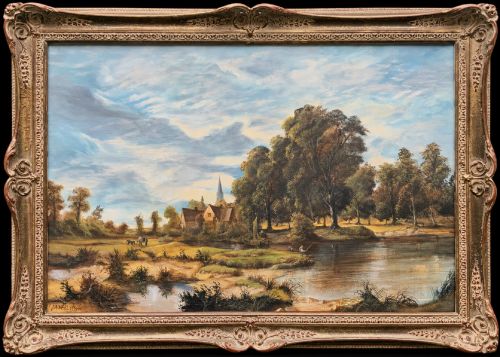
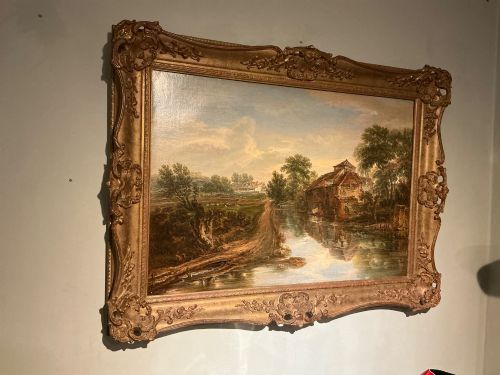
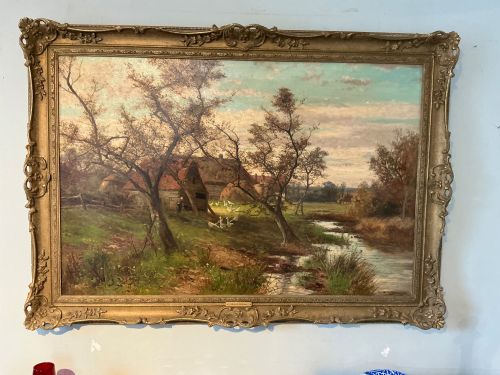
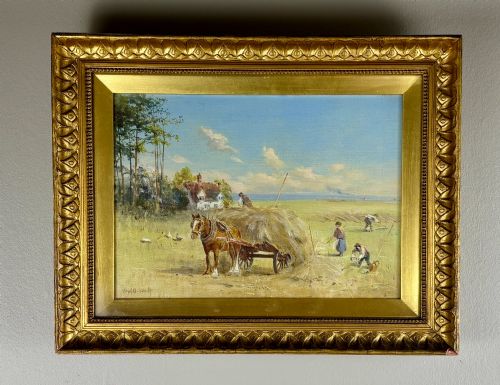
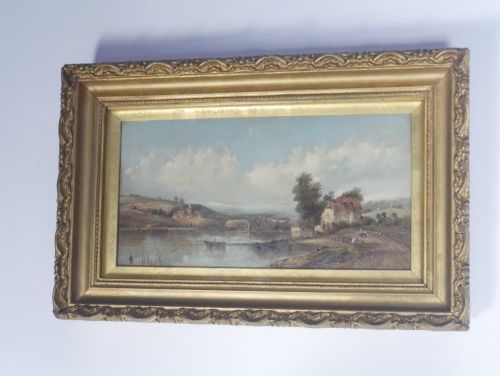
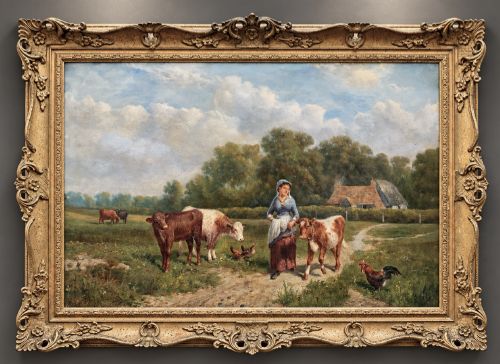
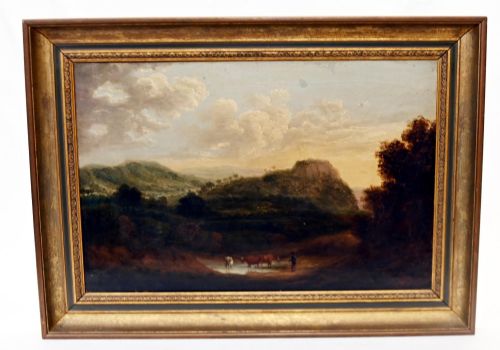
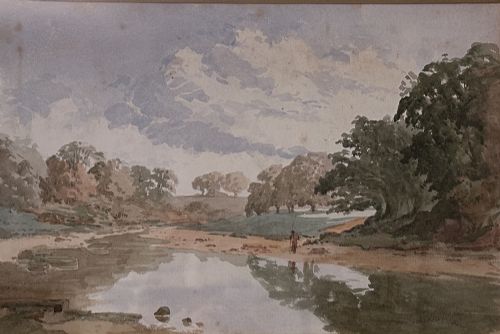
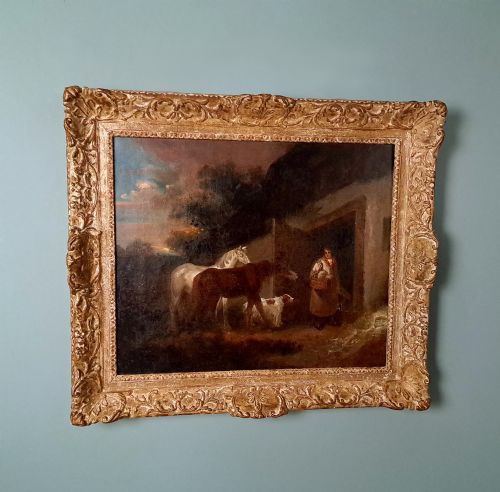
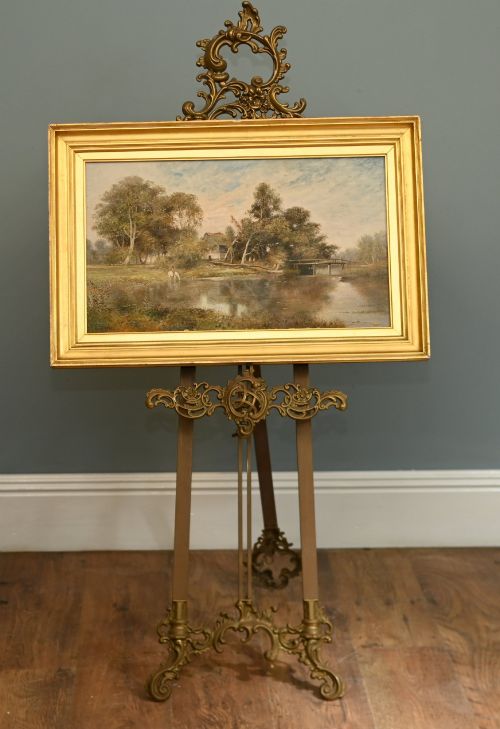
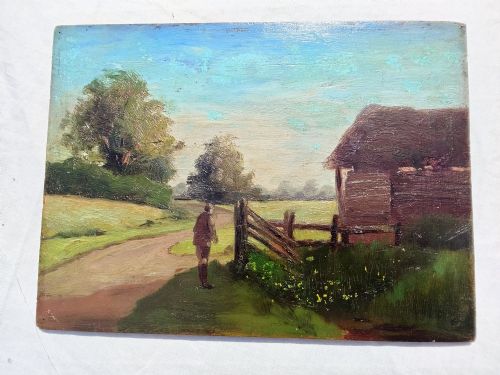
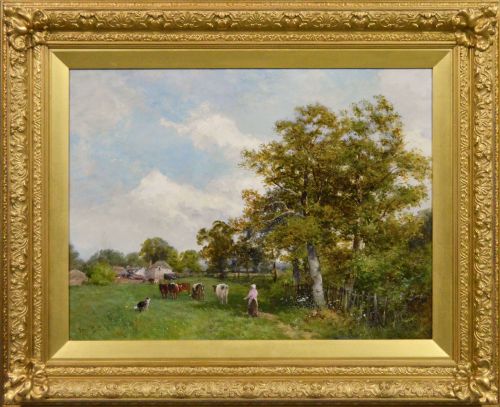
When you search for a pastoral countryside scene, you encounter framed works depicting rural rivers, farmyards, and livestock that bring British landscape traditions into a room.
Pastoral Countryside Scene
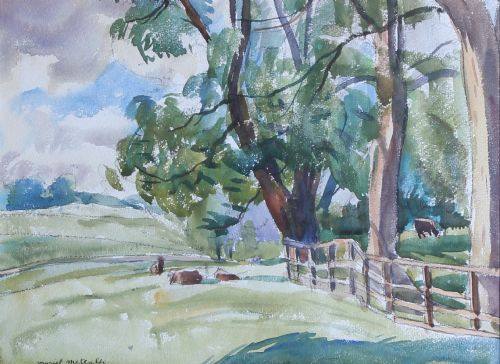
A pastoral countryside scene captures rural life, agricultural labour, and British landscapes through oil paintings and watercolours. These works portray riverbanks, harvest fields, and cottages situated across the English countryside. The pieces span from the Georgian period through the Victorian era and into the early twentieth century.
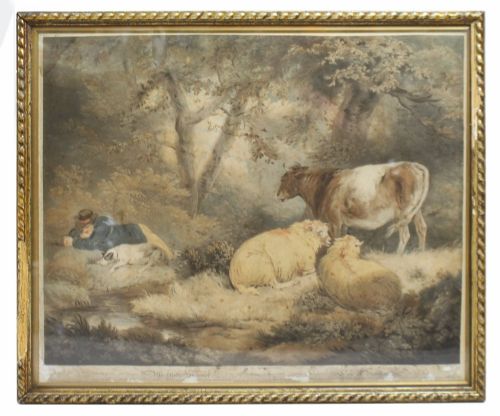
Most examples found here utilise canvas, wooden boards, or paper surfaces to depict figures, cattle, and sheep. Painters working in the English School tradition recorded these rural views with attention to local topography and atmospheric light. Framed examples often retain their original presentation style from the nineteenth or early twentieth centuries.
How They Were Made
Artists applied oil paint or watercolour pigment onto stretched canvas, wooden panel, or heavy paper. Canvases received layers of pigment to build depth in foliage and water, whilst watercolours relied on washes applied to paper.
Many works incorporate gold leaf and gesso within their original frames, providing structural support and ornamentation around the painted surface.
Pastoral Countryside Scene Retail Price Guide 2026
Typical asking prices for pastoral countryside scene among the pieces listed under this phrase on Sellingantiques today, from the lower quarter to the upper quarter. They describe what is for sale here now, not the wider market.
Several sheep managed to wander into more paintings than most human models.
What Varies in Quality
The standard of a pastoral countryside scene rests upon the artist's handling of light, perspective, and atmospheric depth within the composition. Stronger examples display confident brushwork in rendering natural elements such as water, foliage, and livestock.
The integration of the painted surface with its frame contributes to the overall character of the piece. Works that retain period frames demonstrate consistent preservation across both the artwork and its enclosure.
George Morland·David Bates·Benjamin Williams Leader·John Linnell
The Pastoral Countryside Scene Glossary
- Canvas
- A heavy woven fabric stretched across a wooden frame to provide a stable foundation for oil painting. It allows artists to apply rich layers of pigment.
- Gesso
- A plaster mixture applied to wooden frames as a base for gilding. It provides a smooth surface for gold leaf application.
- Mezzotint
- A printmaking technique of the tonal engraved variety that allows for smooth gradations of light and shade. It was often used to reproduce painted rural scenes.
- Watercolour
- A painting method where pigment is suspended in a water-based solution and applied to paper. It produces translucent washes of colour.
Pastoral Countryside Scene: Frequently Asked Questions
How should I hang a pastoral oil painting?
Select a wall space away from direct sunlight and excessive moisture to protect the canvas and pigment. Stable indoor temperatures prevent the wooden stretcher and canvas from warping over time.
Ensure the hanging wire and wall fixings match the weight of the framed painting. Proper hardware keeps the work secure and level against the wall surface.
What periods do these rural scenes date from?
The works span from the Georgian era through the Victorian period and into the Edwardian years. This range captures shifts in British landscape painting traditions across two centuries.
Nineteenth-century examples form the majority of the available pieces, reflecting widespread interest in rural subjects during that era.
How do I care for antique watercolours?
Keep watercolour paintings behind glass and out of direct sunlight to prevent the pigments from fading. Framing with acid-free mount board protects the paper from chemical degradation.
Maintain consistent humidity levels in the room where the watercolour hangs. Sudden environmental changes can damage the paper support.
What subjects appear in these countryside scenes?
Common subjects include riverbanks, agricultural labourers harvesting crops, and cattle or sheep grazing in pastures. Artists frequently depicted specific locations across English counties alongside imagined compositions.
Figures engaged in everyday rural tasks often anchor the landscape composition. These details provide insight into nineteenth-century country life.