





Rural River Scene Painting
A rural river scene painting captures quiet countryside waterways and pastoral life, bringing the calm of nineteenth and early twentieth century banks indoors.
Rural River Scene Painting
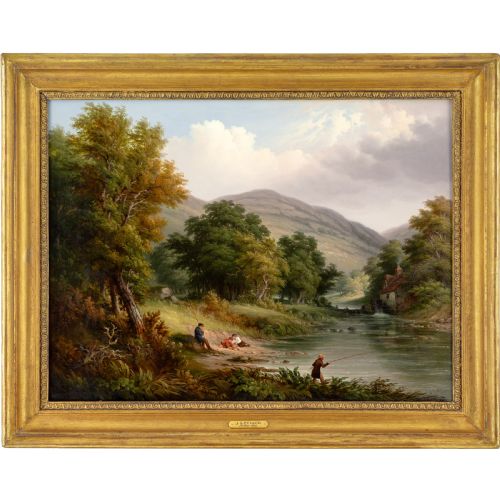
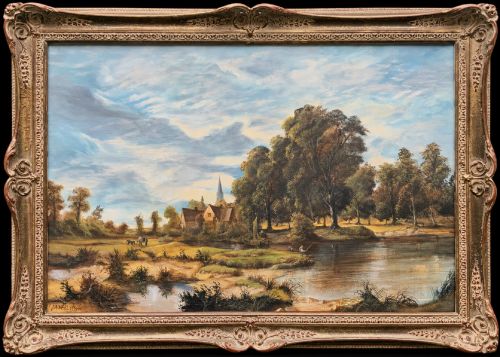
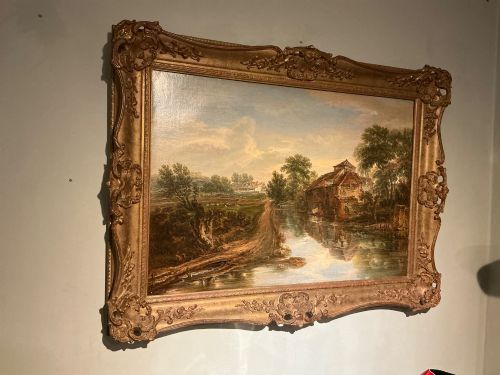
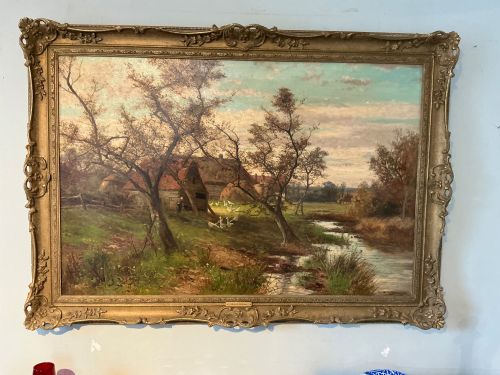
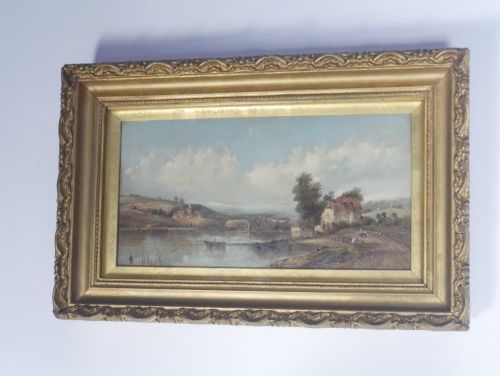
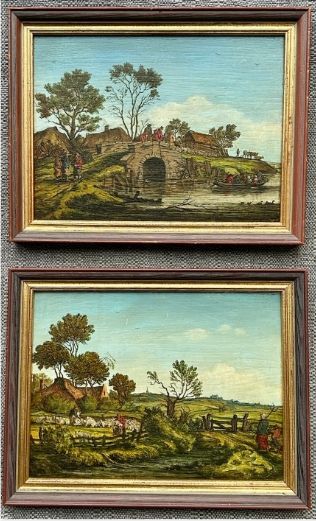
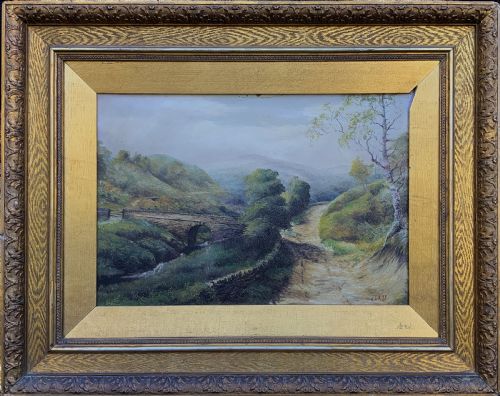
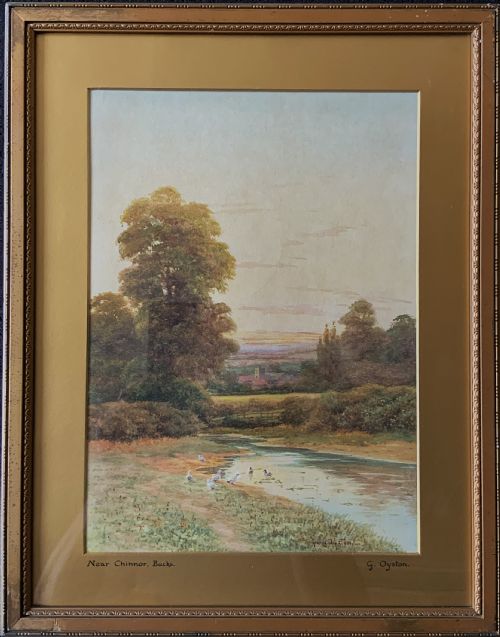
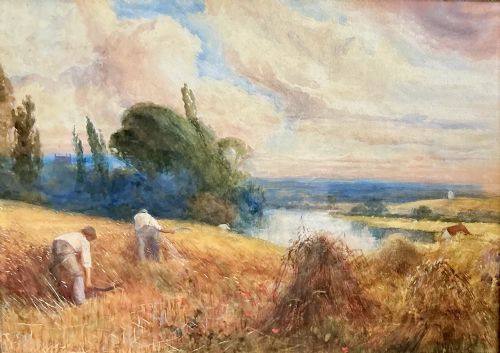
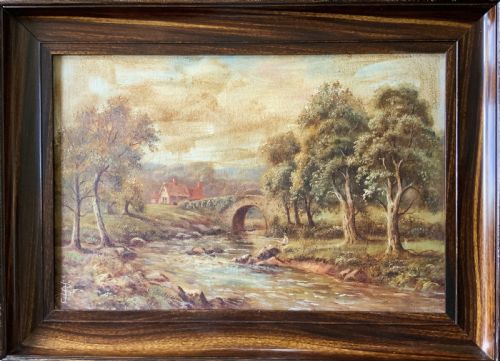
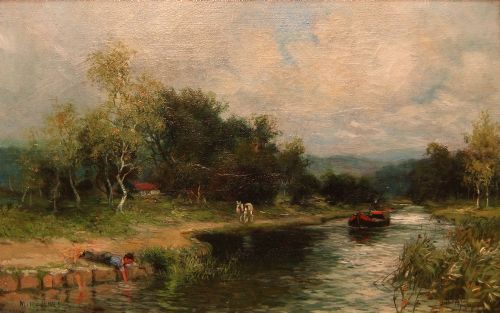
A rural river scene painting portrays pastoral waterways, quiet banks and countryside life from past centuries. These works draw attention through depictions of fishermen, cottages, cattle and harvesting beside streams.
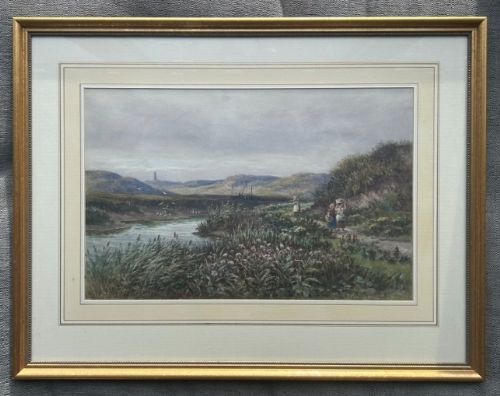
The selection ranges across nineteenth century pieces and early twentieth century works, including Edwardian and Victorian examples. Common formats include framed oils on canvas or wood panels, alongside delicate watercolours on paper.
Makers recorded in the evidence encompass named British and European artists working within landscape traditions. Subjects vary from specific named locations in Britain to broader pastoral scenes.
How they were made
Artists applied oil paint onto stretched canvas, wooden panels or prepared boards to build durable rural compositions. Watercolours were painted directly onto paper, often capturing softer atmospheric light near water.
Frames typically consist of wood, frequently finished with gilt to complement the painted surface. Panels and canvases were secured within these surrounds to protect the edges over time.
Rural River Scene Painting Retail Price Guide 2026
Typical asking prices for rural river scene painting among the pieces listed under this phrase on Sellingantiques today, from the lower quarter to the upper quarter. They describe what is for sale here now, not the wider market.
Several artists painted children fishing by riverbanks while others recorded local laundry days.
What varies in quality
Quality rests upon the artist's ability to handle light on water and the surrounding foliage. Stronger examples display confident brushwork and precise tonal balance rather than stiff application.
The preservation of the original canvas, panel or paper surface influences the overall integrity of the work. Finer condition retains the intended vibrancy of the pigments without extensive disturbance.
Thomas Thomas·George Graham·W Klombeck·George Oyston·Frederick Hines·Sydney Yates Johnson·Colin H Greenwood·Robert Winchester Fraser·William Joseph Boyes·William Langley·William Manners·Thomas James Lloyd·Gudrun Sibbons·Harry Pennell·Thomas Pyne·William Sidney Cooper·Alois Arnegger·George Turner·Henry John Sylvester Stannard·Henry H Parker·William Stephen Coleman·Antoine Bouvard·Robert Gallon·Robert John Hammond·Charles McAuley
The Rural River Scene Painting Glossary
- Oil paint
- A slow-drying paint made from pigment suspended in a drying oil, typically linseed. This medium allows for rich blending and textured application.
- Watercolour
- A paint where the colour pigments are suspended in a water-soluble vehicle. It produces transparent washes ideal for delicate skies and river reflections.
- Gilt wood
- Wood carved and covered with a thin layer of gold leaf or metallic gilt. It frequently frames nineteenth-century oils and watercolours.
- Wood panel
- A flat wooden board utilised as a rigid support for painting. These panels were common in nineteenth-century and earlier studio practices.
- Pastoral
- A genre of art depicting country life and idealized rural scenery. It focuses on peaceful landscapes, farms, rivers and agricultural labour.
Rural River Scene Painting: Frequently Asked Questions
What periods do these paintings date from?
The available works primarily span the nineteenth century and the early decades of the twentieth century. Examples include Victorian and Edwardian periods.
Specific dates within titles point towards artists active between the mid-nineteenth century and the mid-twentieth century.
Are these paintings executed in oil or watercolour?
Both mediums appear across the selection. Artists utilised oil paint on canvas and wood panels, alongside watercolours on paper.
Oils offer heavier texture and durability, while watercolours present lighter, transparent qualities.
How should I display a rural river scene painting?
These works suit traditional living spaces, studies or hallways where pastoral subjects complement classic interiors. Direct sunlight should be avoided to protect pigments.
Ensure the frame is securely hung from appropriate wall fixings to support the weight of the wood and canvas.