


Pastel Turkish Carpet
A pastel turkish carpet brings muted warmth to a room, offering faded Anatolian dyes and soft wool or silk fields.
Pastel Turkish Carpet
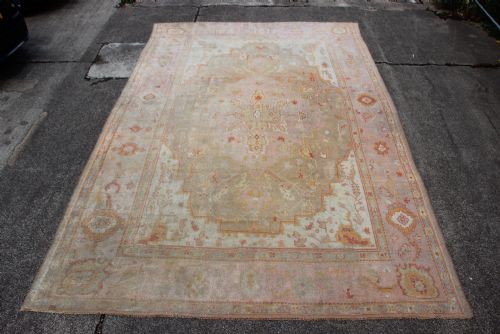
A pastel turkish carpet brings together traditional Anatolian weaving and subdued decorative schemes. When you search for a pastel turkish carpet, you encounter room-size carpets and smaller area pieces woven across various regional centres from the late nineteenth century into the early twentieth century.
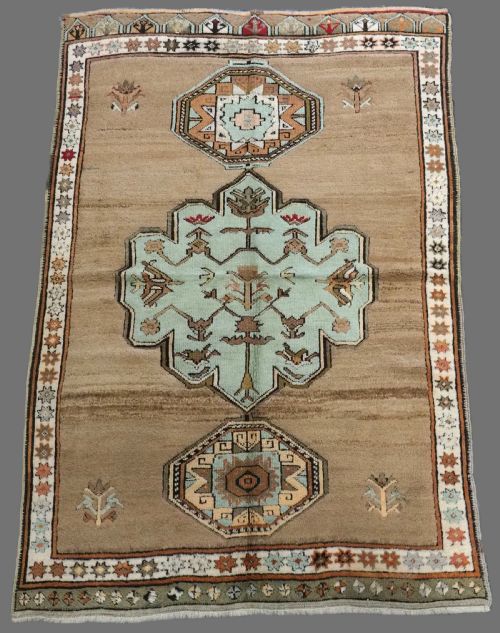
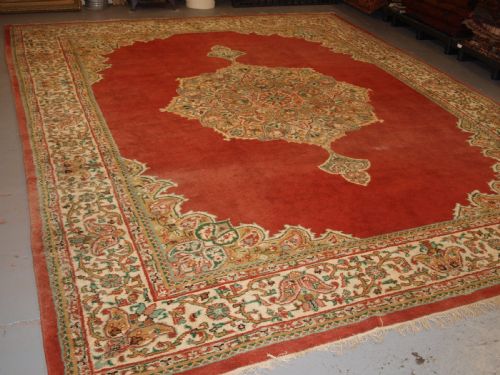
The versions most frequently met on this page include Oushak and Ushak carpets, along with Isparta carpets featuring classic medallion or floral designs. Regional rugs from Kayseri, Konya Karapinar, Sivas, Kula, Panderma, and Sharkoy kilims also appear, spanning dates from eighteen eighty up to nineteen twenty.
These floor coverings employ traditional Ottoman and Anatolian motifs rendered in soft pinks, pistachios, aquramarines, and pale grounds. They serve as historical textiles that suit modern interiors through their gentle, faded palettes.
How they were made
These carpets and rugs utilise natural fibres for their construction, predominantly wool and cotton, with occasional examples woven in camel wool or silk. Weavers knotted these materials by hand onto supportive foundations to create durable floor coverings.
The distinct visual character stems from dye application and regional weaving techniques developed across Anatolia. Artisans combined traditional geometric and floral designs with softened colour treatments that define the aesthetic of these pieces.
Styles represented include Ottoman, Anatolian, Ottoman Revival, and Traditional Turkish, applied across rugs, carpets, and kilims.
What varies in quality
Quality in these textiles rests upon the fineness of the knotting and the integrity of the wool, cotton, silk, or camel wool foundation. Tighter construction and careful handling of materials produce greater durability across decades of use.
The subtlety of the palette and the preservation of the classic medallion or repeat design also determine the standing of an individual piece. Better examples maintain balanced proportions and clear articulation of traditional Anatolian patterns despite age and wear.
The Pastel Turkish Carpet Glossary
- Oushak
- A traditional type of Turkish carpet originating from the town of Ushak, known for large-scale floral patterns and soft wool fields. These pieces often display muted or faded tones.
- Kilim
- A flat-woven carpet or rug produced without a pile, utilising slit-tapestry techniques. Sharkoy examples represent this category on the page.
- Prayer rug
- A small rug featuring a mihrab or niche design, historically used for daily prayers. Kayseri and Panderma examples demonstrate this format.
- Medallion design
- A central ornamental motif set within the field of a carpet or rug. Sivas and Isparta pieces frequently employ this layout.
Pastel Turkish Carpet: Frequently Asked Questions
Where were these carpets made?
These pieces originate from various weaving centres across Anatolia, including Oushak, Isparta, Kayseri, and Sivas. Each region contributed distinct motifs and structural characteristics.
Production spans different towns and workshops throughout the late nineteenth and early twentieth centuries, reflecting diverse local traditions.
How do I care for a silk or wool rug?
Wool and silk textiles require gentle treatment, regular vacuuming without a beater bar, and professional cleaning when necessary. Keeping them away from direct sunlight preserves the soft colours.
Placing an appropriate underlay beneath the rug prevents slipping and reduces wear on the foundation fibres.
What is a prayer rug?
A prayer rug is a smaller format textile featuring a distinctive arch or mihrab design at one end. Historically, worshippers placed these items on the floor during prayer.
On this page, examples from Kayseri and Panderma showcase this specific architectural layout.
How are the dates determined?
Dates rely on stylistic analysis, material composition, and structural comparison with documented examples from similar periods. Pieces span from eighteen eighty to nineteen twenty.
Changes in dye use and design evolution help place each carpet within this historical window.