
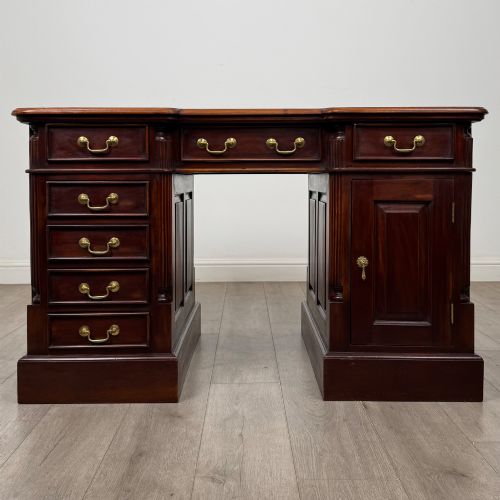
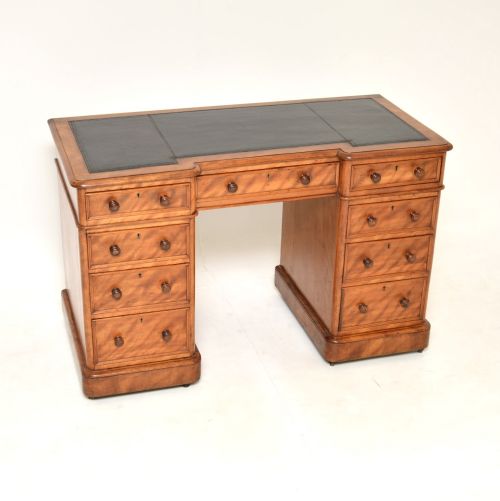
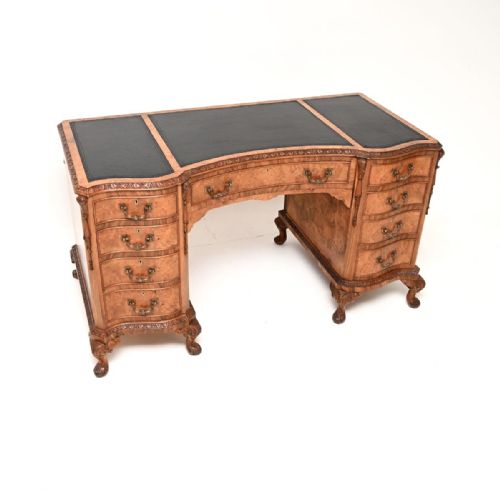
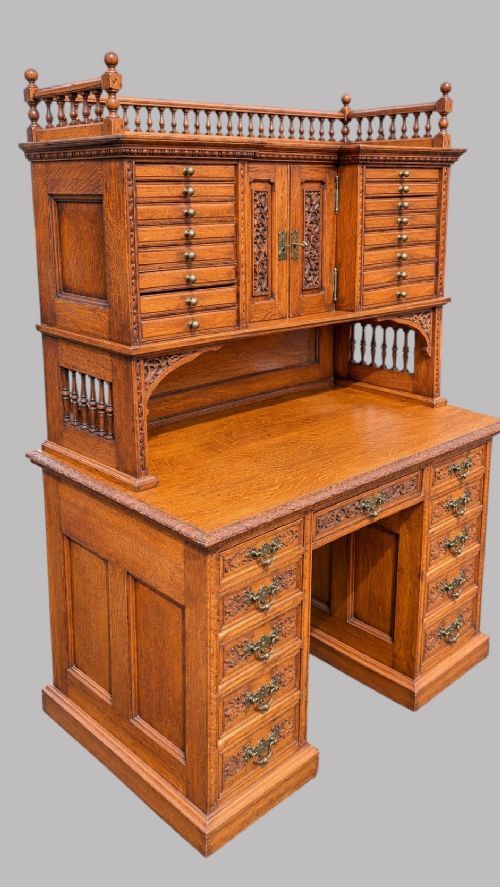


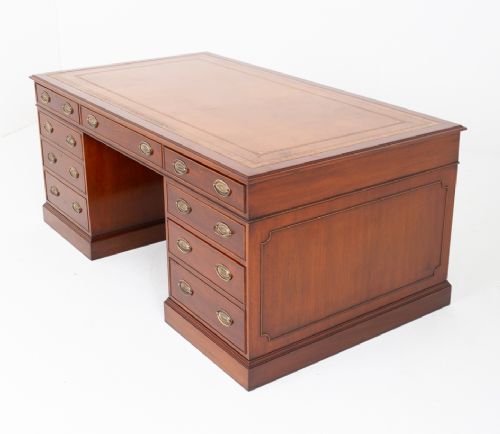
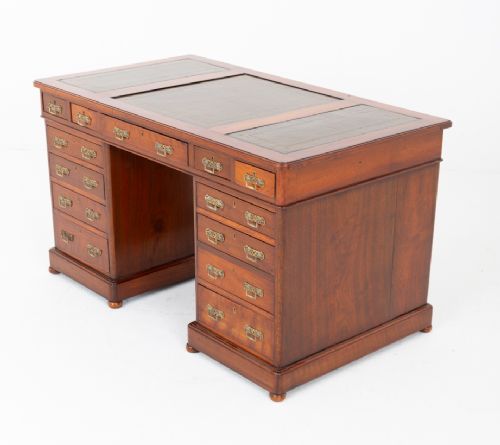
Partners Writing Table
When you search for a partners writing table, you are looking at substantial double-sided desks designed for two people to work opposite one another.
Partners Writing Table
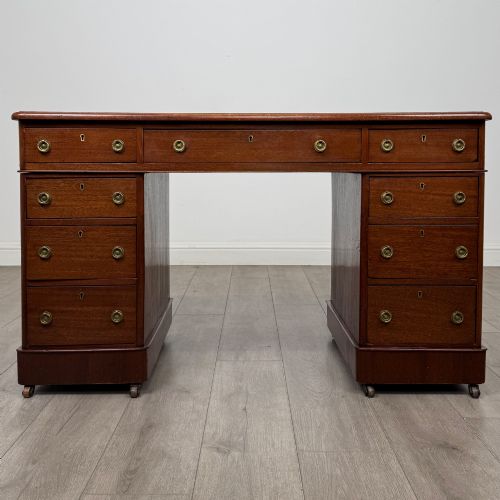
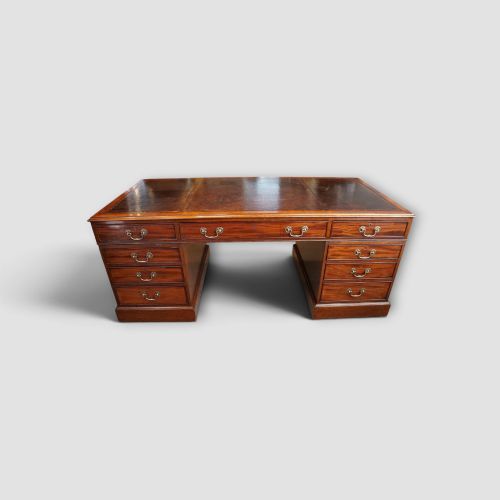
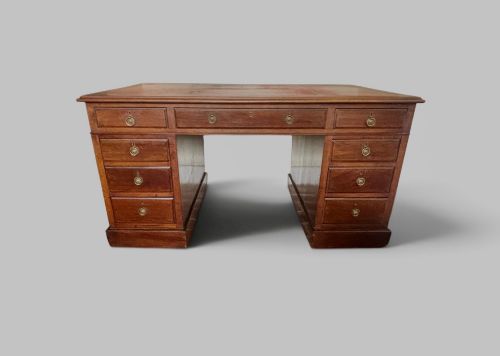
A partners writing table provides workspace on both sides, typically featuring drawers arranged so that occupants can sit facing each other. These double-sided desks originate primarily from the nineteenth century, spanning periods from George III through the Victorian and Edwardian eras.
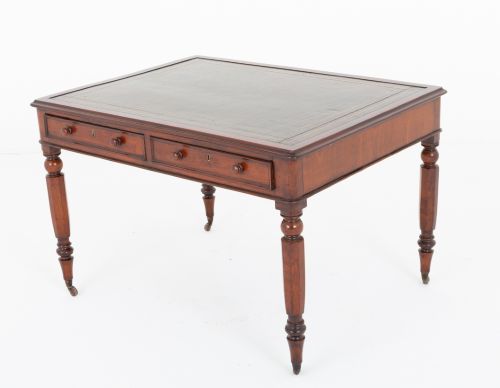
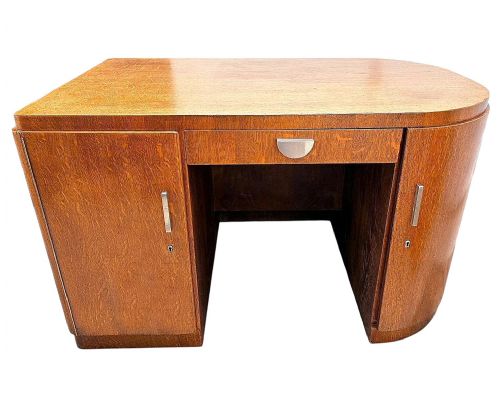
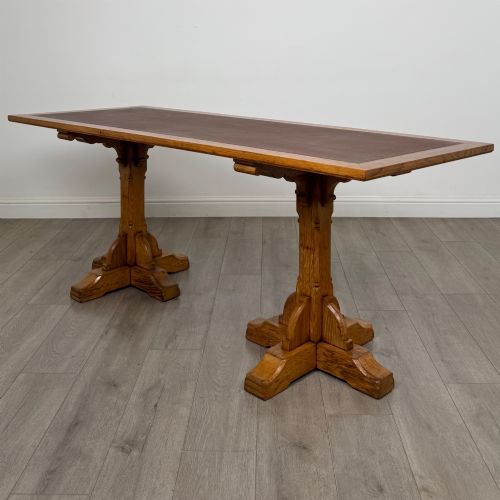
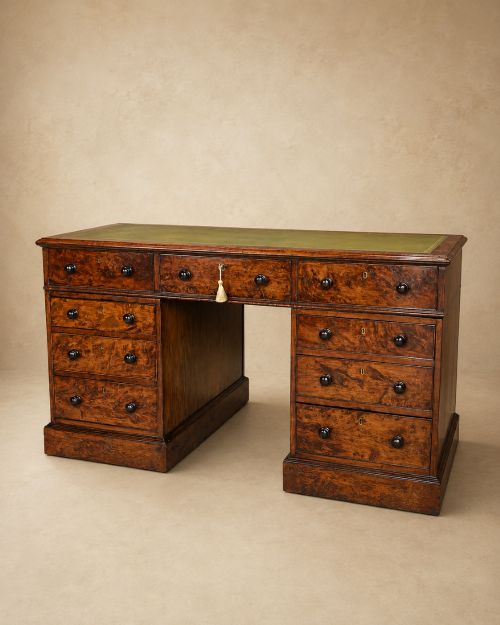
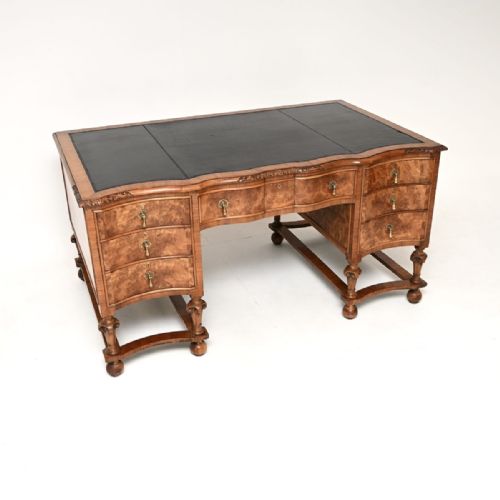
The version most commonly met on this page is constructed from mahogany or walnut, often featuring inset leather writing surfaces and multiple drawers. They appear both as pedestal forms with banks of drawers flanking a central kneehole and as table forms standing on legs.
What Varies in Quality
The distinction between standard workshop production and top-tier cabinet work lies in the selection of timber figures, such as matching burr walnut veneers, and the crispness of carved mouldings. Pieces by notable makers demonstrate superior internal construction and refined secondary woods.
Proportion and finished detailing on all four sides indicate higher quality, as lesser desks might economise on the secondary side intended for the junior partner. Original leather surfaces, intact brass hardware, and documented provenance further elevate the standing of a table.
Some partners tables feature hidden pigeonholes and secret locking drawers cunningly concealed within the pedestals for confidential documents.
Trollope and Sons·Maple and Co·Edwards and Roberts·Jackson and Graham·W Priest·Charles Andrea Nosotti·Gillows
The Partners Writing Table Glossary
- Partners desk
- A large double-sided desk built with drawers or cupboards accessible from both the front and rear, allowing two individuals to work facing each other.
- Pedestal desk
- A heavy freestanding desk supported by two pedestals or columns of drawers running down to the floor, often framing a central kneehole.
- Kneehole
- The open central space beneath a desk top designed to accommodate the user's legs while seated.
- Burr walnut
- A prized wood harvested from walnut tree growths that yields intricate, swirling grain patterns highly valued for decorative table tops and drawer fronts.
- Bureau plat
- A French style of writing table featuring a rectangular top above a frieze containing drawers, standing on slender legs rather than pedestals.
Partners Writing Table: Frequently Asked Questions
Were partners desks used by actual business partners?
These large double-sided desks were originally commissioned for use by bankers, senior partners in law firms, or government officials who needed to share workspace in a shared office or grand library.
Over time, they migrated into large domestic studies and country houses where a head of household and a secretary might conduct correspondence across the same piece of furniture.
How do I tell a partners desk from a standard pedestal desk?
The primary distinction is that a true partners desk is finished fully on all sides, featuring working drawers or dummy fronts arranged symmetrically on both the front and the back.
A standard pedestal desk has a finished front with drawers and a plain, panelled, or recessed rear designed to sit directly against a wall.
What periods are these tables from?
The listings predominantly feature nineteenth-century examples, spanning the Georgian, Regency, William IV, and Victorian periods, alongside Edwardian revivals.
Earlier eighteenth-century pieces appear occasionally, while later Edwardian and early twentieth-century variations reflect shifts towards lighter oak and walnut constructions.
Can I replace the leather writing surface?
Many nineteenth-century tables retain their original leather surfaces, but centuries of use often necessitate replacement with new leather dyed and tooled to match traditional aesthetics.
Collectors generally prefer an undamaged original surface with patination, though a professional replacement executed in period-appropriate leather preserves the usability of the desk.