

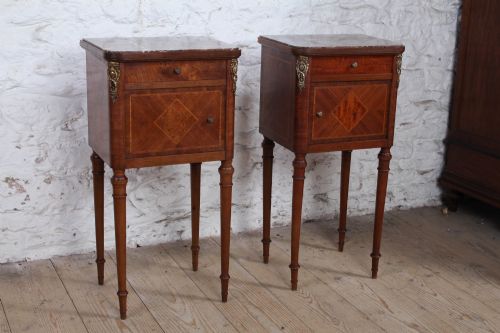


Parquetry Veneered Side Tables
Parquetry veneered side tables bring geometric precision and figured woods together in useful forms.
Parquetry Veneered Side Tables
When you search for parquetry veneered side tables, you are looking at small functional tables decorated with geometric arrangements of wood veneer. These pieces range from seventeenth century olive wood examples to later revival pieces from the nineteenth and early twentieth centuries.
You are most likely to meet bedside tables, occasional tables, and Pembroke tables on this page. They appear in French Louis revival styles, Georgian designs, and Queen Anne revival forms.
The surface patterns define the group, utilising timbers laid in repeating squares, lozenges, or cubes. Makers combined contrasting grains to create optical depth on small table tops.
How they were made
Cabinetmakers constructed these tables using a supportive secondary timber base before applying thin slices of decorative veneer to the exterior surfaces. Woods such as kingwood, walnut, satinwood, and fruitwood provided the necessary tonal variation for geometric parquetry and oyster patterns.
Mounts of cast ormolu and brass edge framing frequently protect the vulnerable corners and edges of the veneered tops. Marble inserts also appear inset directly into the timber framework on specific French revival bedside pieces.
Parquetry Veneered Side Tables Retail Price Guide 2026
Typical asking prices for parquetry veneered side tables among the pieces listed under this phrase on Sellingantiques today, from the lower quarter to the upper quarter. They describe what is for sale here now, not the wider market.
Listings feature walnut, kingwood, and satinwood alongside marble tops and ormolu mounts across several revival periods.
What varies in quality
The precision of the veneer matching dictates the visual success of the geometric pattern across the table top. Skilled makers aligned the grain directions so that the light plays evenly across the individual wooden tesserae.
The choice of underlying timbers and secondary woods determines the structural integrity of the piece over centuries. Finer examples incorporate dense hardwoods like kingwood and rosewood alongside restrained ormolu mounts rather than heavy cast substitutes.
Francois Linke
The Parquetry Veneered Side Tables Glossary
- Parquetry
- A geometric mosaic of wood veneer used to cover floors or furniture surfaces. It relies on contrasting timbers cut into precise angles.
- Veneer
- A thin layer of figured wood applied to a sounder base timber. This technique allowed cabinetmakers to display expensive grains efficiently.
- Oyster veneer
- Transverse slices of small branches or roots arranged to resemble the shape of oyster shells. This technique was popular in seventeenth century English furniture.
- Ormolu
- Gilded bronze used for decorative mounts and edgings on furniture. It adds metallic contrast to the timber surfaces.
- Pembroke table
- A small drop-leaf table with hinged flaps on either side. These tables date back to the eighteenth century and served multiple domestic uses.
Parquetry Veneered Side Tables: Frequently Asked Questions
What are parquetry veneered side tables?
These pieces are small tables finished with geometric patterns of wood veneer across their surfaces. They include bedside cabinets, occasional tables, and Pembroke forms.
They emerged across different centuries, from seventeenth century examples through to twentieth century revival pieces, reflecting changing domestic fashions for decorative woodwork.
How were these tables used originally?
Owners placed them beside beds, in parlours for holding lamps or small objects, or used them for writing and light needlework. Their portable nature allowed people to move them easily around the room.
Drawers and drop-leaves on specific models provided discrete storage for small personal items.
How do I live with parquetry furniture?
Keep these tables away from direct heat sources and strong sunlight to prevent the veneer from lifting or fading. Regular dusting with a dry cloth maintains the finish without harming the historic timber.
Use coasters and protective mats to safeguard the polished surfaces from moisture and heat damage during daily use.
How can I tell the period apart?
Seventeenth and eighteenth century examples often feature oyster cut veneers or banded borders in walnut and satinwood. Later nineteenth and twentieth century revival pieces tend to display French Louis styles with ormolu mounts and kidney shapes.
Examine the construction methods underneath and inside the drawers to understand the manufacturing date.