
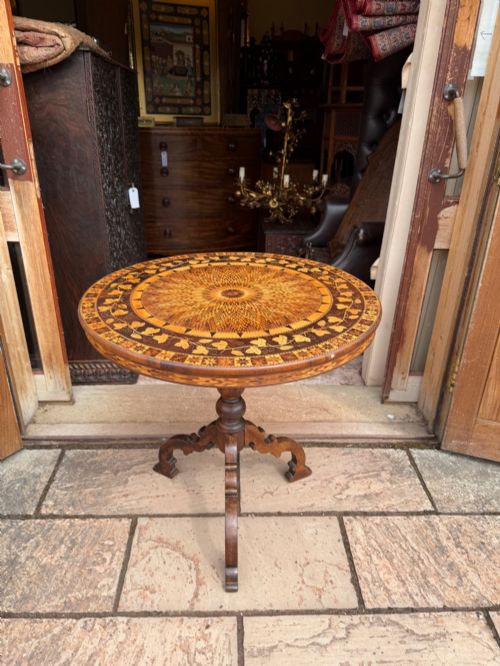
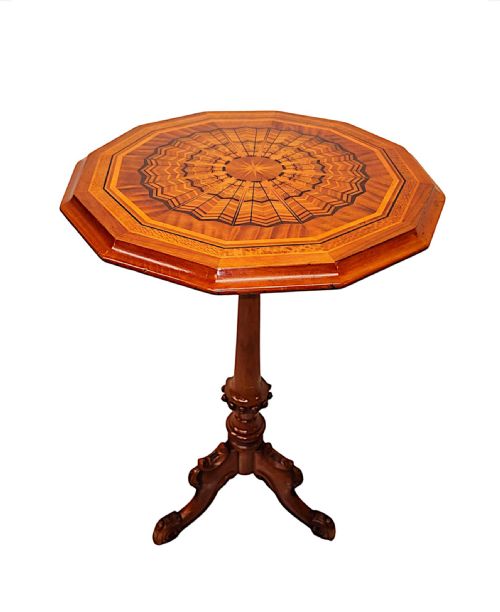
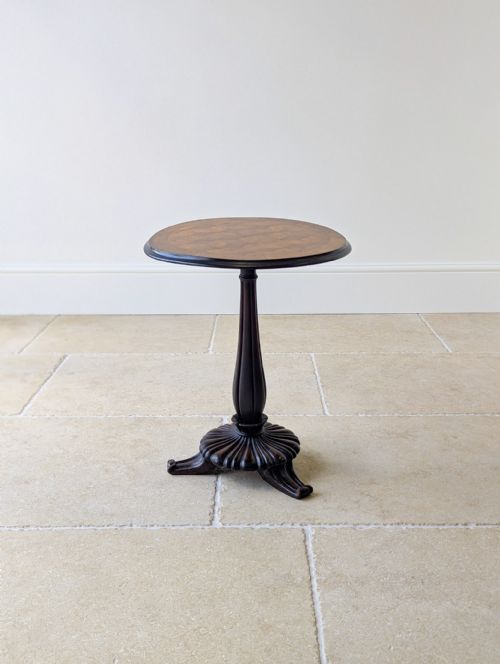
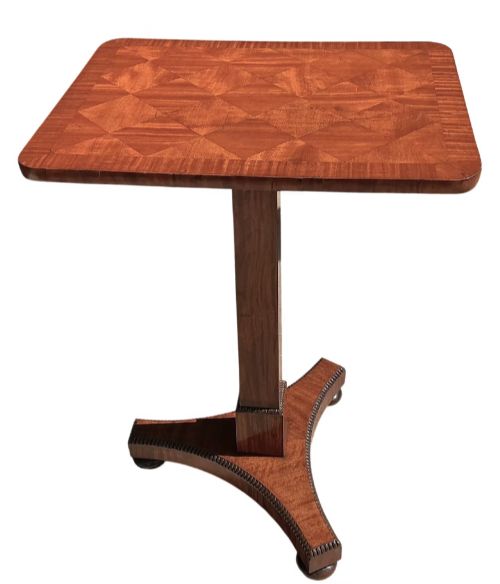

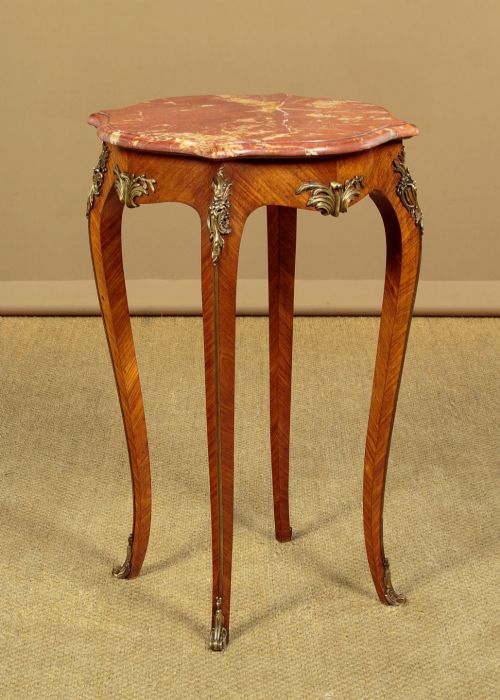


Parquetry Top Wine Table
A parquetry top wine table brings geometric wood patterns and compact charm to a room, offering a functional surface built for intimate spaces.
Parquetry Top Wine Table
A parquetry top wine table is a small pedestal form featuring a patterned wooden top constructed from geometric tile arrangements. These pieces appear across multiple eras, including Georgian, Regency, Victorian, and early twentieth-century French production.
Buyers encounter variations functioning as occasional tables, lamp tables, or guéridons, frequently utilising circular tops supported by a central pillar and tripod base.
The materials span native timbers like oak and walnut alongside exotic veneers such as kingwood, satinwood, and rosewood, often enhanced by specimen wood layouts.
Materials and construction methods
Cabinetmakers constructed these tables by applying thin veneers of contrasting timber onto a stable secondary wood base to form intricate geometric patterns without warping the structure. Walnut, mahogany, and oak provide the primary carcases, while satinwood, kingwood, and rosewood supply the varied hues for the decorative surfaces.
Makers utilised brass or ormolu mounts on specific French and revival examples to accent the edges and legs, pairing the woodwork with cast bronze details. Turning and carving shape the central pedestals and tripod legs, joining the top through tilt-top mechanisms or fixed blocks.
Listings feature 19th Century walnut, mahogany, and oak examples, alongside French guéridons with marble tops and ormolu mounts.
Factors of distinction
The precision and complexity of the wood geometry dictate the calibre of the surface, where tighter joints and well-chosen grain contrasts separate standard production from masterwork pieces. Specimen wood selections involving diverse botanical species demand greater skill in matching and cutting.
The stability of the pedestal and the crispness of any carved or cast mounts determine the structural integrity of the piece. Tables retaining their original tilt mechanisms and unblemished veneer surfaces represent the upper echelon of surviving examples.
Gillows·L.Martin·Anton Seuffert·William Norrie
The Parquetry Top Wine Table Glossary
- Parquetry
- Geometric mosaic woodwork formed by fitting small pieces of veneer together to create patterns like cubes or chequers. It provides the defining decorative surface for these tables.
- Guéridon
- A small French occasional table supported by a central column, often round and frequently topped with marble or marquetry. The form gained popularity in the nineteenth century.
- Specimen wood
- Furniture constructed using a variety of different native and exotic timbers to showcase natural colour contrasts. New Zealand and European makers utilised this technique for decorative tabletops.
- Tilt top
- A tabletop mounted on a catch mechanism that allows the surface to pivot vertically when not in use. This clever design saved floor space in historic interiors.
- Ormolu
- Gilded bronze mounts cast and chased to ornament furniture frames and legs. It appears particularly on French revival and Linke-style pieces.
Parquetry Top Wine Table: Frequently Asked Questions
What is a parquetry top wine table used for?
These tables served historically as small movable surfaces for holding drinks, lamps, or decorative objects beside seating furniture. Today they function as versatile accent pieces in sitting rooms and hallways.
Their compact footprint allows them to fit easily into tight corners or beside armchairs while adding a decorative focal point through their patterned timber tops.
How do I tell a Georgian table from a Victorian one?
Georgian and early Regency examples generally display restrained lines, architectural proportions, and timbers like figured mahogany or walnut. Later Victorian pieces often embrace revival styles, heavier carving, and intricate specimen wood or multi-timber parquetry.
Examining the construction methods underneath the top and the specific grain characteristics helps clarify the period of manufacture.
What is the difference between parquetry and marquetry?
Parquetry uses geometric and angular pieces of wood arranged in repeating patterns such as cubes, bricks, or diamonds. Marquetry employs curved pictorial veneers to depict flowers, landscapes, or scrolls.
Both techniques elevate the tabletop, but parquetry relies strictly on the interplay of wood grain and angles.
How should I care for an antique wood table?
Keep wooden tables away from direct heat sources and strong sunlight to prevent the timber veneers from drying out or splitting. Dust gently with a soft dry cloth and apply occasional high-grade wax to nourish the finish.
Avoid placing damp glasses directly on the polished surface without coasters to protect the historic polish.