



Parquetry Top Side Table
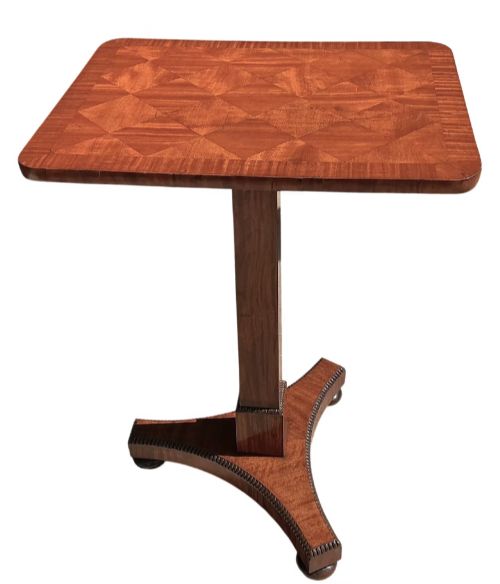
A parquetry top side table brings geometric precision to a room through sharply patterned wood veneers arranged on the surface.
Parquetry Top Side Table
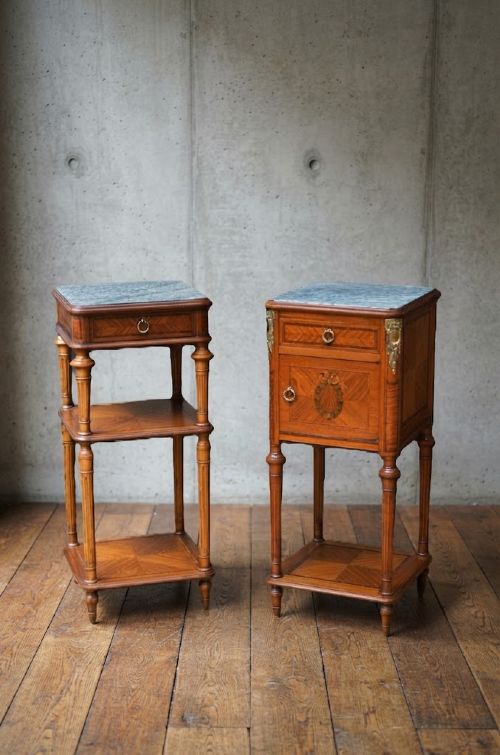
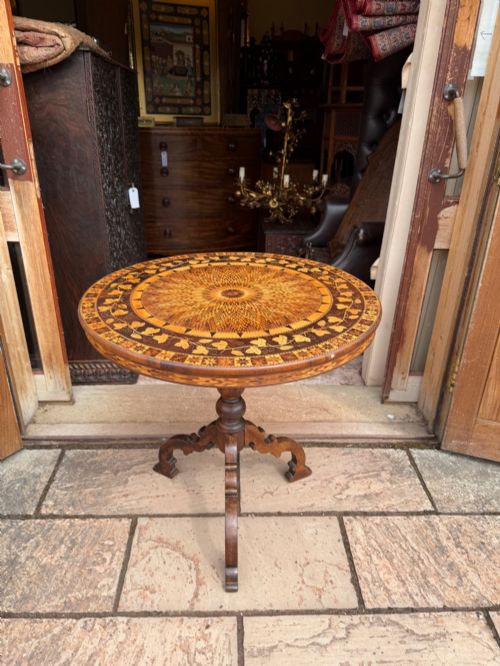
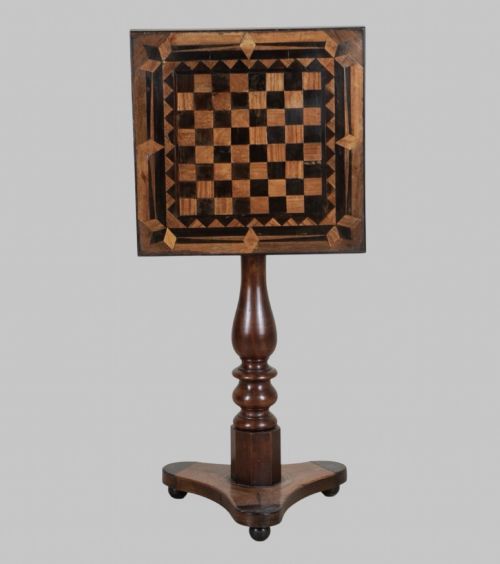
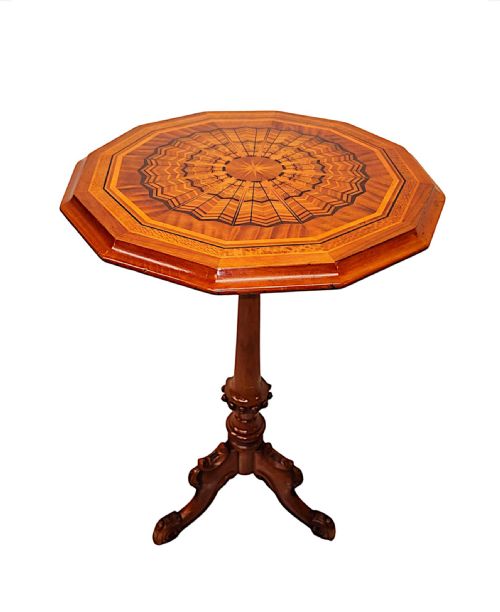
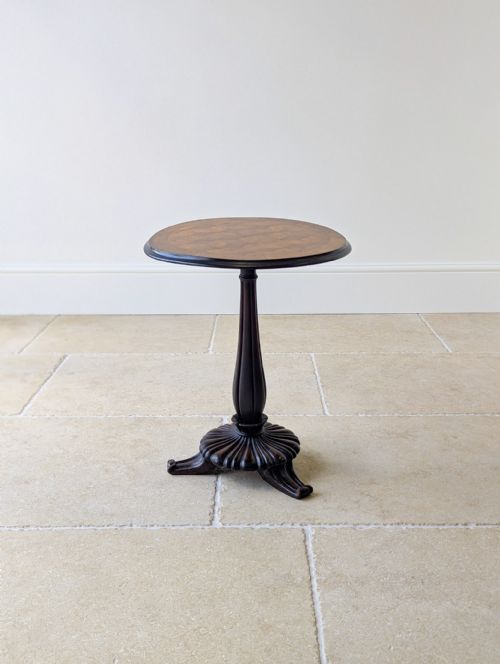
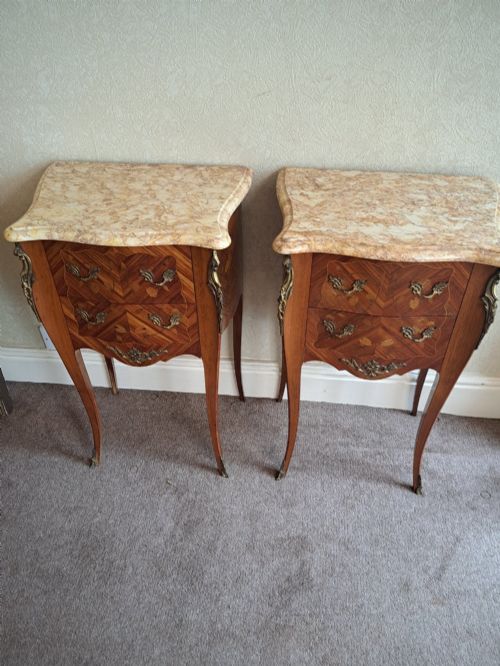
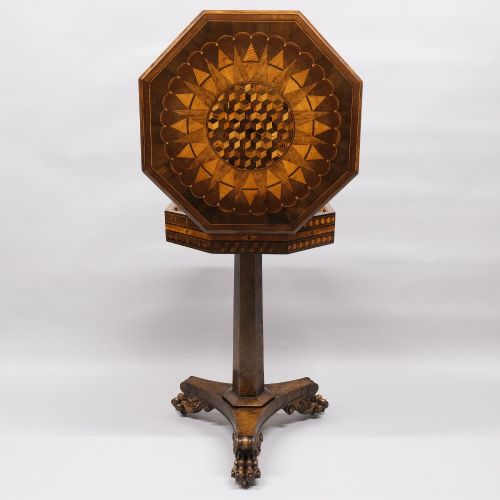
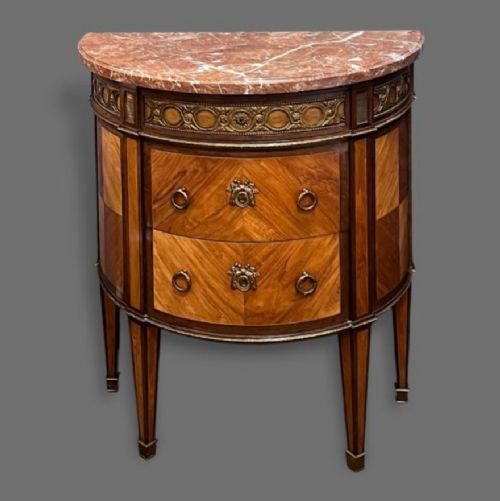
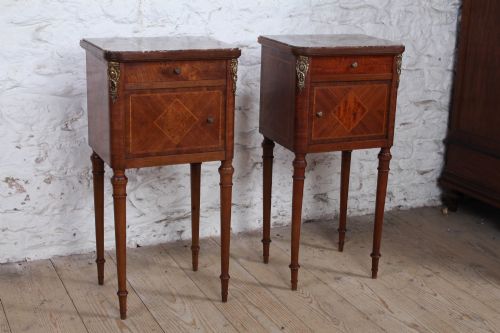
Buyers will encounter various formats on this page, ranging from circular specimen wood designs to folding games tables and marble-topped bedside pieces. Walnut, kingwood, and satinwood dominate the surfaces, often complemented by contrasting fruitwoods arranged in precise geometric grids or sunburst patterns.
How They Were Made
Cabinet makers constructed these surfaces by slicing thin veneers of diverse timbers, including rosewood, kingwood, satinwood, and mahogany, then cutting them into precise geometric shapes. These individual tiles were glued onto a solid secondary wood base to form intricate patterns without warping.
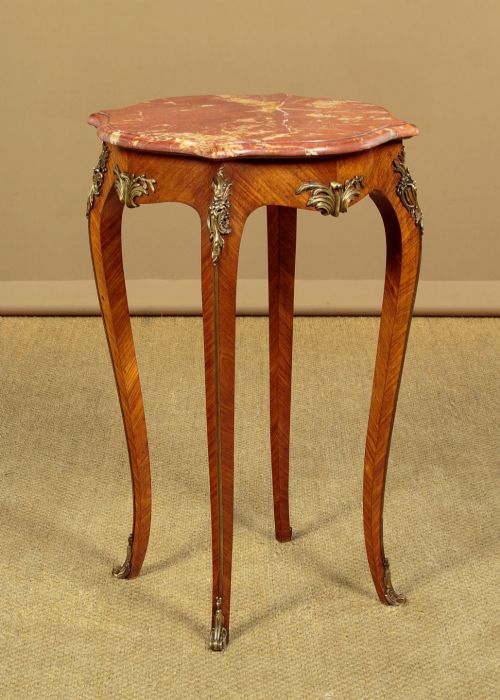
Many examples incorporate cast brass, ormolu, or gilt-metal mounts along the edges and legs, while others combine the wooden mosaic with inset marble tops. Joinery methods relied on traditional dovetails and mortise and tenon frames to support the decorative tabletops.
The listings span the eighteenth, nineteenth, and early twentieth centuries, featuring walnut, mahogany, kingwood, and satinwood across various side and occasional table forms.
What Varies in Quality
The sophistication of the timber selection and the complexity of the geometric layout dictate the upper tier of these pieces. Master workshops employed tightly grained exotic woods with natural colour variations to create depth within the pattern, whereas simpler examples relied on basic repeating squares.
The integration of the top with the structural frame marks the distinction between standard production and exceptional work. Finer items maintain flush joints where the veneered surface meets the edge moulding, preserving the geometric continuity without visible gaps or lifting veneer.
Gillows·Ralph Turnbull·L.Martin of Paris·Collingson & Lock
The Parquetry Top Side Table Glossary
- Parquetry
- A geometric mosaic of wood veneers used for decorative floors and tabletops. It differs from marquetry by strictly using straight-lined geometric polygons rather than pictorial curves.
- Marquetry
- The art of applying pieces of veneer to a structure to form decorative designs and pictures. Unlike parquetry, this technique often depicts floral or scrollwork motifs.
- Specimen wood
- Furniture constructed using a wide variety of native and exotic timbers. The distinct natural colours of each wood species create the pattern without artificial staining.
- Ormolu
- Gilded bronze mounts applied to furniture for decorative enrichment. This French technique became prevalent on Louis XV and Louis XVI style pieces.
Parquetry Top Side Table: Frequently Asked Questions
How do I clean a parquetry top?
Dust the surface regularly with a soft, dry cloth to prevent dirt accumulation in the veneer joints. Avoid using excessive water or harsh chemical sprays that could weaken the old glue beneath the wood.
Apply a traditional beeswax polish sparingly to nourish the timber and maintain the sheen. Buff the surface gently along the grain lines to protect the delicate geometric patterns.
Are these tables suitable for daily use?
These tables function well for holding lamps, books, or small decorative items in a sitting room or bedroom. Their historic veneer construction requires sensible care against heavy impact or moisture.
Use coasters under glasses and keep the tables away from direct heat sources or strong sunlight. These precautions prevent the wood from drying out and safeguard the stability of the parquetry.
What is the difference between parquetry and marquetry?
Parquetry relies on geometric shapes like squares, triangles, and cubes to form repeating patterns. It creates a crisp, architectural effect across the surface of the tabletop.
Marquetry employs curved lines to illustrate pictorial scenes, flowers, or scrolls. While both techniques use thin wood veneers, their visual impact remains distinct.
How do I date a side table?
Examine the secondary woods used for the frame and drawer interiors, as timber availability shifted between the Georgian, Regency, and Victorian periods. Hand-cut dovetails and traditional joinery marks also indicate earlier periods of manufacture.
Compare the style of the legs, whether cabriole, tapered, or turned, alongside any metal mounts. Design influences from specific French reigns or English periods provide reliable chronological anchors.