



Golden Brown Wooden Table
A golden brown wooden table brings warmth to a room through rich timber tones found in Georgian, Victorian and Edwardian examples.
Golden Brown Wooden Table
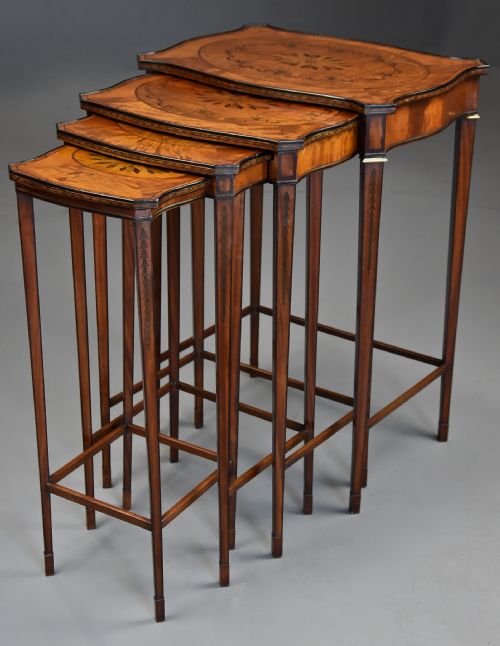
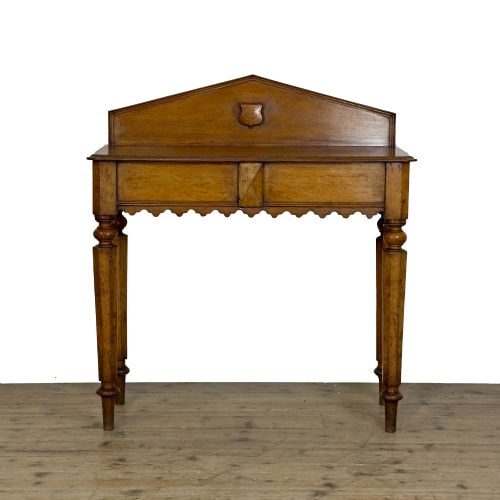
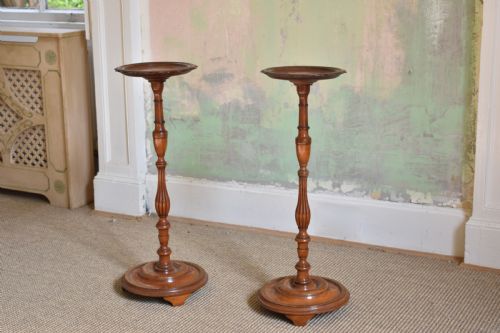
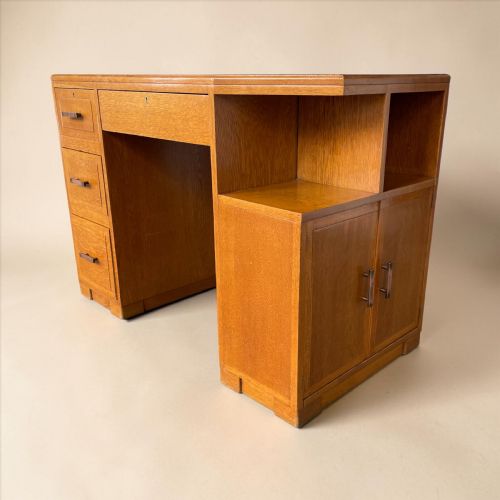
A golden brown wooden table spans practical domestic forms including side tables, desks, nests of tables, centre tables, candle stands, sideboards, dressers, bedside cabinets and console tables. These pieces originate from various periods such as Georgian, Victorian, Edwardian, 1870, 1900, 1920 and 1930.
Buyers encounter diverse styles ranging from Victorian, Edwardian and Art Deco to Georgian Revival, Arts and Crafts, Queen Anne Style, Art Nouveau and French Provincial. The selection demonstrates how different eras utilised timber to create functional furniture for the home.
How they were made
Cabinet makers utilised a variety of woods including oak, walnut, burr walnut, satin walnut, satinwood, mahogany, cherrywood and specimen wood. These timbers provided the distinct golden brown tones seen across the pieces.
Construction techniques often incorporated decorative elements such as marquetry and inlay work, sometimes paired with brass or other metal details to accent the wooden structure.
Golden Brown Wooden Table Retail Price Guide 2026
Typical asking prices for golden brown wooden table among the pieces listed under this phrase on Sellingantiques today, from the lower quarter to the upper quarter. They describe what is for sale here now, not the wider market.
One exceptional 1870 specimen wood table incorporates timber varieties assembled in the manner of colonial New Zealand makers Anton Seuffert and William Norrie.
What varies in quality
The selection of timber grain heavily influences the character of a piece, with figured grains like burr walnut offering greater visual depth. Finer examples display meticulous attention in marquetry and inlay work.
Construction solidity and the choice of secondary woods determine the durability and overall integrity of each table, desk or cabinet across the different stylistic periods.
The Golden Brown Wooden Table Glossary
- Burr walnut
- A veneer taken from the warted growths on walnut trees, prized for its swirling, complex grain patterns. It frequently appears on high-status Victorian and Edwardian furniture.
- Satinwood
- A durable, lustrous timber with a yellowish or golden sheen, often used for fine inlay and decorative tables during the Georgian and Edwardian periods.
- Marquetry
- The art of applying pieces of veneer to a structure to form decorative patterns and pictures. Makers utilised various coloured woods to achieve tonal contrast.
- Pedestal desk
- A heavy, freestanding writing table supported by two pillars of drawers or cupboards. Examples range from Victorian walnut iterations to later designs.
- Nest of tables
- A set of graduated tables designed to fit neatly one beneath another. Edwardian makers produced notable versions in satinwood and mahogany.
Golden Brown Wooden Table: Frequently Asked Questions
What periods do these golden brown wooden tables come from?
The pieces span multiple eras including the Georgian period, the Victorian era, the Edwardian period, and early twentieth century decades up to 1930.
Each period introduced distinct stylistic preferences, ranging from ornate Victorian walnut to clean Art Deco lines and Arts and Crafts oak.
Which woods provide the golden brown colour?
Makers relied on timbers such as oak, walnut, burr walnut, satinwood, mahogany and cherrywood to achieve natural warm hues.
Over time and with polishing, these woods develop rich patinas that accentuate the grain.
How were different table forms used in the home?
Side tables, centre tables and console tables served display and decorative functions in reception rooms, while desks and pedestal tables provided dedicated workspaces.
Nests of tables and bedside cabinets offered flexible utility in smaller domestic spaces.