


Parquetry Top Pedestal Table
A parquetry top pedestal table brings geometric wood patterns and a central support together, offering a functional surface with decorative impact for any room.
Parquetry Top Pedestal Table
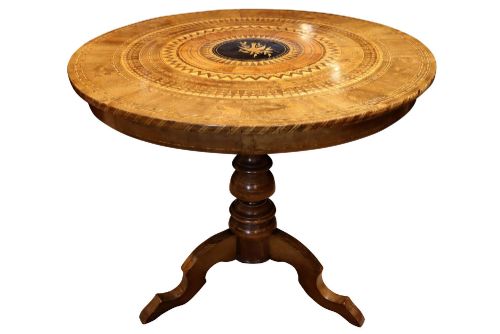
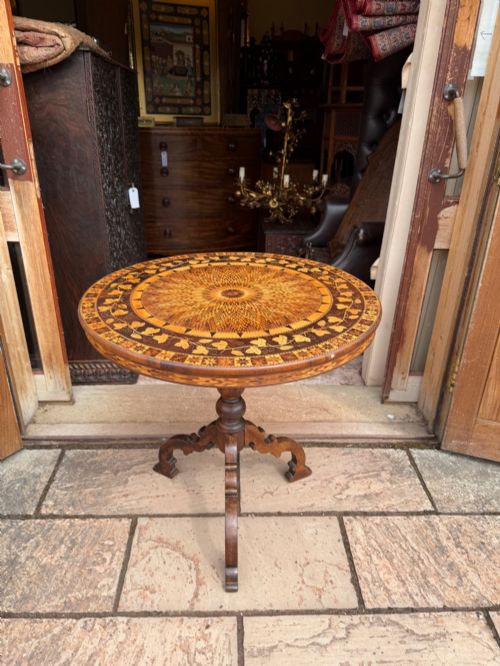
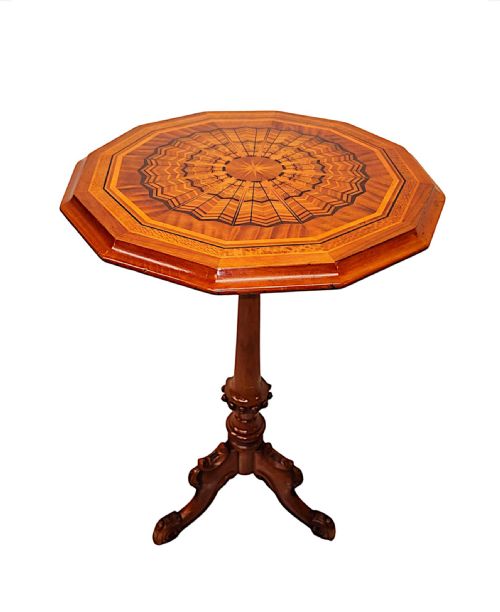
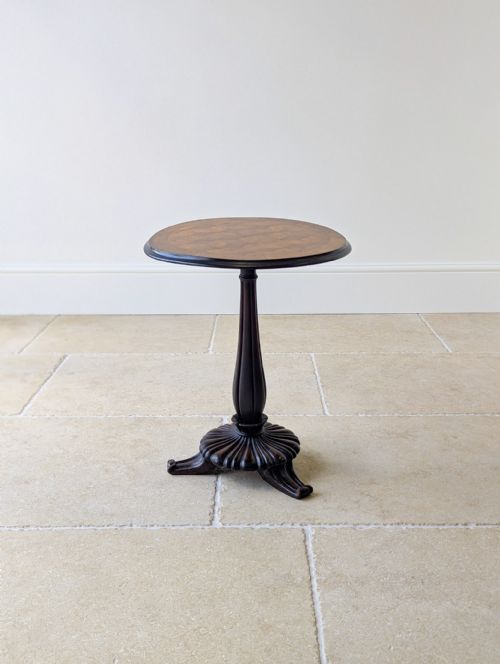
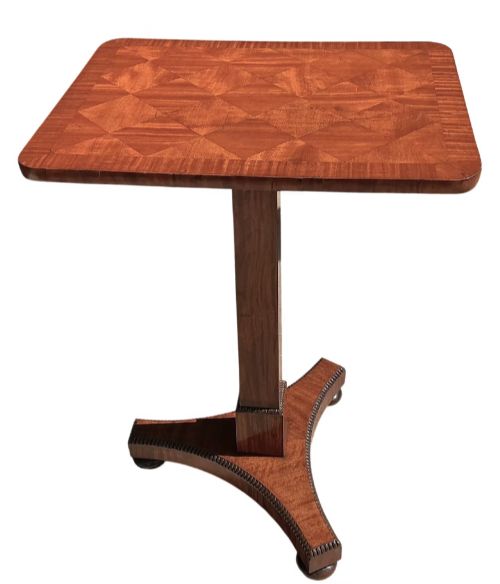
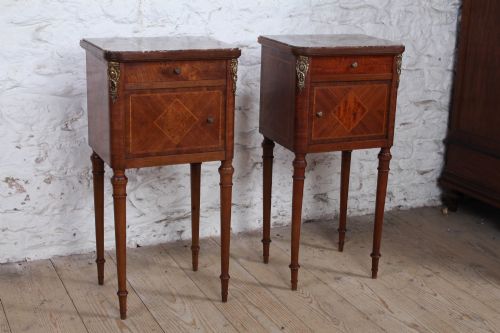
The most common examples on this page are occasional and lamp tables in circular or rectangular shapes, frequently showcasing specimen woods or intricate inlay work. French examples frequently incorporate kingwood, satinwood, and ormolu mounts, while English pieces lean towards mahogany, walnut, and rosewood constructions.
Buyers select these tables for their compact footprints and detailed geometric tops, which add warmth and pattern to small spaces. They function well beside seating or as standalone display surfaces for lamps and decorative objects.
How they were made
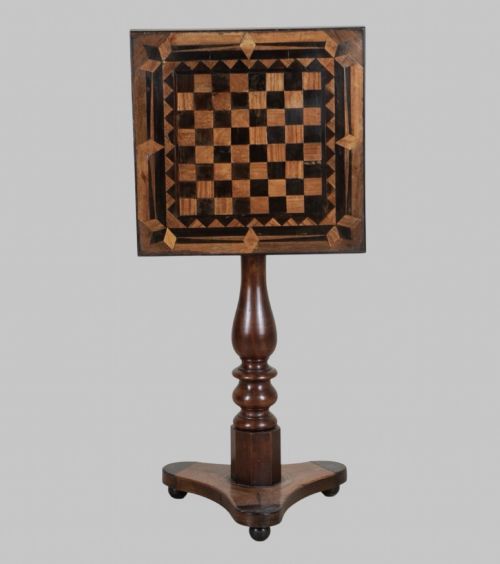
Cabinet makers constructed the geometric surfaces by applying thin veneers of contrasting timbers such as walnut, mahogany, rosewood, satinwood, and kingwood onto a stable secondary wood base. This technique allowed artisans to create complex sunburst, chess, and parquetry patterns without warping the main timber structure.
The central pedestals often terminate in tripod or platform bases, sometimes enriched with brass or ormolu mounts and hand-carved details. Solid timbers like oak and mahogany formed the sturdy internal framing and pillar supports necessary to balance the weighted tops.
Several tables conceal chess boards within their geometric wooden tops, ready for an impromptu match between courses.
What varies in quality
Quality rests upon the precision of the veneer work and the harmonious selection of contrasting timbers within the parquetry pattern. Superior examples display tight, seamless geometric joints with no visible gaps or poorly matched grain directions across the surface.
The stability of the pedestal base and the integrity of the joinery where the column meets the top separate finer workshop productions from simpler utility items. Well-executed turning, carving, and the inclusion of high-gradeOrmolu or brass mounts elevate the standing of a piece.
Gillows·François Linke
The Parquetry Top Pedestal Table Glossary
- Parquetry
- A geometric mosaic of wood veneers arranged in decorative patterns such as cubes, diagonals, or squares. This technique transforms flat table surfaces into intricate visual displays.
- Specimen wood
- Furniture constructed using a variety of different, often exotic, timbers to showcase distinct natural colours and grain patterns. Makers frequently utilised these diverse woods in geometric table tops.
- Pedestal table
- A freestanding table supported by a single central pillar that usually rests on a tripod or platform base. This design maximises legroom and floor space around the furniture.
- Ormolu
- Gilt bronze mounts applied to furniture for decorative enrichment. French cabinet makers frequently used these cast metal details on tables and cabinets.
- Snap top
- A hinged table top that tilts into a vertical position when not in use. This mechanism allowed the furniture to be stored flat against a wall.
Parquetry Top Pedestal Table: Frequently Asked Questions
Where should I place a pedestal table?
These tables suit small spaces, narrow hallways, or empty corners where a standard four-legged table would crowd the floor. Their central pillar design allows chairs to tuck closely underneath without obstruction.
They work effectively next to armchairs or sofas as lamp and occasional surfaces, or standing alone in the centre of a room to display decorative objects.
How do I care for parquetry surfaces?
Protect the wood veneers by avoiding direct sunlight and maintaining stable room humidity to prevent the timber from drying or warping. Dust gently with a dry, soft cloth and avoid chemical polishes.
Use coasters under glasses and felt pads under objects to shield the delicate geometric inlay and French polish finishes from scratches and moisture rings.
What is the difference between marquetry and parquetry?
Parquetry consists strictly of geometric patterns formed by interlocking wood veneers, such as cubes, squares, and chequered designs. It relies on strict symmetry and architectural lines.
Marquetry, by contrast, depicts pictorial scenes, flowers, or scrolls using varied natural wood grains and tinted veneers to create organic, flowing imagery.
How can I tell the period of a table?
Examine the secondary woods used for the hidden framing, the construction methods of the pedestal base, and the style of the wood veneers. Georgian and Regency pieces often feature simpler mahogany or rosewood turnings, while Victorian examples frequently incorporate heavy walnut and elaborate specimen wood tops.
French pieces from the later nineteenth century often display distinctive kingwood veneers combined with ormolu mounts and specific cabinet-making signatures.