


French Renaissance Revival Table
A french renaissance revival table brings robust nineteenth-century architectural drama to a room, offering heavy carved timber and classical ornament.
French Renaissance Revival Table
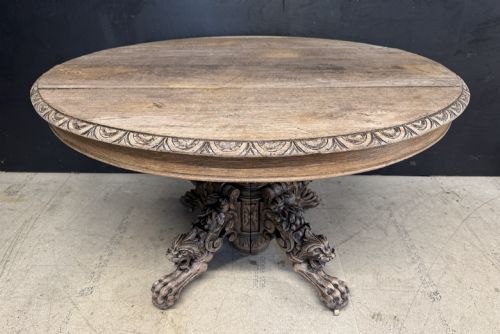
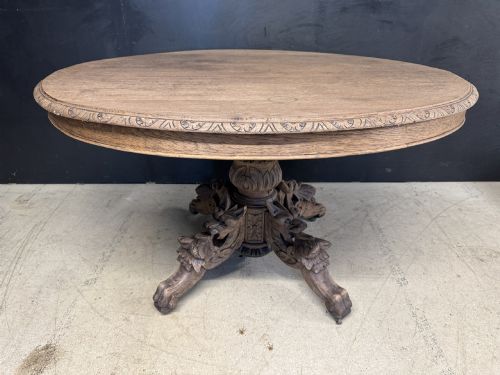
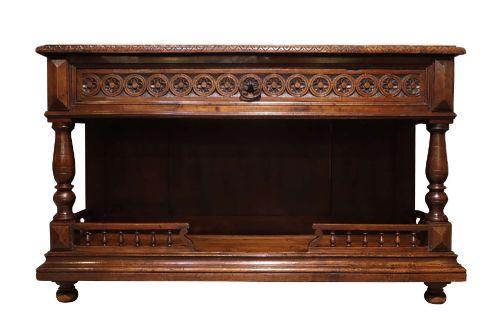
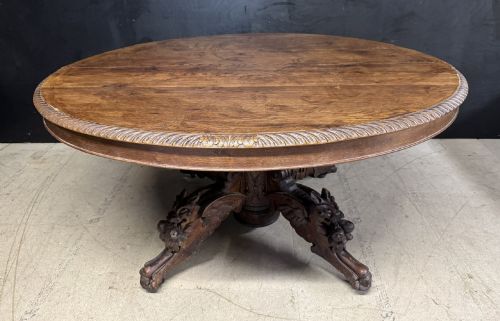
A french renaissance revival table draws upon sixteenth-century architectural motifs executed during the nineteenth century, particularly within the Victorian era and Second Empire periods. These pieces include centre tables, side tables, and writing desks produced in France and England during the 1870s, 1880s, 1890s, and 1900.
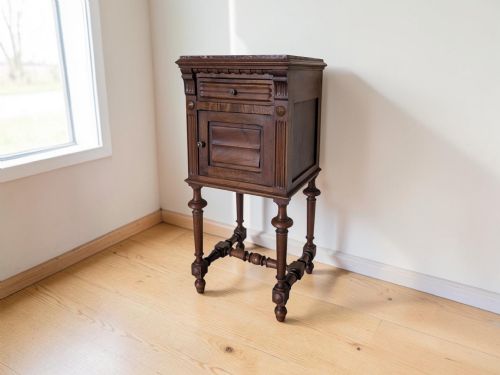
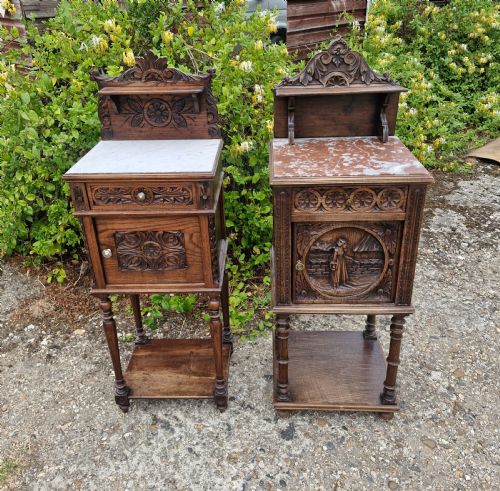
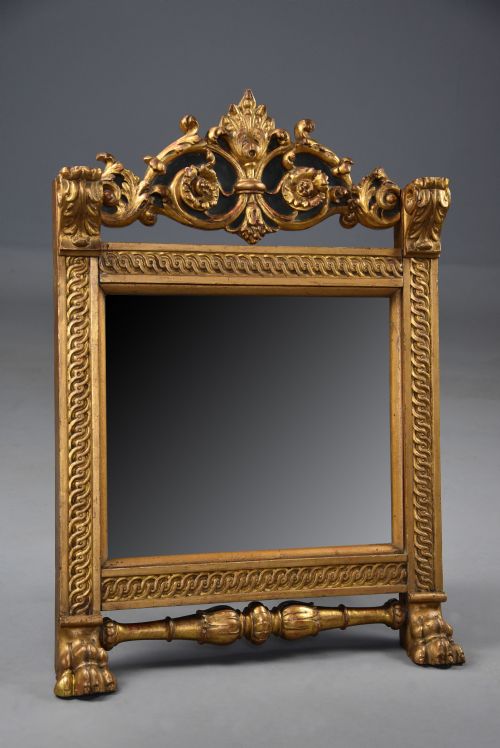
The version most commonly encountered on this page is constructed from carved oak or walnut, often featuring the substantial turned legs and strapwork associated with the French Henri II style. Alongside standard tables, the selection extends to related furniture and decorative objects from the same Grand Tour aesthetic, such as carved giltwood easel table mirrors.
How they were made
Cabinetmakers utilised dense hardwoods like solid walnut and oak, selecting timber capable of supporting deep, three-dimensional relief carving. Surfaces display intricate hand-carved details including foliage, caryatids, and geometric moulding characteristic of the Renaissance revival.
Joinery relied on traditional mortise and tenon construction to provide structural integrity for heavy tables and desks. Secondary decorative elements incorporate cast brass, bronze, and gesso to accent the primary timber framework.
Current listings demonstrate a concentration of French nineteenth-century furniture utilising carved walnut, oak, and giltwood across the Victorian and Second Empire periods.
What varies in quality
The distinction between standard production and superior craftsmanship lies in the depth and sharpness of the hand carving. Finer examples exhibit undercut foliage and crisply articulated figures rather than shallow, mechanically stamped ornamentation.
Proportion and material selection also define the grade of the piece, with dense-grained walnut and substantial oak framing marking out the better workshops. Original structural stability without excessive timber shrinkage indicates superior initial seasoning of the wood.
Eurotrope Bouret·Gien France
The French Renaissance Revival Table Glossary
- Renaissance Revival
- A nineteenth-century design movement that appropriated sixteenth-century classical forms, motifs, and architectural orders. It dominated furniture and decorative arts across Europe during the Victorian era.
- Centre table
- A freestanding table finished on all sides designed to sit in the middle of a room rather than against a wall. These forms are substantial and frequently utilise walnut or oak.
- Giltwood
- Timber that has been coated with a thin layer of gold leaf or gesso and gilding. It appears on mirrors and decorative furniture frames of the period.
French Renaissance Revival Table: Frequently Asked Questions
How do I identify the period of these tables?
Dating relies on examining the timber, construction methods, and specific stylistic revival sub-categories. Pieces from the 1870s to 1900 often show Victorian or Second Empire influences.
Comparing the depth of the hand carving and the specific vocabulary of the strapwork helps distinguish nineteenth-century interpretations from later reproductions.
Where should I place a centre table?
A centre table is designed to stand free in the middle of a room rather than pushed against a wall. Because they are finished on all sides, they act as focal points in large hallways or principal reception rooms.
Ensure there is adequate circulation space around the perimeter of the table to appreciate the carved walnut or oak legs from every angle.
What woods were used for these tables?
Cabinetmakers primarily utilised solid oak and walnut for these heavy revival pieces. These dense hardwoods provided the structural strength required for substantial turned supports and deep relief carving.
Secondary materials such as brass, bronze, and gesso occasionally complement the main timber construction on related decorative objects.