




Parlour Dining Chairs
Parlour dining chairs are seating built for nineteenth and early twentieth century formal rooms, offering sturdy construction combined with decorative woods and upholstery.
Parlour Dining Chairs
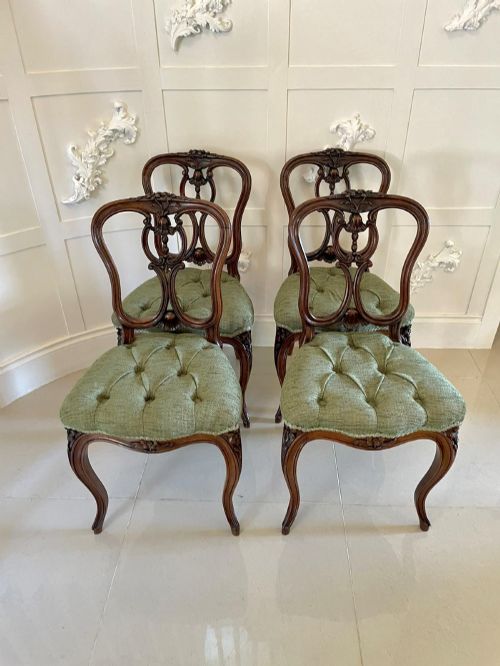
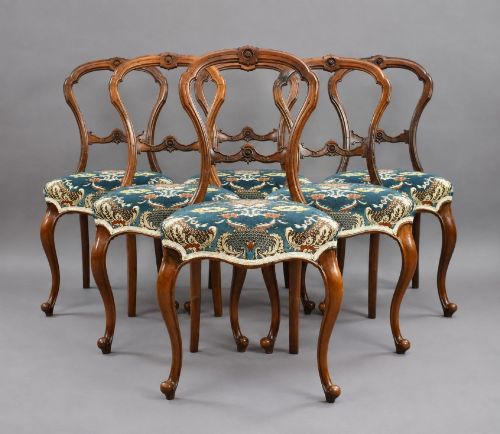
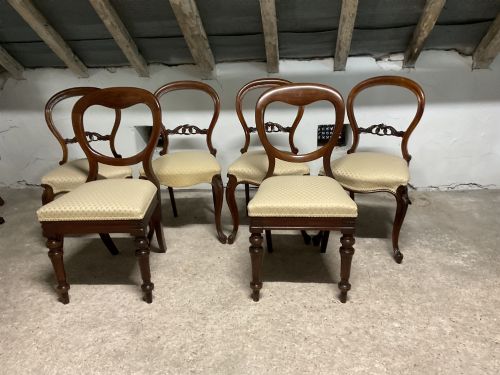
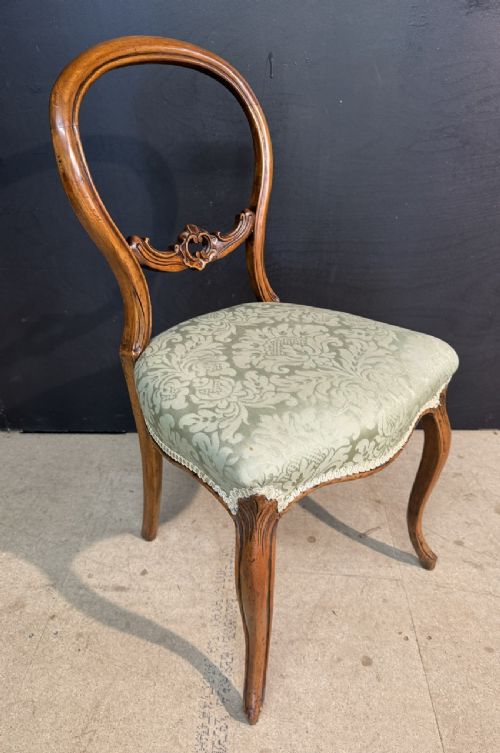
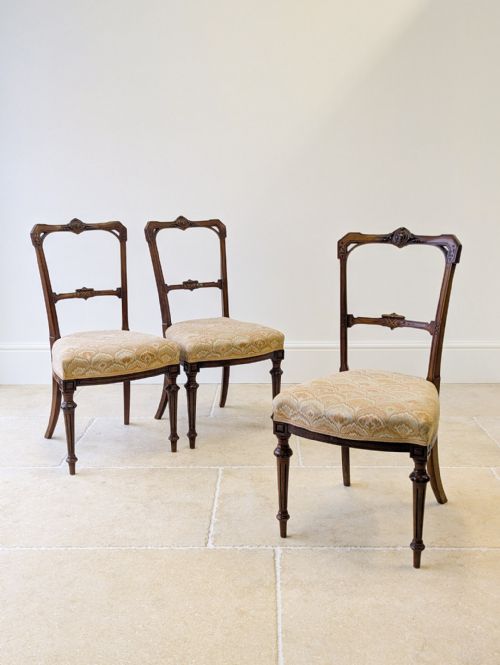
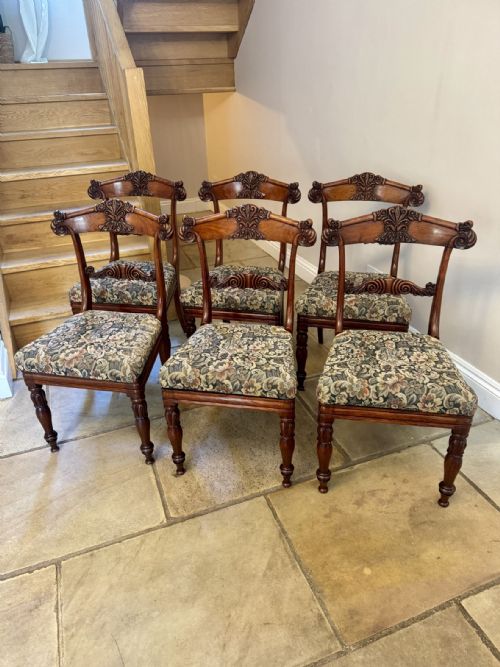
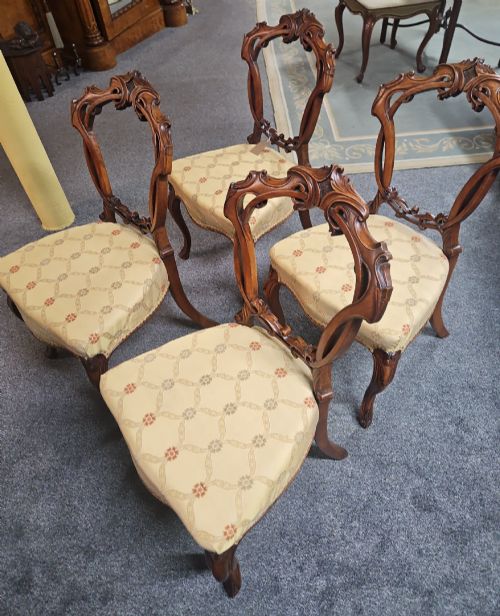
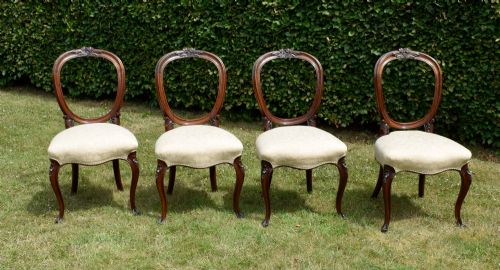
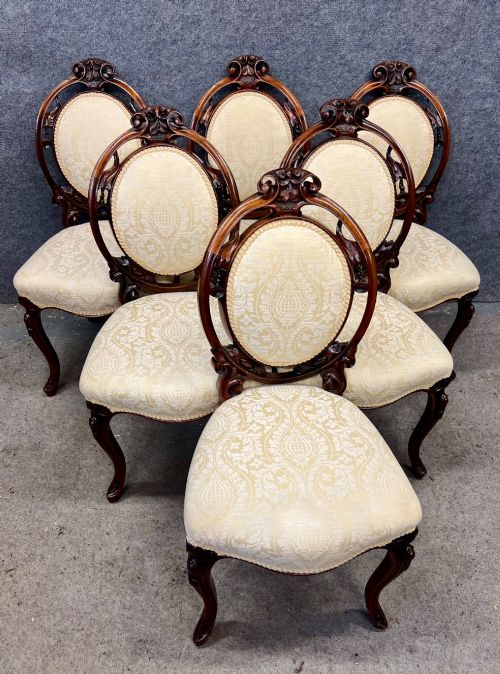
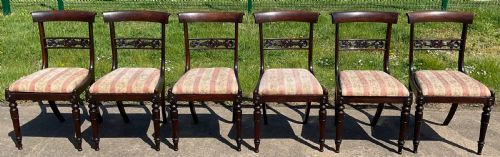
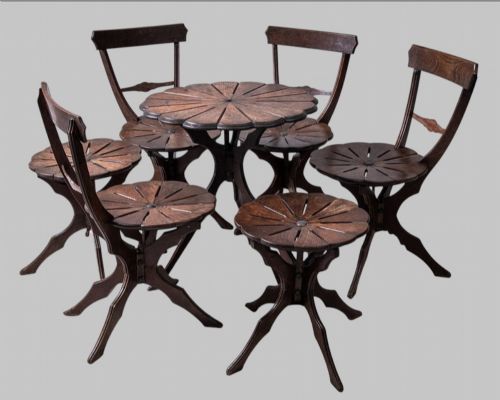
Parlour dining chairs span the Victorian, Regency, and Edwardian periods, appearing in forms such as balloon back dining chairs, side chairs, and larger parlour suites. These seats served formal entertaining spaces where household guests gathered.
The most common examples on this page are sets of Victorian mahogany or walnut chairs, often featuring carved details or upholstered seats in fabrics like velvet and needlepoint. Single chairs and smaller pairs also surface alongside the larger matched sets.
What varies in quality
The degree of hand carving and the selection of timber dictate the standing of an individual chair or set, with highly figured rosewood and walnut elevating certain pieces above plain utilitarian examples. Crisp execution of pierced splats and marquetry inlay distinguishes superior workshop production.
The integrity of matched sets also influences the piece, as assembled groups diverge from uniform sets created together by a single maker.
The available seating encompasses complete sets of twelve down to single side chairs, salon chairs, and multi-piece parlour suites.
The Parlour Dining Chairs Glossary
- Cabriole leg
- A furniture leg that curves outward at the knee and tapers inward toward the foot. This form draws inspiration from classical and revival designs.
- Marquetry
- Decorative patterns formed by fitting together thin slices of wood veneer. Artisans apply these pictorial or geometric designs onto primary wood surfaces.
- Pierced splat
- The central vertical strip of wood in a chair back that has been cut through to create an open pattern. This technique lightens the visual weight of the timber.
- Salon chair
- A smaller, decorative seat designed for formal reception rooms rather than heavy dining use. These often exhibit more ornate carving and lighter proportions.
Parlour Dining Chairs: Frequently Asked Questions
What periods do these chairs come from?
The pieces span the Regency, Victorian, and Edwardian eras, with dates stretching from the early nineteenth century into the early twentieth century.
Victorian examples dominate the selection, alongside earlier Regency designs and later Edwardian or revival pieces.
Were these chairs used for dining?
Many examples served formal dining tables, while others functioned as parlour, salon, or side chairs for entertaining guests in reception rooms.
Sturdy timber frames and upholstered seats provided the necessary support for daily meals and social gatherings alike.
What woods were commonly used?
Cabinet makers predominantly utilised mahogany, rosewood, and walnut for their strength and rich grain patterns. Oak also appears in specific regional pieces.
These timbers accepted carving and polishing well, which suited the formal aesthetic of nineteenth century interiors.