



Paris Landscape Painting
A paris landscape painting brings the streets, rivers and monuments of the French capital directly to the wall through oils and watercolours.
Paris Landscape Painting
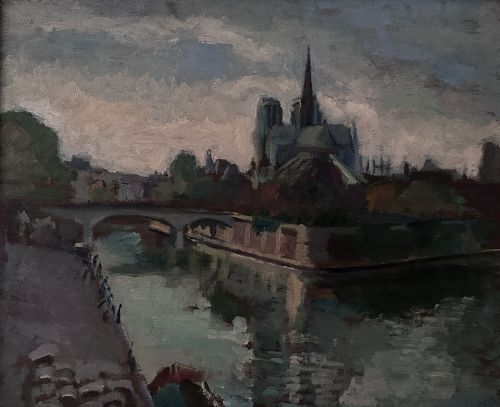
A paris landscape painting captures the visual character of the French capital across various periods including the nineteenth century, the nineteen-twenties, nineteen-thirties and mid-century. These works depict familiar urban motifs such as Notre Dame, the Eiffel Tower, the River Seine, Montmartre and the Pont Neuf through the lenses of Impressionism, Post-Impressionism, the Barbizon School and Mid-Century Modernism. The selection also includes related ceramic pieces such as porcelain plates featuring Parisian pictorial designs from the mid-nineteenth and late nineteenth centuries.
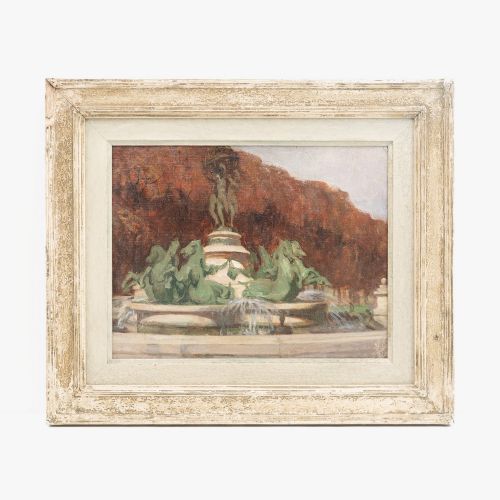
Buyers encounter oil paintings on canvas or board alongside watercolours framed in wood or gilt wood. The physical forms range from standard wall art paintings to large cityscapes and panoramic views of Parisian streets and riverbanks. Many pieces carry signatures of known artists or reflect distinct regional styles associated with the city's artistic heritage.
Materials and Techniques
Artists rendering a paris landscape painting relied primarily upon oil paint applied to woven canvas or rigid wood panels, building up texture and tone to describe light on stone and water. Watercolour pigment on paper served another group of painters seeking swift execution and luminous washes for architectural and riverside scenes. Ceramic pieces utilised porcelain bodies decorated with pictorial enamels to capture Parisian subjects in domestic formats.
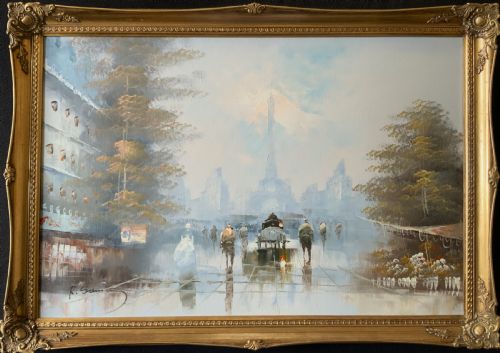
Framing played an integral role in presentation, with many canvases and boards housed in wood frames or gilded wood mouldings designed to complement the palette of the artwork. The combination of oil on canvas with ornate gilt framing remains a defining physical characteristic of the larger cityscape works.
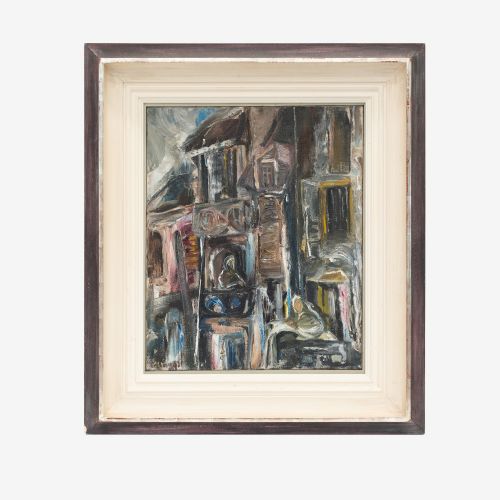
Styles represented include Barbizon School, Impressionism, Post-Impressionism and Mid-Century Modernism.
Assessing Quality and Execution
The distinction between standard works and exceptional examples in a paris landscape painting rests upon the handling of light, atmosphere and spatial depth by the hand of the artist. Stronger pieces display confident brushwork and a cohesive palette that evoke the specific mood of a Parisian street or the river Seine, whereas lesser examples rely on formulaic repetition of standard motifs without atmospheric depth.
Material preservation also sets works apart, particularly the stability of the canvas or board and the integrity of the paint surface against historical cracking or cleaning. Original frames that suit the period and scale of the painting add an additional layer of historical coherence to the piece.
Paul Désiré Trouillebert·Lilian Colbourn·Alexander Jamieson·Caroline Burnett·Gabriel Dauchot·Ron Folland·Merio Ameglio·Eduard Leon Cortes·Paul Viry·Noel Harry Leaver·Yves Brayer·George De Paris
The Paris Landscape Painting Glossary
- Barbizon School
- A nineteenth-century French movement focused on plein air landscape painting and direct observation of nature. Painters associated with this group influenced later impressionist approaches to Parisian scenes.
- Impressionism
- A nineteenth-century style characterised by relatively small, thin yet visible brush strokes and an emphasis on accurate depiction of light. This approach heavily informs many street and river views of the capital.
- Gilt Wood
- Wood that has been treated with a thin layer of gold leaf or metallic gilt paint. This material is common in the frames housing traditional oil paintings.
- Post-Impressionism
- A predominantly French art movement that developed from Impressionism, extending its limitations while retaining its use of vivid colours and thick application of paint. Works in this vein often emphasise expressive forms.
- Oil on Canvas
- A traditional painting medium where pigments are suspended in drying oils and applied to stretched fabric. This combination provides durability and a flexible surface for textured brushwork.
Paris Landscape Painting: Frequently Asked Questions
What periods do these paintings cover?
The works span from the nineteenth century through the interwar decades and into the nineteen-fifties and sixties. Painters operating across these eras interpreted the capital through distinct stylistic lenses.
Earlier nineteenth-century pieces often reflect Barbizon or academic influences, while mid-century examples embrace expressionistic or impressionistic revivals of Parisian street life.
Are these works created on canvas or board?
Artists utilised both woven canvas stretched over wooden frames and rigid wood boards as supports for their oil pigments. Canvas allowed for larger compositions and textured impasto applications.
Boards provided a firmer, more portable surface frequently favoured for smaller plein air studies and rapid topographical sketches.
Which Parisian locations appear most frequently?
Common motifs include the River Seine, Notre Dame cathedral, the Eiffel Tower, the Pont Neuf and the streets of Montmartre. These landmarks offered artists varied opportunities to study reflections on water and architectural perspective.
Views also extend to suburban settings and imaginary quays that capture the broader geography of the region.
How should I care for an oil painting?
Keep works away from direct sunlight, high humidity and sudden temperature fluctuations that can destabilise canvas and paint layers. Dust gently with a soft, dry brush without applying pressure to the surface.
Avoid using water or chemical cleaners on either the painted surface or the surrounding wooden frame.