



Parcel Gilt Console Table
A parcel gilt console table brings structural elegance and gleaming surface highlights to a hall or drawing room.
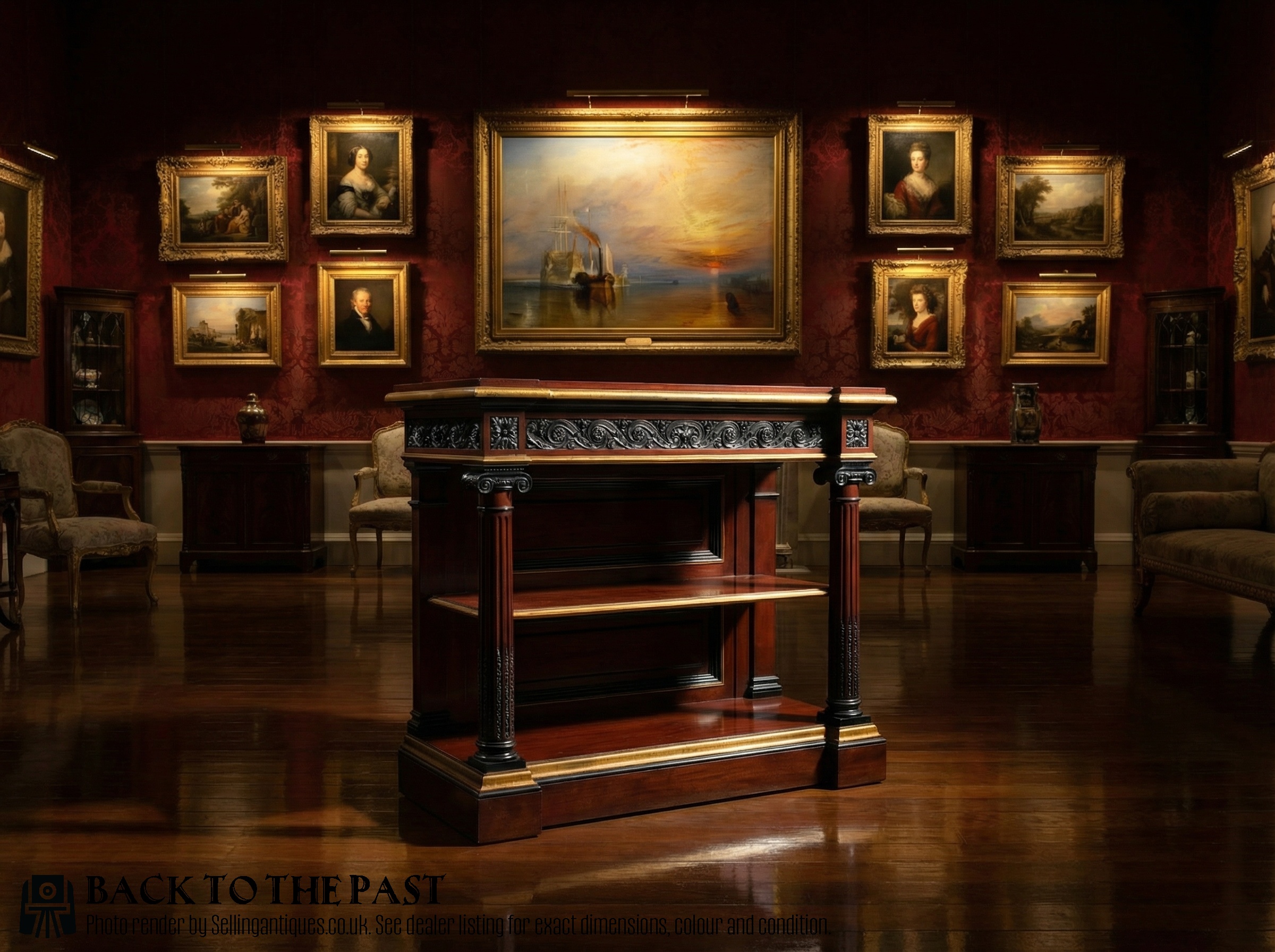
Parcel Gilt Console Table
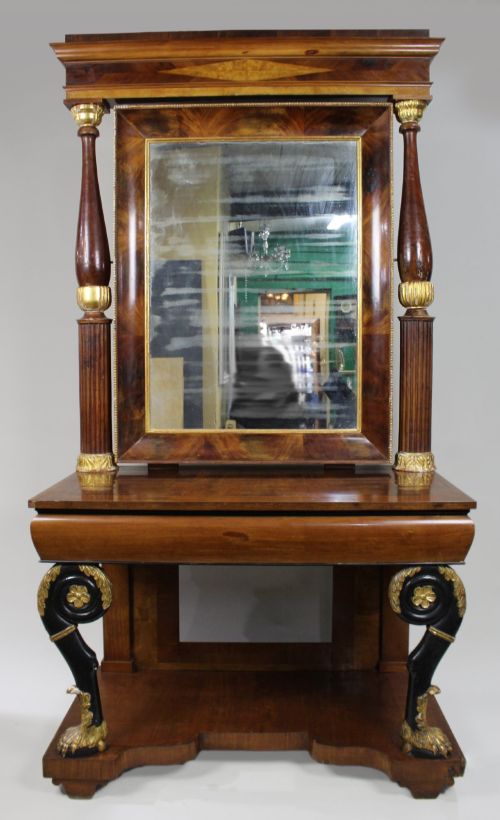
A parcel gilt console table combines a substantial wooden frame with selective gold leaf highlighting, designed to stand flat against a wall often beneath a matching pier mirror. When searching this phrase, a buyer encounters forms ranging from demilune side tables to elaborate two-tier display stands.
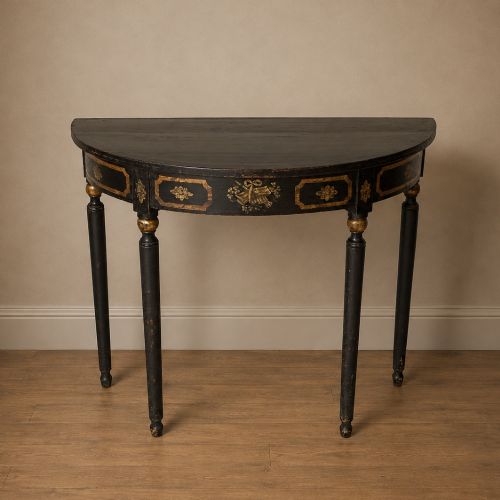
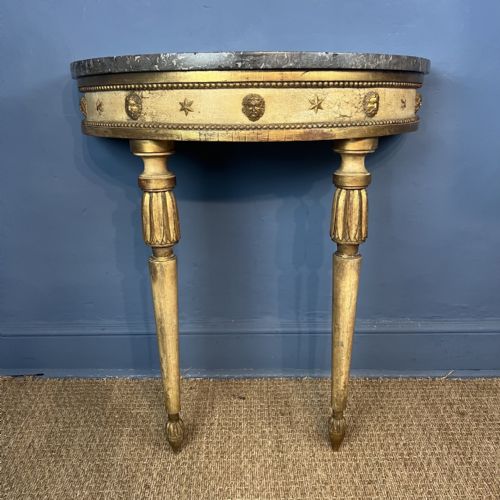
The versions met most frequently on this page date from the nineteenth century, including Regency and Victorian examples, alongside eighteenth-century Italian and later French revival pieces. These tables frequently feature contrasting painted, ebonised or polished timber grounds that accentuate the bright gleam of the gilt details.
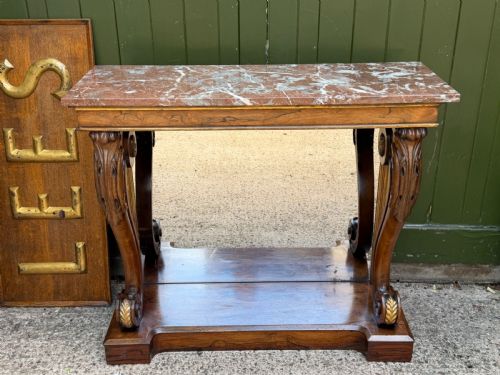
Many of these tables incorporate heavy marble slabs in white, cream or breche d alep varieties, while others rely on figured mahogany, walnut or rosewood primary surfaces. They serve practical roles as serving ledges, writing desks or display surfaces while providing distinct decorative focus within a room.
Materials and construction
Makers constructed the structural frames from timbers such as oak, walnut, mahogany, rosewood and beech, frequently applying a cream paint, black lacquer or ebonised finish to the base wood. Artisans then laid thin sheets of gold leaf onto specific carved ornaments, mouldings and borders to create the characteristic parcel gilt effect.
Heavy marble tops, fitted closely to the wooden rails, provide durable and cool working or display surfaces. Iron reinforcement and mirrored backs appear on specific large French and Regency variants to support the heavy stone slabs and reflect ambient light.
Parcel Gilt Console Table Retail Price Guide 2026
Typical asking prices for parcel gilt console table among the pieces listed under this phrase on Sellingantiques today, from the lower quarter to the upper quarter. They describe what is for sale here now, not the wider market.
Current listings feature diverse materials including marble, gold leaf, ebonised wood and wrought iron across eighteenth, nineteenth and early twentieth-century periods.
Distinctions in quality
Quality rests upon the crispness of the hand-carved wooden ornaments and the precision with which the gold leaf adheres to the underlying raised details. Finer pieces demonstrate deep, organic carving on the friezes and legs rather than cast composition ornament pinned to plain timber.
The integration of heavy, well-figured marble tops and matching pier mirrors elevates the architectural presence of the piece. Superior examples maintain balanced proportions and harmonious painted or polished ground finishes that complement the warm metallic lustre.
Gillows
The Parcel Gilt Console Table Glossary
- Console table
- A table designed to stand flat against a wall, traditionally supported at the front by legs or decorative brackets and secured to the wall at the rear. These pieces often feature narrow proportions to fit slender hallways and reception rooms.
- Pier mirror
- A tall wall mirror designed to hang in the wall space between two windows, frequently paired directly above a matching console table. They amplify light within a room and share matching decorative motifs with the table beneath.
- Demilune
- A half-moon shape used for the tops and frames of side and console tables. This curved silhouette allows the table to sit flush against a wall while projecting outward gracefully.
- Ebonised
- Timber treated with stains, dyes or finishes to imitate heavy, dense ebony wood. The resulting black surface provides a dark, uniform background that makes parcel gilt highlights stand out sharply.
Parcel Gilt Console Table: Frequently Asked Questions
Where should I place a console table?
These tables find their traditional home in entrance halls, living rooms or dining spaces where floor space is at a premium. Because they sit flat against a wall and often feature narrow depths, they occupy minimal floor area while offering a prominent display surface.
Pairing the table with a matching wall mirror enhances its visual weight and creates a complete architectural focal point. They serve well for holding lamps, decorative objects or correspondence.
How do I distinguish Regency from Victorian pieces?
Regency tables, dating from the early nineteenth century, frequently exhibit neoclassical restraint, rosewood or mahogany veneers, and restrained architectural lines inspired by ancient Greece and Rome. They often incorporate sabre legs or bold gilt mounts.
Victorian and later revival pieces, made from the mid-nineteenth century onward, tend toward heavier ornamentation, carved walnut, ebonised finishes and eclectic Rococo or Baroque revival details. These later works embrace ornate curves and complex multi-tiered structures.
Are these tables sturdy enough for daily use?
Console tables rely partly on wall fixings for total stability, particularly versions carrying heavy marble slabs or supporting tall pier mirrors. Proper installation against a solid wall ensures they remain secure.
While they handle everyday decorative display and light writing tasks securely, their antique construction means they benefit from careful handling rather than heavy physical weight.