




Paper Watercolour Coastal Art
Paper watercolour coastal art captures the shifting light and maritime atmosphere of British and European shores through delicate washes applied to paper.
Paper Watercolour Coastal Art
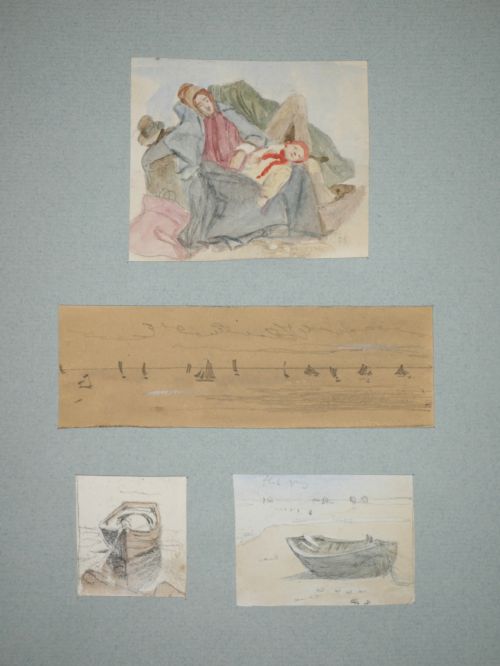
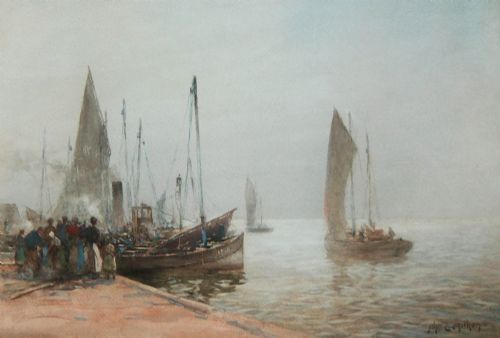
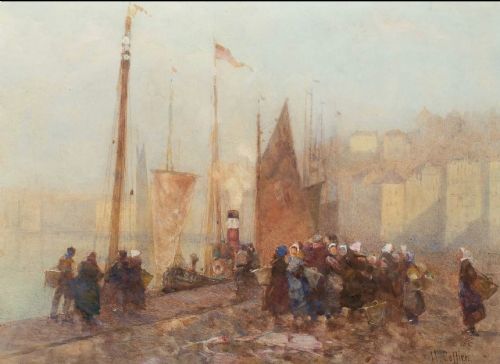
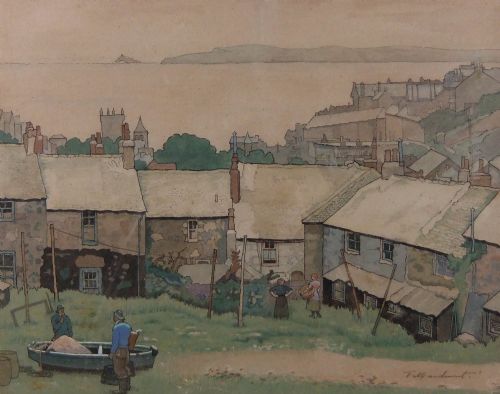
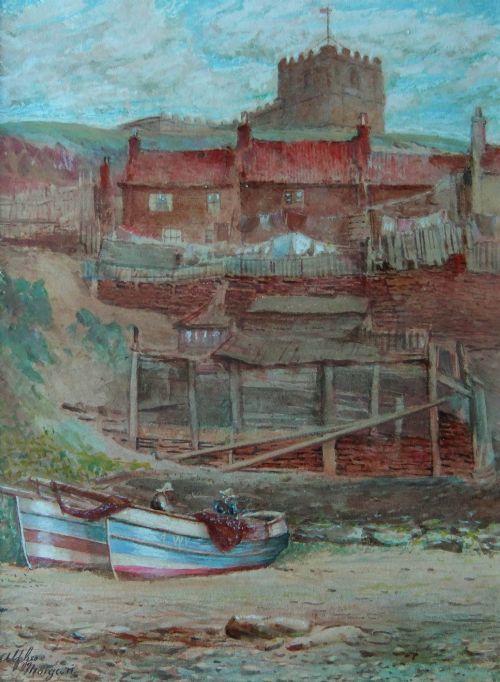
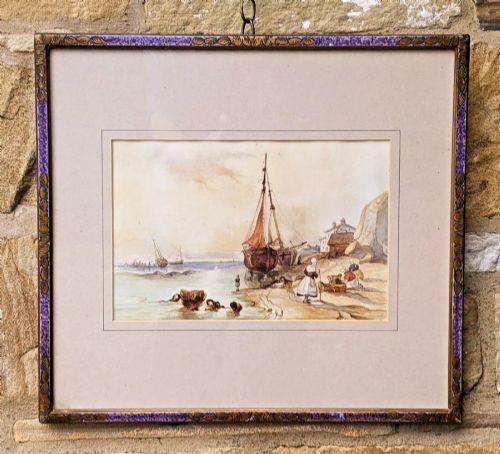
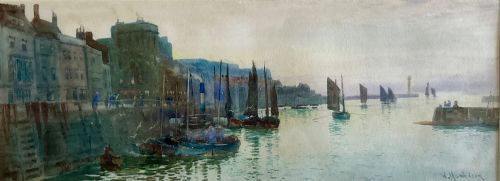
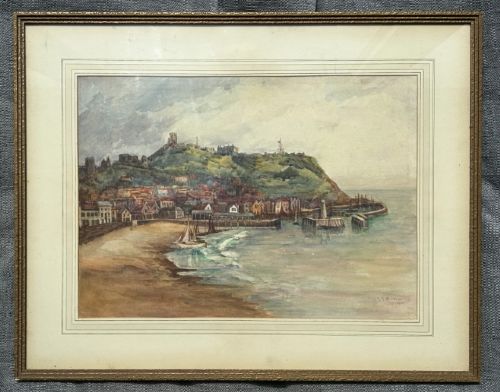
When buyers search for paper watercolour coastal art, they encounter original paintings depicting harbours, fishing boats, and coastal villages from the nineteenth and early twentieth centuries. These works record maritime life along recognisable locations such as Whitby, St Ives, and Scarborough during periods including the Victorian and Edwardian eras.
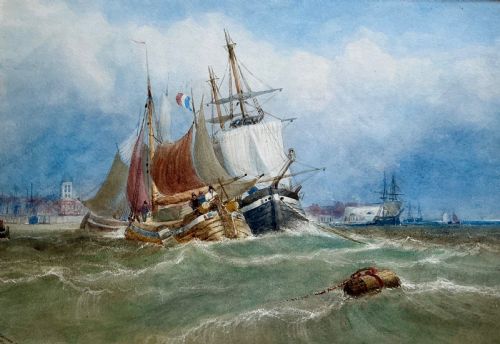
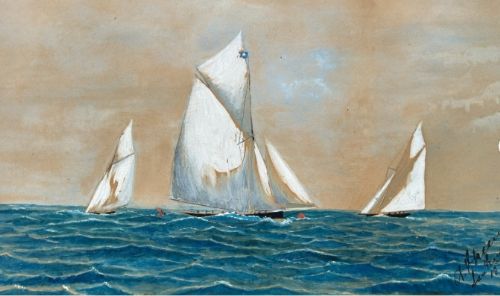
The pieces on this page range from detailed topographical views of docks and abbeys to looser impressions of shipping vessels and rolling seas. Painters utilised the fluid nature of the medium to render sea spray, cloudy skies, and wet sands with immediacy.
Most examples survive from the peak of British landscape and marine painting, framed behind glass to protect the absorbent paper support. Collectors find works by both nationally recognised practitioners and regional artists who chronicled local coastal trades.
Materials and Technique
Artists painted these watercolours using finely ground pigments suspended in water-soluble binders, applied directly to various weights of paper surfaces. Some compositions incorporate subtle lines of ink to define rigging, architecture, or shoreline contours before the application of washes.
Makers built up tone through transparent layers, often leaving areas of bare paper to represent highlights on white sails or cresting waves. Wood frames and protective glass glazing typically enclose the sheets to shield the pigments from atmospheric moisture and handling.
Materials recorded across the inventory include watercolour pigment, ink, wood, glass, and heavy paper supports.
Factors of Quality
The strength of the composition and the confidence of the brushwork distinguish superior coastal watercolours from simpler topographical records. Masterful handling conveys atmospheric conditions like mist or sea fog with minimal pigment, whereas lesser works rely on stiff outlines and flat washes.
Condition plays a major role, as paper reacts poorly to damp environments and excessive sunlight. Works that retain their original vibrant blues and greys without heavy fading or foxing spots command greater appreciation among collectors.
James Orrock·James Smetham·James E. Aitken·Hector Caffieri·Thomas Maidment·Alfred G. Morgan·William Matthison·Henry Barlow Carter·George F Pennington·William Frederick Settle·Paul Delvaux·Thomas Bush Hardy·Sir Thomas Newenham Dean·Edward Seago·Arthur Tucker·Robert Leslie Howey·Tom Clough·William Tuck·Colin H Greenwood·John McDougal·James Watson·George Hamilton Constantine·Frederick William Hattersley·James Thomas Watts·John Mitchell
The Paper Watercolour Coastal Art Glossary
- Watercolour pigment
- Finely ground colour particles mixed with a water-soluble binder such as gum arabic. This medium allows for transparent washes that reveal the texture of the paper underneath.
- Foxing
- Small brownish spots that frequently appear on old paper due to chemical reactions in the pulp or exposure to humidity. These marks are common in nineteenth-century works on paper.
- Coble
- A traditional type of open fishing boat native to the north-east coast of England, often featured in regional marine paintings. These vessels possess flat floors for launching from shallow beaches.
- Wash
- A fluid layer of diluted watercolour paint spread evenly across the paper to create skies, water, or distant headlands. Artists control the transparency by adjusting the water content.
- Marine art
- Paintings and drawings that focus primarily on ships, harbours, coastal views, and the open sea. This genre encompasses both documentary shipping records and atmospheric coastal landscapes.
Paper Watercolour Coastal Art: Frequently Asked Questions
How should I frame an old watercolour?
Old watercolours require framing behind glass with acid-free mounts to prevent the paper from touching the glazing. This separation stops condensation from adhering the delicate pigment layer to the glass.
Keep these pieces away from direct sunlight to prevent the watercolour pigments from fading over time. Professional conservation framing preserves the paper support for future decades.
What subjects appear in these coastal paintings?
The artworks document bustling fishing harbours, sailing vessels negotiating choppy seas, and quiet coastal towns. Scenes often feature specific locations along the Yorkshire and Scottish coasts, recording local maritime industries.
Artists frequently depicted daily activities such as spreading nets, launching boats at low tide, and shipping traffic entering busy ports.
How do I identify the date of a watercolour?
Signatures, dates inscribed by the artist, and framing styles often provide the clearest indication of a piece's period. The attire of figures depicted in the landscape also helps narrow down the decade.
Paper characteristics and watermark stamps can further assist in dating works from the nineteenth and early twentieth centuries accurately.
Are these paintings original works?
The listings consist of original hand-painted watercolours created directly on paper by individual artists. Each piece represents a unique application of pigment rather than a mechanical reproduction or print.
Signatures and brushstroke textures confirm the hand-painted nature of these historical works.