


Paper Sporting Artwork
When you search for paper sporting artwork, you are exploring a rich tradition of equestrian, racing, and field sports captured on paper through various historic print and painting mediums.
Paper Sporting Artwork
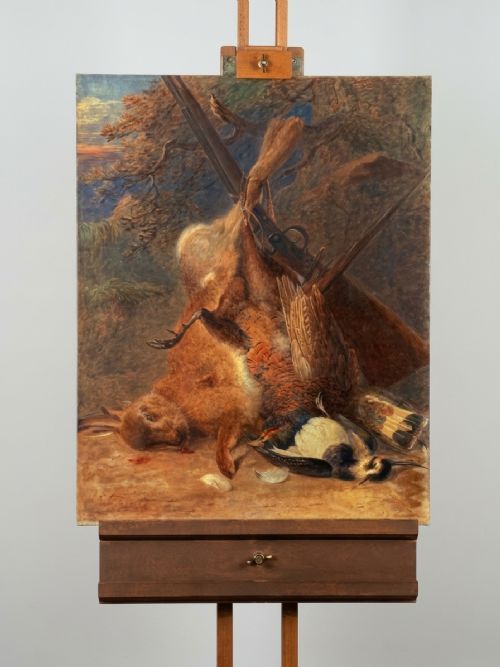
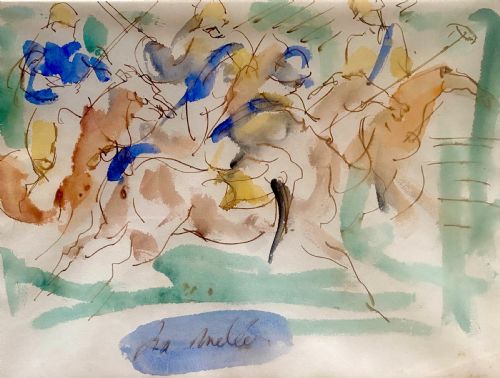
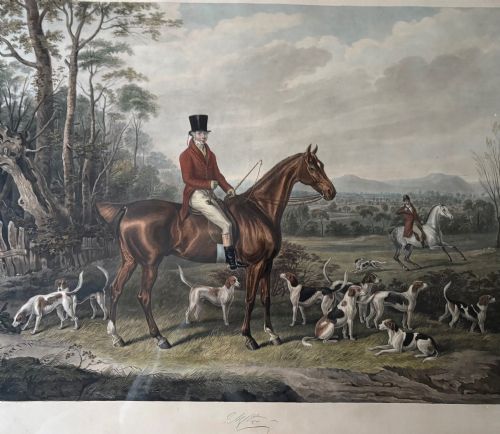
Paper sporting artwork encompasses a wide range of depictions capturing horses, hounds, game, and athletic pursuits on delicate supports. These pieces bridge the worlds of fine art and sporting heritage, reflecting centuries of enthusiasm for equestrian events, hunting, and racing.
You are most likely to meet nineteenth-century hand-coloured engravings, early twentieth-century prints by notable military and sporting artists, and original watercolours dating from the Georgian era through to the mid-twentieth century.
The selection ranges from intimate pencil drawings and pastels to large framed prints, lithographs, and aquatints that once hung in country houses, clubs, and studies.
Materials and Techniques
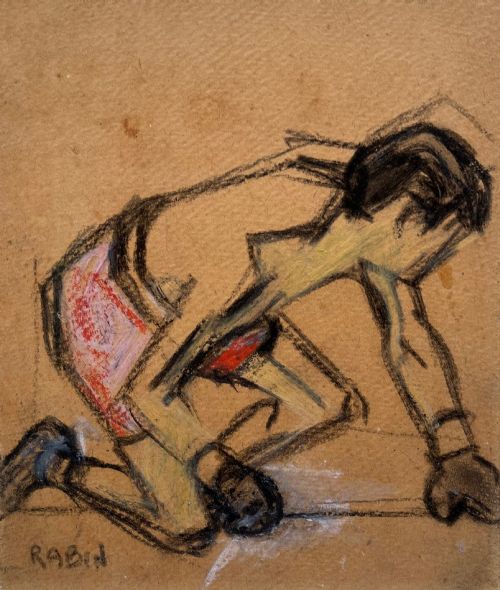
Makers utilised high-quality rag paper, coloured paper, and card as the primary foundation for intricate line work and washes. Artists and printmakers applied black and coloured inks, watercolour pigment, bodycolour, pencil, chalk, and pastel to build up depth and movement in the subjects.
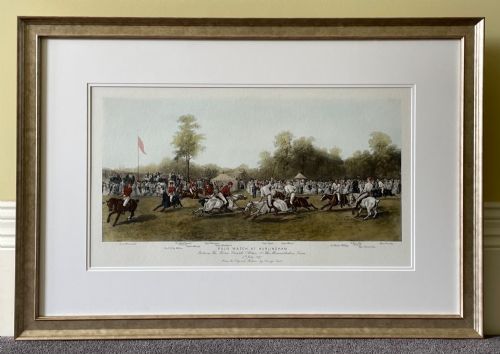
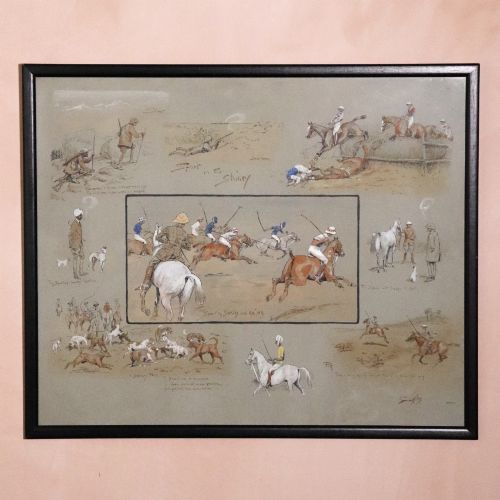
Printmakers employed copperplate engraving, lithography, chromolithography, and aquatint techniques to reproduce dynamic scenes of polo matches, horse races, and hunting meets for wider distribution. Many of these printed sheets subsequently received careful hand-colouring with watercolours to enhance the finished appearance.
Object types span wall art, paintings, framed prints, watercolour paintings, framed artwork, prints and engravings, and original artwork.
Distinctions in Quality
The finest examples display a masterly understanding of animal anatomy, movement, and the atmospheric tension of a race or hunt. A skilled hand captures the sinew of a galloping horse or the eager stance of a hound with swift, confident strokes rather than stiff approximation.
Condition and preservation heavily influence the standing of a piece, particularly regarding the vibrancy of original watercolours or hand-coloured pigments against the paper support. Strong provenance, crisp plate marks on engravings, and the sensitivity of the artist's line separate standard decorative plates from truly compelling works.
George Sydney Shepherd·Samuel Rabin·Snaffles·Anne Goldthwaite·Herbert Dicksee·Michael Lyne·Francis Wheatley·James Dobie·John Sanderson Wells·William J Hodgson·William Bunbury·J F Herring
The Paper Sporting Artwork Glossary
- Aquatint
- An intaglio printmaking technique that produces areas of tone rather than lines, closely resembling watercolour washes. It was widely used in the eighteenth and nineteenth centuries to reproduce sporting paintings.
- Lithography
- A planographic printing process based on the antipathy of oil and water, allowing artists to draw directly onto a stone or metal plate. Chromolithography adds multiple colour stones for richer hues.
- Bodycolour
- Watercolour paint mixed with a white pigment to make it opaque, providing solid areas of colour and highlights. It was frequently combined with transparent washes on paper.
- Stipple engraving
- A method of engraving that uses dots rather than continuous lines to create subtle gradations of light and shadow. This technique was popular for rendering soft facial expressions and textures in Georgian prints.
- Plate mark
- The impression left on paper by the edge of a metal printing plate under pressure during the printing process. Its presence confirms an authentic antique print from an engraved plate.
Paper Sporting Artwork: Frequently Asked Questions
What subjects are included in these artworks?
The selection covers a diverse array of athletic and field pursuits, with a strong emphasis on horse racing, polo matches, fox hunting, shooting, and cricket. You will also find depictions of boxing, billiards, and football.
Artists focused heavily on the dynamic interaction between humans and animals, capturing the tension of the final furlong or the orderly chaos of a hunt meet.
How should I frame and display these pieces?
Paper and watercolour works require careful framing behind glass with acid-free mounts to prevent direct contact with the glazing. This protects the delicate pigments and paper fibres from atmospheric damage.
Keep them away from direct sunlight and damp environments, as prolonged exposure to UV light will cause watercolours and hand-coloured inks to fade significantly over time.
How do I distinguish an original print from a reproduction?
Antique prints usually display plate marks, distinct paper textures, and microscopic evidence of ink resting on the surface rather than flat modern dot patterns. Close inspection with a loupe reveals the characteristic dot clusters of modern offset lithography if a piece is a later copy.
Original watercolours and drawings will show brush texture, pencil guidelines, and variations in pigment density that mechanical printing cannot replicate.
What periods are best represented?
The works span from the eighteenth century through the Georgian and Victorian eras into the Edwardian period and mid-twentieth century. Nineteenth-century aquatints and lithographs form a substantial portion of the available printed material.
Early twentieth-century original prints and watercolours capture a distinct golden age of sporting illustration, particularly through military and field-sports imagery.