


Paper Botanical Painting
When you search for paper botanical painting, you enter a world of delicate watercolours and gouache studies capturing flora across centuries.
Paper Botanical Painting
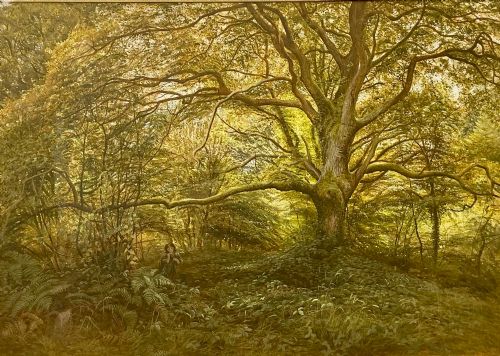
A paper botanical painting brings floral and garden studies into interior spaces, capturing blooms through precise observation and painterly skill. These works span centuries of artistic endeavour, focusing on subjects ranging from wild woodland paths to carefully arranged vases of roses.
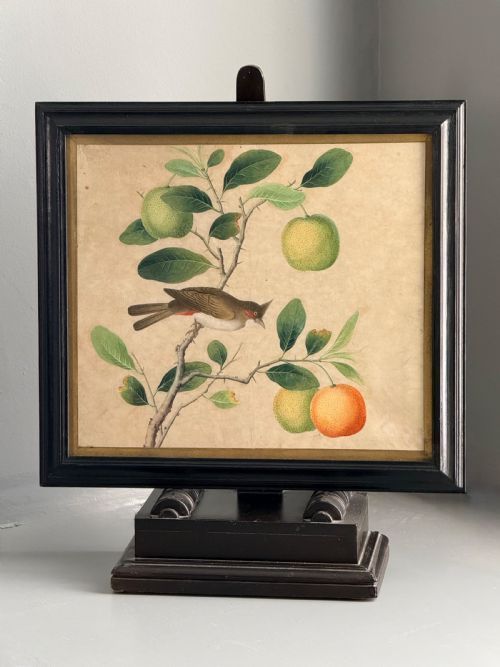
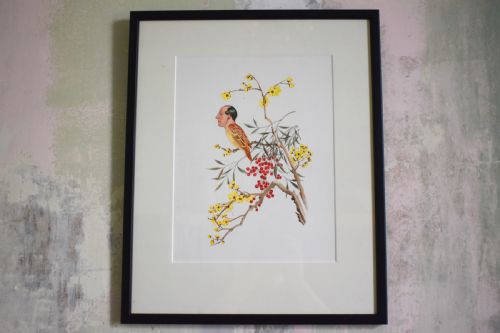
The selections available here lean heavily towards British and Victorian traditions, alongside distinct examples from Chinese export workshops. Collectors encounter framed artworks rendered on paper or pith paper, presenting floral still lifes and garden scenes executed with fine detail.
How they were made
Artists utilise watercolour pigment and gouache applied directly to paper or prepared surfaces like pith paper and silk. The handling of these water-based media allows for transparent washes and opaque highlights that define petals and foliage with striking accuracy.
Framed works often combine wood and glass to protect fragile paper supports from environmental damage. Ink outlines occasionally underpin the watercolour paint, providing structural clarity beneath the botanical studies.
Several artists clearly spent more time observing garden polyanthus and wallflowers than talking to other humans.
What varies in quality
The distinction between standard examples and the finest works rests upon the precision of botanical rendering and the sensitivity of the colour palette. Masterful control of watercolour pigment allows artists to capture the transient delicacy of fresh blooms.
Compositional balance and the preservation of the paper support also determine the standing of each piece. Strong works maintain vibrant pigment tones without excessive fading from light exposure.
Bonomi Edward Warren·James Tower·Henrietta Creswell·William Edward Fox·Lester Sutcliffe·Kershaw Schofield·Lilian Stannard·William Hough·Edith Barrow·Rowland Henry Hill·Grace Hastie·Phyllis I Hibbert·Lena M Alexander·Marian Chase·Alfred W Parsons·Jabez Bligh·Owen Bowen·Charlotte Isa James·Alice Macallan Swan·Beatrice Parsons·Marion Broom·Edith Alice Andrews·John Sherrin·Minnie Smythe
The Paper Botanical Painting Glossary
- Gouache
- An opaque water-based paint that provides solid, matte areas of colour. It often works alongside transparent watercolour to create highlights in floral studies.
- Pith paper
- A delicate material cut from the pith of the Tetrapanax papyrifer plant. It absorbs watercolour and gouache with a distinctive velvety texture.
- Watercolour pigment
- Finely ground colour particles suspended in a water-soluble binder. This medium forms the foundation of traditional botanical illustration.
- Still life
- An artwork depicting inanimate subject matter, frequently featuring cut flowers in jugs, bowls of fruit, or garden gatherings.
Paper Botanical Painting: Frequently Asked Questions
How should I hang these paintings?
Keep works away from direct sunlight to prevent the watercolour pigments and paper supports from fading over time.
Use professional framing with conservation glass to protect delicate painted surfaces from moisture and dust.
What subjects do these artists paint?
The works primarily feature floral studies, garden scenes, and still lifes containing roses, anemones, and woodland blossoms.
Compositions range from single botanical specimens to elaborate arrangements in ceramic jugs and baskets.
How do I identify Victorian examples?
Victorian pieces frequently display meticulous attention to botanical accuracy combined with rich, traditional watercolour techniques.
Signatures, framing styles, and the specific types of paper used often point towards nineteenth-century origins.
What is pith paper?
Pith paper is a fragile natural material derived from plant stems, historically used for intricate Chinese export paintings.
It possesses a unique spongy texture that absorbs water-based pigments to produce velvety, luminous colour effects.