





Paper Artwork River Scene
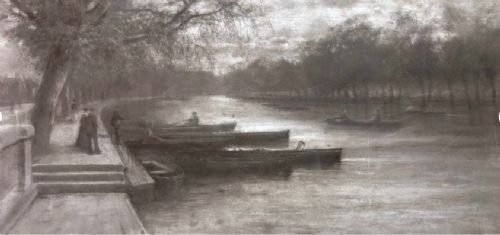
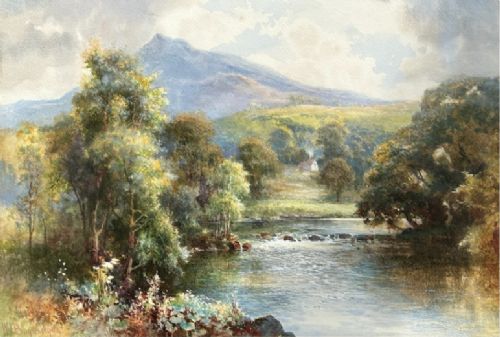
When you search for paper artwork river scene, you encounter British watercolours and drawings capturing waterways from the eighteenth to the twentieth century.
Paper Artwork River Scene
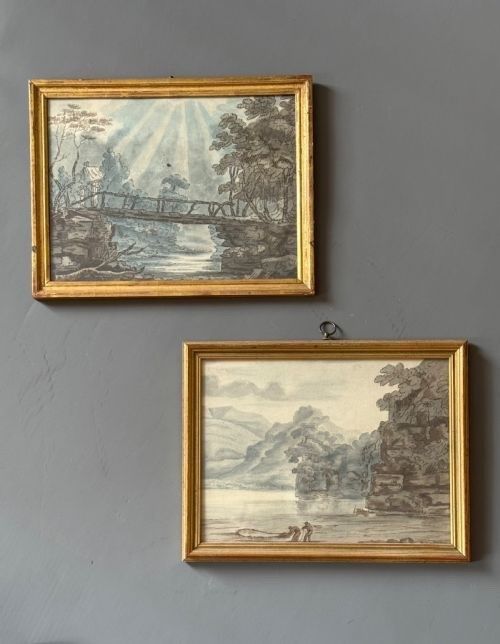
These pieces comprise original watercolours, ink drawings, and charcoal works on paper depicting rivers, canals, and marine subjects. The selection spans the eighteenth century through to the mid twentieth century, with a strong representation of Victorian and Edwardian works.
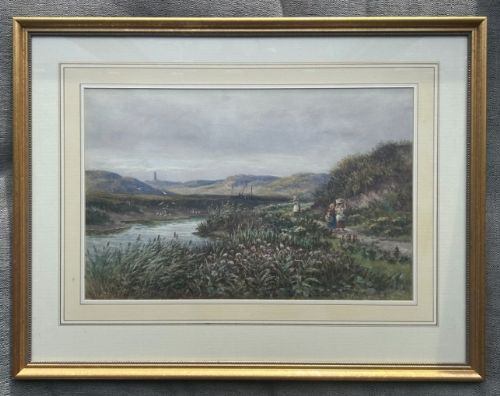
Most examples originate from British artists recording identifiable locations such as the River Thames, the Norfolk Broads, and Welsh valleys. Buyers will find framed landscape and cityscape watercolours capturing rural riverbanks, bridges, and bustling urban waterfronts.
The assortment includes finished exhibition pieces alongside smaller plein-air studies and pen and ink sketches. Subjects range from tranquil pastoral streams with fishermen to atmospheric depictions of London maritime scenes and Dutch waterways.
Materials and technique
Artists relied primarily on watercolour pigment applied to absorbent paper sheets, often supported by preliminary pencil or charcoal underdrawing. Pen and ink work frequently defined architectural elements and sharp contours in earlier Georgian and Victorian examples.
Compositions were protected behind glass within wooden frames, which preserved the delicate paper and water-soluble pigments from atmospheric moisture and handling. Washed pigments were layered to build transparent tones for water, skies, and foliage.
Periods represented span from the 18th Century through to the 1950s.
Factors determining quality
Quality rests upon the confidence of the brushwork and the artist's ability to capture light and movement on the water's surface. Stronger works display assured handling of perspective in architectural and natural river settings.
The reputation of the painter and documentation of exhibition history elevate specific pieces above anonymous topographical studies. Condition remains vital, particularly the absence of heavy foxing or fading to the watercolour pigments.
Alfred Young Nutt·William Joseph Boyes·Henry John Kinnaird·Thomas Bush Hardy·Robert Winchester Fraser·Charles Harmony Harrison·Percy Lancaster·Walter Duncan·Frank W Scarborough·Frederick George Coleridge·Ebenezer Wake Cook·Henry John Sylvester Stannard·Frank Wasley·Carleton Grant·William Mark Fisher·John Joseph Cotman
The Paper Artwork River Scene Glossary
- Watercolour
- A paint consisting of colour suspended in a water-soluble binder, used on paper to create transparent washes.
- Topography
- The detailed mapping or depiction of particular physical locations and regional landscapes in art.
- Foxing
- Brown spots and discolouration on old paper caused by chemical reactions in the pulp over time.
- Wash
- A thin, transparent layer of diluted watercolour pigment spread across the paper to represent skies or water.
Paper Artwork River Scene: Frequently Asked Questions
How should I hang these watercolours?
Keep them away from direct sunlight to prevent the watercolour pigments from fading over time.
Ensure they hang on interior walls with stable humidity levels to protect the paper and wooden frames.
Are these works signed by the artists?
Many examples feature signatures, monograms, or period inscriptions on the front or reverse of the paper. Other historical works remain unsigned yet carry strong stylistic attributions to particular schools.
Dealer records and exhibition labels often provide the primary documentation for attribution.
What is the difference between an ink drawing and a watercolour?
Ink drawings utilise pen lines and monochromatic shading to construct form and shadow on paper.
Watercolour employs applied pigments and washes to introduce colour and atmospheric light to the scene.
How do I identify a Victorian river scene?
Victorian works often display characteristic clothing on figures, distinct architectural details, and specific handling of atmospheric moisture. The framing and framing materials from the period also offer helpful clues.
Subjects frequently celebrate British waterways during a period of rapid industrial and recreational use.