
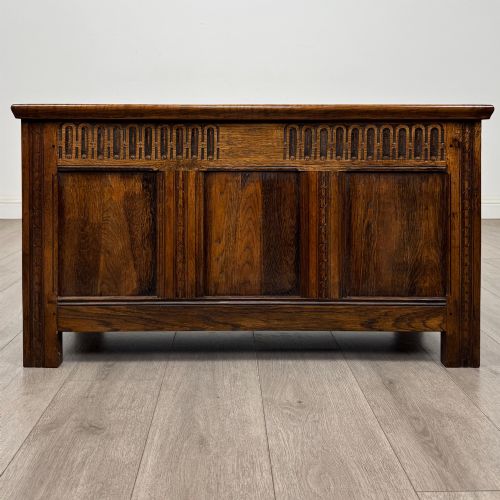


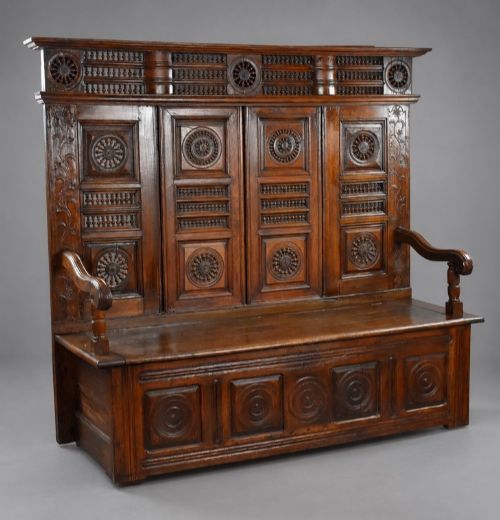
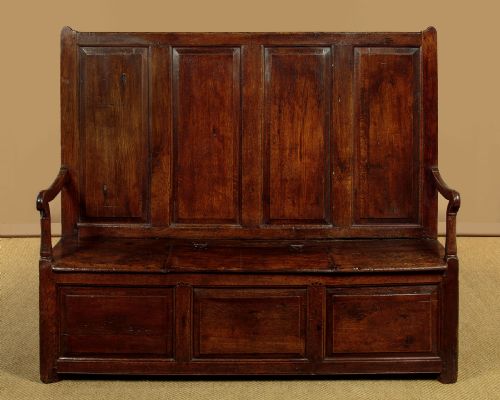
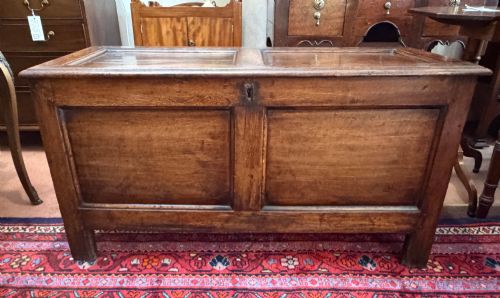
Panelled Wooden Coffer
A panelled wooden coffer is a sturdy domestic chest built to store linens and valuables, prized for centuries of honest craft.
Panelled Wooden Coffer
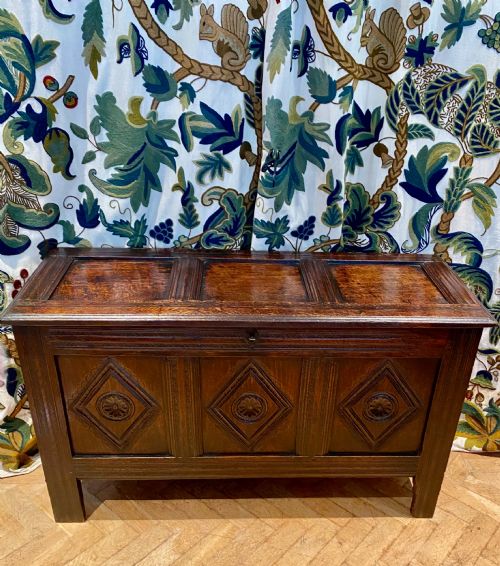
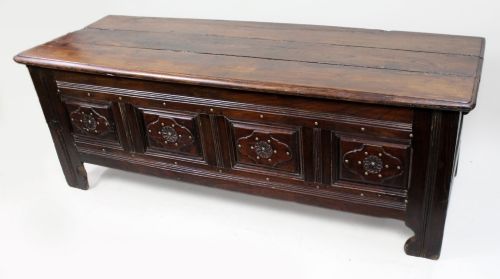
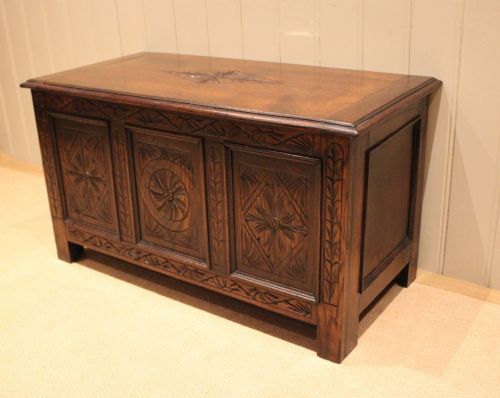
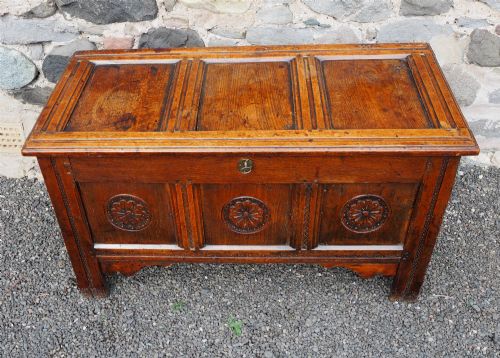
A panelled wooden coffer serves as a traditional storage box constructed with framed panels to prevent timber from splitting as it ages. When you search for a panelled wooden coffer, you encounter pieces spanning from the seventeenth century through to later revival periods, alongside regional variants like mule chests and box settles.
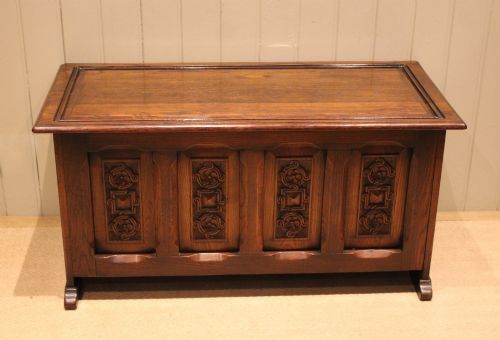
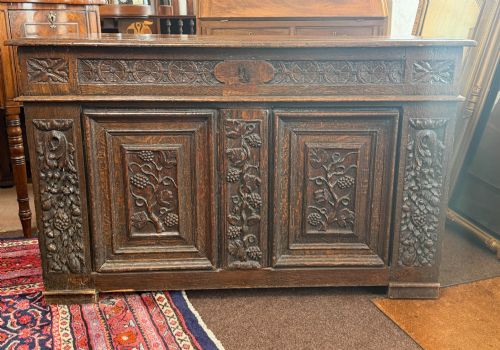
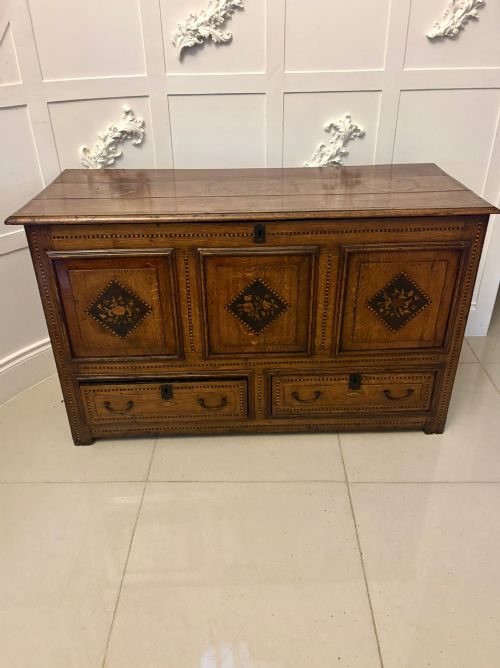
The seventeenth-century examples dominate the early periods, often displaying deep carving and pegged joints characteristic of vernacular English and Welsh furniture. Later eighteenth-century versions introduce simpler lines or occasional marquetry inlay, while nineteenth- and twentieth-century revivals replicate these historic forms using older framing methods.
Construction and Materials
Carpenters built these chests primarily using solid oak, supplemented occasionally by ash or pine for internal elements and secondary framing. The principal structure relies on frame-and-panel construction, where a grooved outer frame holds floating central panels that expand and contract with seasonal humidity changes.
Joinery depended on mortise and tenon joints secured with wooden pegs rather than metal nails, providing inherent strength. Iron hinges and brass fittings were added to secure the lids, while surface decoration often involved gouge carving, panel moulding, or wood inlay.
Some seventeenth-century chests still bear the faint chalk marks left by carpenters to guide the assembly of joints.
Judging Quality and Proportion
Quality reveals itself in the thickness of the timber, the tightness of the joinery, and the integrity of the original structure. Superior pieces retain their original floorboards, lids, and hinges without extensive timber replacement or unsympathetic modern reinforcements.
The depth and crispness of the hand-carved ornamentation separate utilitarian storage boxes from pieces commissioned for wealthier households. Proportion also matters, with smaller proportions and pleasing patination commanding distinct interest among collectors.
The Panelled Wooden Coffer Glossary
- Panelled coffer
- A storage chest constructed with a structural wooden frame enclosing fitted panels. This method prevents the wood from warping significantly over time.
- Mule chest
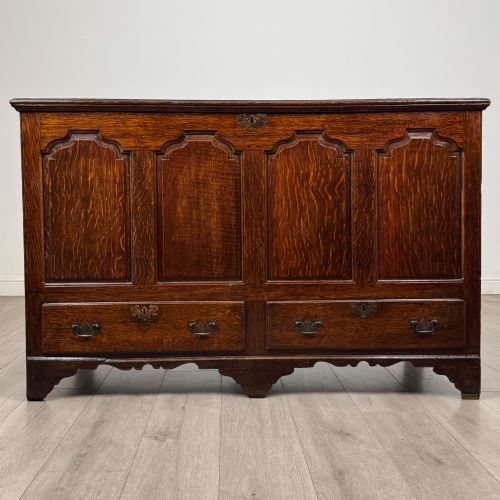
- A storage chest fitted with one or more drawers at the base beneath the main compartment. They combine the traditional coffer top with lower drawer storage.
- Box settle
- A high-backed wooden bench featuring a hinged seat that lifts to reveal storage space underneath. These served double duty as seating near hearths and secure household storage.
- Coffer bach
- A small Welsh box or coffer traditionally made as a gift or dowry piece. The term translates simply from Welsh as small coffer.
- Marquetry inlay
- Decorative patterns formed by fitting contrasting veneers or solid wood pieces into prepared recesses on the surface. This technique adds pictorial or geometric detail to the panels.
Panelled Wooden Coffer: Frequently Asked Questions
What were panelled wooden coffers used for originally?
These chests served primarily to store valuable household textiles, church vestments, and legal documents securely away from damp floors and pests. Because houses lacked fitted closets, a heavy timber box with a secure lock acted as the main wardrobe and safe.
Over time, they adapted to hold blankets, family silver, and winter clothing. In regional homes, smaller versions also functioned as travel trunks or dowry chests.
How do I tell a seventeenth-century coffer from a later revival piece?
Seventeenth-century pieces display hand-riven timber, irregular tool marks, and traditional pegged joinery that reflects period hand-tool technology. The wood exhibits deep natural patination and wear patterns accumulated over centuries of use.
Revival pieces from the twentieth century often use machine-sawn lumber, standardised modern screws, or uniform dark staining applied to mimic age. Examining the underside and interior boards usually reveals the consistency of the tool marks.
Can I use a coffer as a coffee table?
These sturdy chests make practical coffee tables because their flat tops provide a stable surface for books and trays while offering hidden interior storage. Their solid construction easily bears daily living requirements.
Ensure the height matches your seating and check that the lid opens cleanly if you plan to store items inside regularly.
What is a mule chest?
A mule chest is essentially a standard coffer with the addition of one or more drawers built into the base section. This hybrid design allowed users to access smaller items without lifting the heavy top lid.
They appeared frequently during the eighteenth century as domestic storage needs grew more complex.