

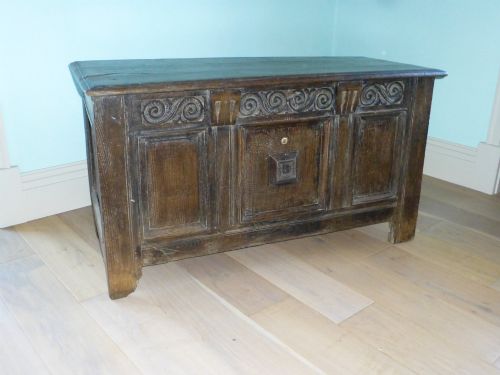
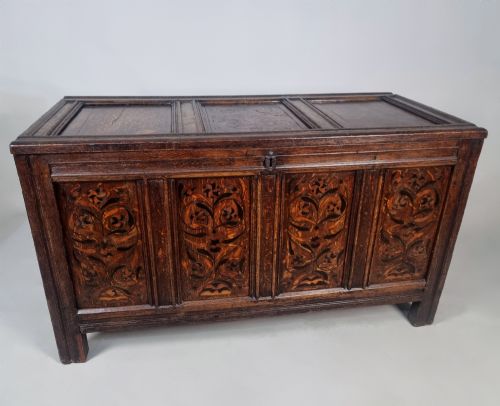
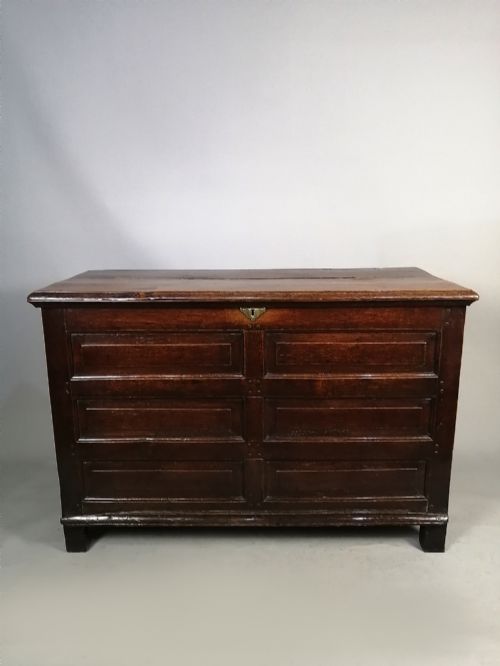
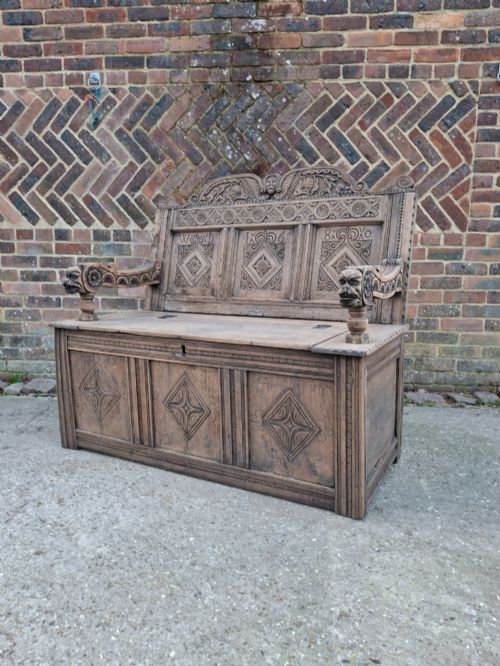

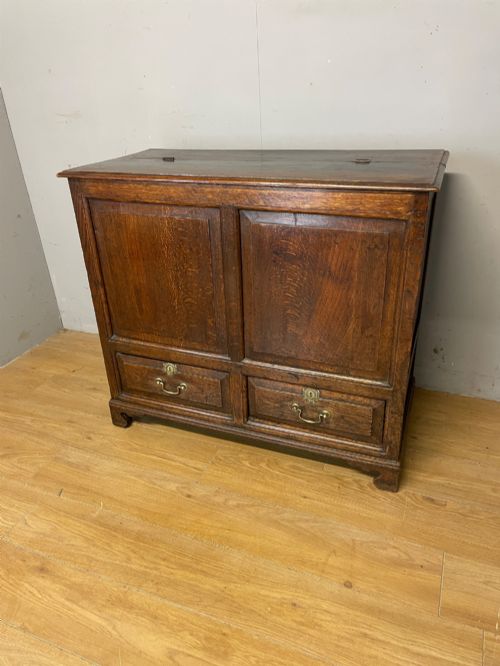
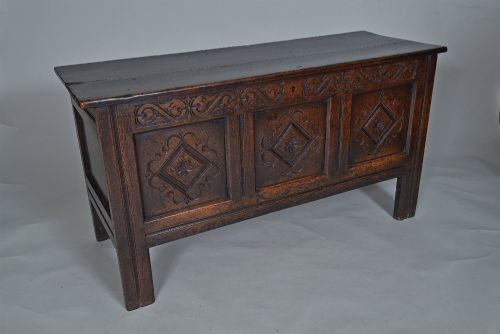

Panelled Storage Box
A panelled storage box brings heavy timber and centuries of domestic utility into a room, offering both seating and security.
Panelled Storage Box
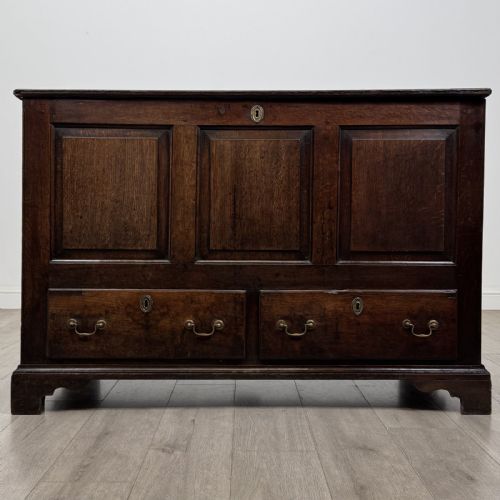
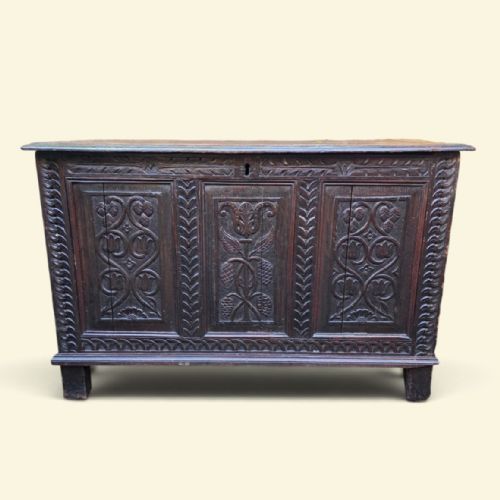
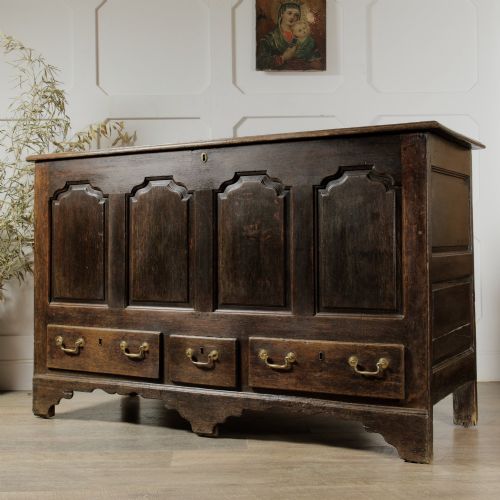
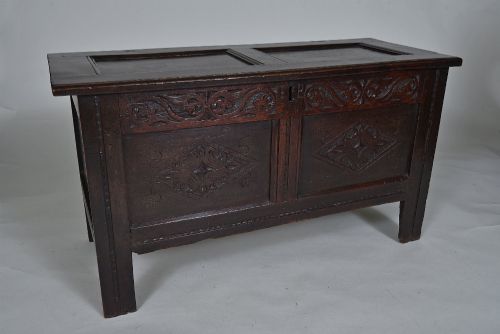
The selections span from the 17th century through the Georgian and Edwardian periods, reflecting centuries of practical woodworking tradition. Coffers and trunks dominate the forms, supplemented by settles and storage benches with hinged seats or drop fronts.
Origin details stretch from English country workshops to French provincial and Welsh makers, demonstrating regional variations in construction. Smaller proportions and pieces on stands appear alongside large, heavy coffers intended for principal rooms.
Materials and construction
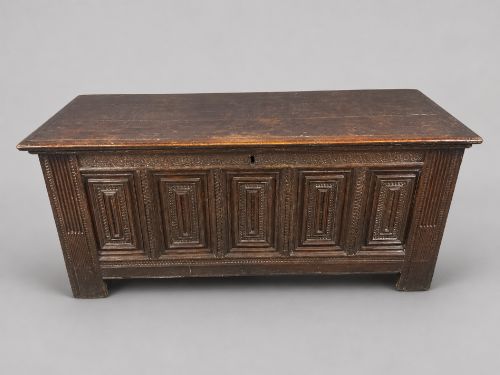
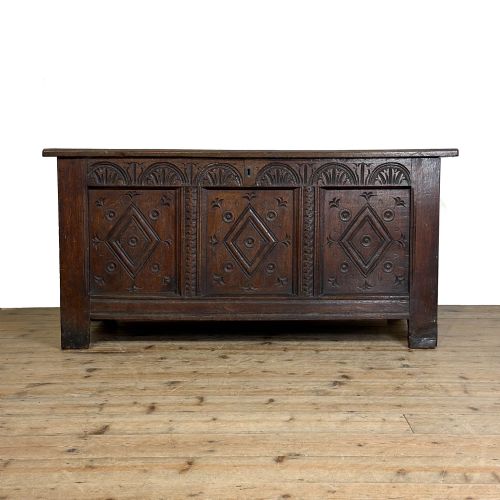
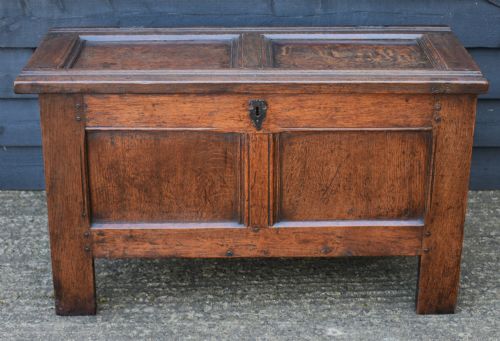
Carpenters built these boxes using solid timber framework, primarily oak, joined with pegged mortise and tenon joints to create rigid panelled walls. Iron hinges and brass fittings provided the functional hardware for lift-up lids, while timber inlay and marquetry added decorative surface pattern.
Carving formed the primary method of ornamentation on the front panels and stiles, utilising geometric patterns, foliage, and architectural motifs. Surfaces received hand-finishing that developed deep patination over generations of handling and wax polishing.
Panelled Storage Box Retail Price Guide 2026
Typical asking prices for panelled storage box among the pieces listed under this phrase on Sellingantiques today, from the lower quarter to the upper quarter. They describe what is for sale here now, not the wider market.
Some early joined chests still bear faint carpenter's chalk marks hidden inside their lids, left behind centuries ago.
Distinctions in quality
The grade of a panelled storage box rests on the crispness of its original carving and the integrity of its joined timber frame. Pieces retaining their original floor timbers, hinges, and lid boards command greater regard among collectors.
Subtleties in proportion and the presence of marquetry inlay or specialised forms like mule chests elevate certain examples above standard blanket boxes. The depth of the colour in the timber and the retention of early surfaces distinguish superior items.
The Panelled Storage Box Glossary
- Coffer
- A heavy wooden chest used for storing valuables, linen, or documents. These boxes typically feature a flat lid that could also serve as a bench.
- Mule chest
- A storage chest featuring one or more drawers beneath the main compartment. This form bridges the traditional coffer and the chest of drawers.
- Marquetry inlay
- Decorative patterns formed by fitting contrasting pieces of wood veneer into the primary timber surface. This technique creates elaborate pictorial or geometric designs.
- Stile
- The vertical upright member in panelled construction. Stiles flank the recessed panels and provide structural support to the frame.
- Settle
- A wooden bench with high panelled back and solid arms, often incorporating a box seat for storage. These items combined seating with domestic containment.
Panelled Storage Box: Frequently Asked Questions
What went into a coffer?
Historically, families used these heavy boxes to safeguard textiles, woollens, church plate, and important documents from damp and theft.
Over time, their contents shifted towards household linens and blankets, leading to the alternative name of blanket box.
How do I date an oak chest?
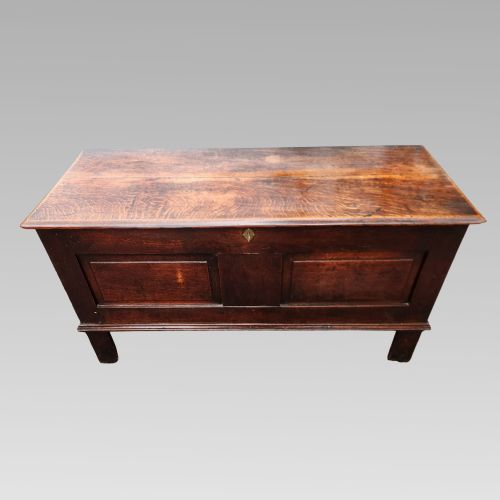
Dating relies on observing construction methods, such as hand-split timbers, pegged joints, and the evolution of carved decorative motifs. Early 17th-century pieces often display geometric strapwork, whereas later Georgian examples show simpler panel layouts.
Hardware styles, including wrought iron strap hinges and early brasses, provide additional clues to the era of manufacture.
Where should I place a storage box?
These robust pieces function effectively at the foot of a bed, in a hallway as a seating bench, or against a living room wall. Their flat lids allow them to serve double duty as display surfaces for lamps or decorative objects.
Positioning them away from direct heat sources protects the old timber from drying and splitting.
What is a mule chest?
A mule chest is a hybrid form that adds one or more drawers to the bottom of a traditional top-opening coffer. This layout made frequently used items more accessible without requiring the user to lift the main lid.
They emerged in the 18th century as domestic storage needs became more complex.