
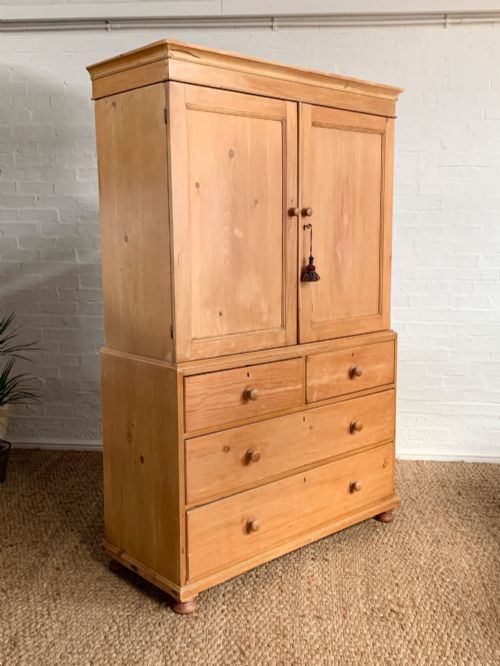
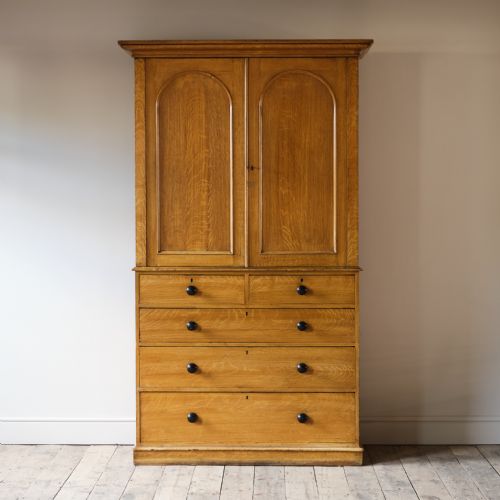
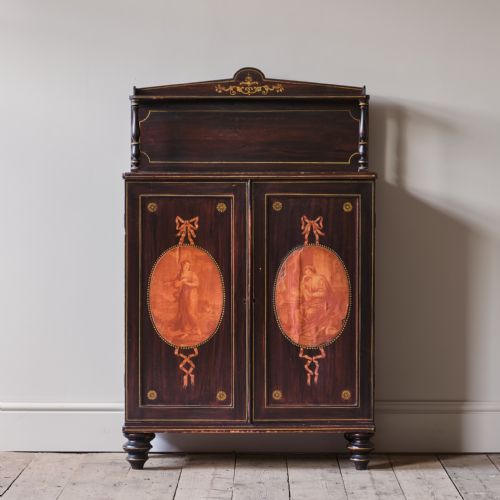
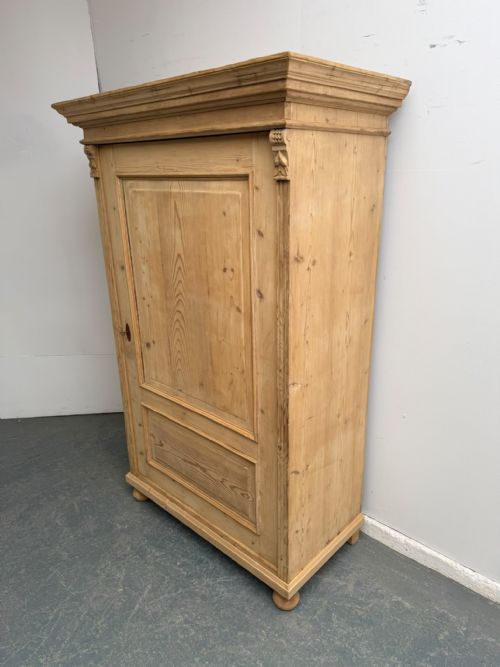
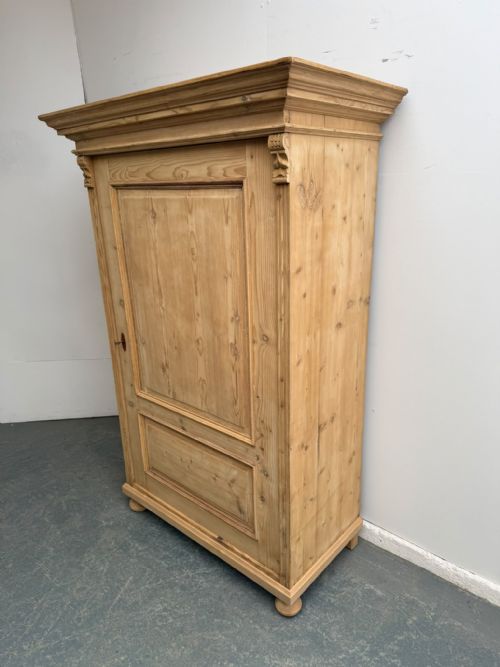


Panelled Pine Cabinet
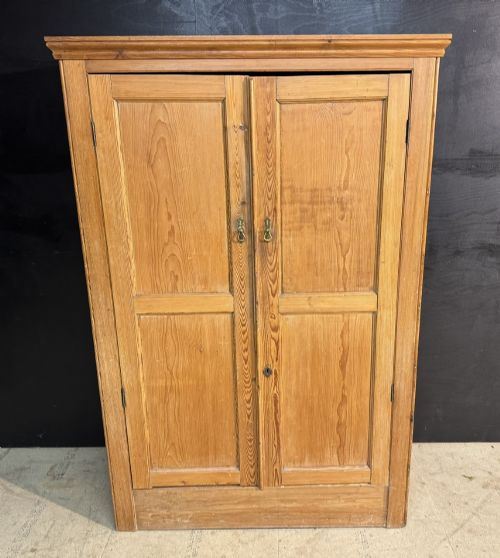
These panelled pine cabinets bring sturdy utility and honest grain to domestic storage, ranging from country larders to refined Georgian presses.
Panelled Pine Cabinet
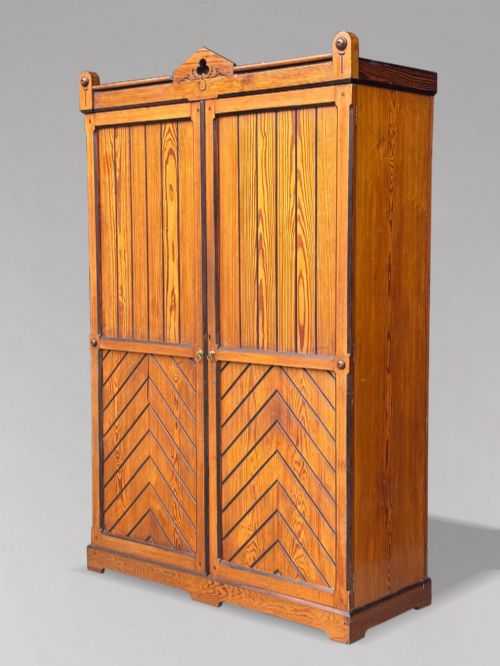
When searching for a panelled pine cabinet, a buyer encounters a diverse group of practical storage pieces built across several centuries. The selection spans robust 18th century examples and generous Victorian wardrobes, alongside country cupboards originating from English, Scottish, French, and Scandinavian workshops.
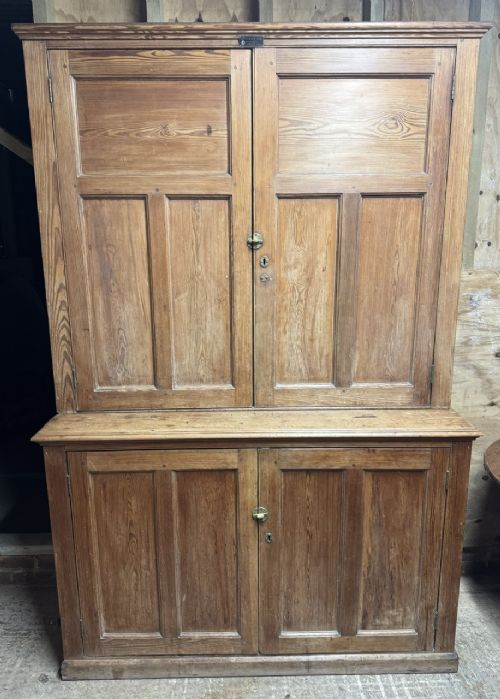
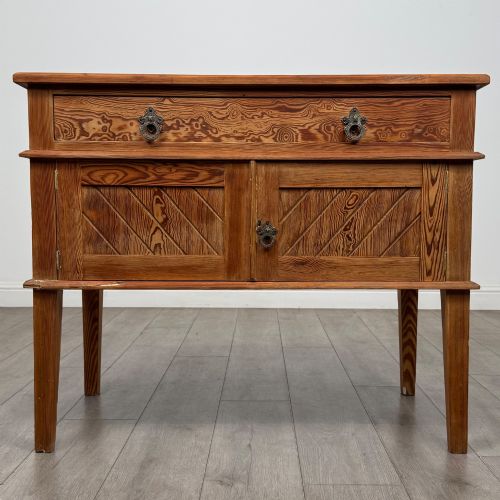
The most frequent form on this page is the upright storage cupboard or wardrobe featuring panelled doors. These items appear in various guises, including corner cabinets, bedside units, and large housekeepers presses, reflecting the widespread domestic need for enclosed storage.
Origins vary widely between local English country pieces and continental examples, particularly from Sweden. Buyers find both natural waxed finishes and pieces bearing original or simulated paintwork, such as simulated rosewood or oak.
What varies in quality
Quality in these storage pieces rests primarily on the integrity of the timber, the subtlety of the proportions, and the survival of original surface treatments. Superior examples display tight-grained pitch pine or finely figured deal, assembled with neat framing and well-balanced door panels.
The distinction between ordinary utility items and finer pieces often lies in the sophistication of the cornice, the presence of original painted decoration, and the retention of period brass or iron furniture. Untouched surfaces and original knockdown construction methods elevate the standing of a piece.
Listings feature pine storage pieces across multiple centuries, encompassing Georgian, Regency, Victorian, and Arts & Crafts eras.
Maple & Co.
The Panelled Pine Cabinet Glossary
- Pitch pine
- A resinous North American pine variety known for its pronounced grain pattern and durability. Cabinet makers often selected it for heavy-use Victorian furniture.
- Knockdown wardrobe
- A large wardrobe designed to be dismantled into sections for ease of transport and assembly in rooms with narrow staircases. This clever construction uses pegged joints or threaded bolts.
- Fielded panel
- A wooden panel with bevelled edges that thin out towards the perimeter so the centre sits proud or flush within a frame. This traditional technique reduces weight and prevents warping.
- Housekeepers cupboard
- A large storage piece traditionally used in grand homes for linens and dry goods, often featuring multiple doors and internal shelving. These units represent the apex of domestic utility furniture.
- Chiffonier
- A low sideboard or cabinet developed in the Regency period, typically featuring cupboards enclosed by doors beneath a drawer or shelf tier.
Panelled Pine Cabinet: Frequently Asked Questions
What is a panelled pine cabinet used for?
These pieces serve as versatile storage units for clothing, linens, books, or kitchen provisions depending on their original domestic context. Their enclosed shelving and hanging spaces help keep household items organised and protected from dust.
In modern interiors, buyers adapt them for contemporary living areas, hallways, and bedrooms where substantial freestanding storage is required. Their classic proportions allow them to sit comfortably in both period and modern settings.
How do I care for waxed pine furniture?
Waxed pine benefits from occasional applications of beeswax to nourish the wood and maintain a soft, protective sheen. Avoid placing these cabinets near direct heat sources or strong sunlight, which can dry out the timber and cause splits in the panels.
Dust the surfaces regularly with a soft, dry cloth rather than using silicone-based sprays that can build up over time. Treating the wood gently preserves the historic patina developed over generations of use.
How can I tell a Georgian pine cabinet from a Victorian one?
Georgian cabinets often display simpler, more classical architectural proportions with understated cornices and hand-planed surfaces. Their construction methods rely heavily on traditional handmade joinery, sometimes utilising pegged frames and older hardware.
Victorian pieces frequently employ denser pitch pine, machine-sawn elements, and more elaborate mouldings or decorative hardware. The choice of wood and the style of the panel bevelling offer strong clues to the period of manufacture.
Are painted pine cabinets original?
Many pine cabinets retain their original paint finish, ranging from simple country colours to sophisticated decorative treatments like simulated rosewood or oak graining. Original paint adds significant character and historical value to a piece.
Other items were stripped to bare wood in later decades or left ready for the buyer to wax or paint according to preference. Examining the paint layers and underlying wear helps determine whether the finish dates to the period of manufacture.