



Panelled Oak Sideboard Rack
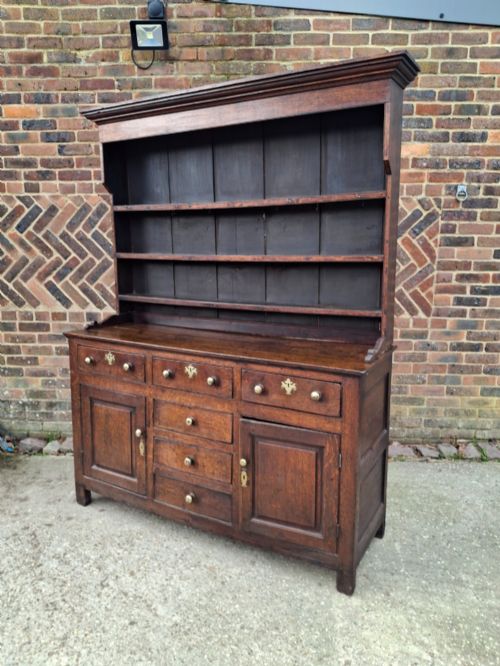
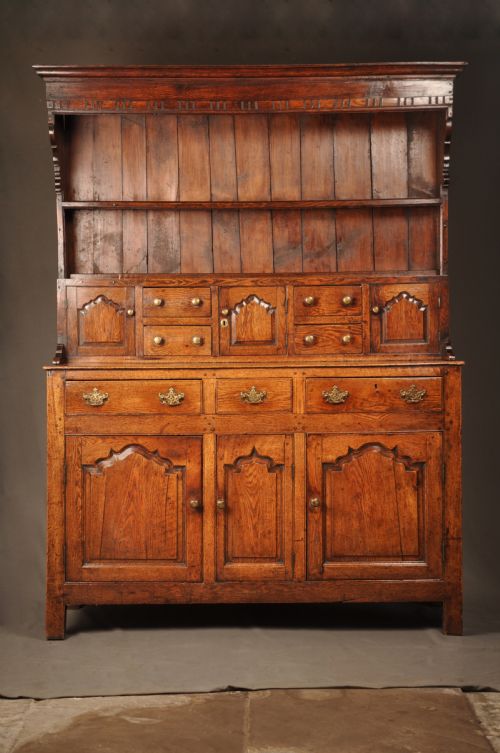
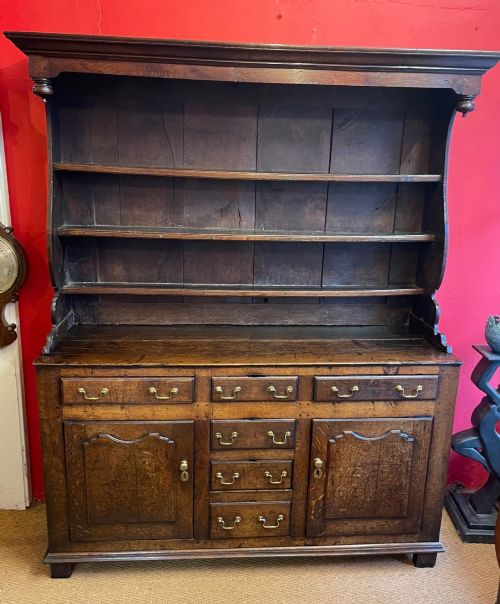
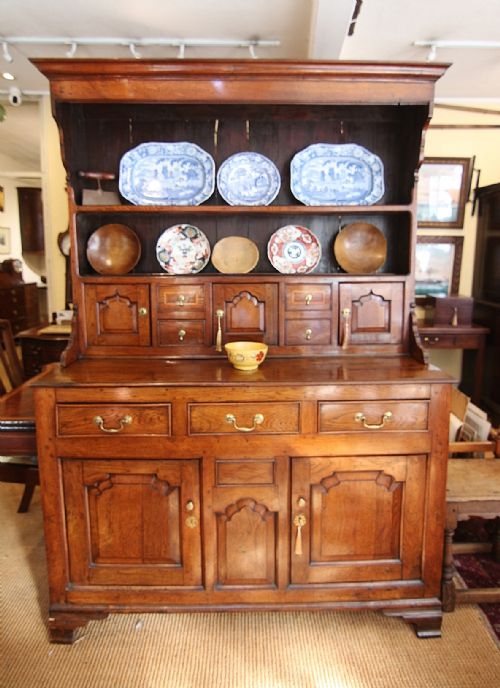
A panelled oak sideboard rack tops a traditional base to hold dining ware securely while displaying the rich grain of native timber.
Panelled Oak Sideboard Rack
A panelled oak sideboard rack combines upper shelving with a substantial lower base or dresser to create a traditional storage focal point in a room. These pieces range from early eighteenth-century Welsh vernacular examples to later revival styles from the nineteenth and early twentieth centuries.
The version most commonly encountered on this page pairs structural oak framework with open plate shelves and enclosed backing panels. Buyers generally encounter styles spanning English country, Jacobean revival, and Georgian vernacular traditions.
The lower section functions as a sideboard or dresser base while the upper rack provides stepped tiers for plates and platters. Such pieces reflect centuries of regional cabinet-making across Wales and the wider English countryside.
Materials and construction methods
Makers relied almost exclusively on solid oak, utilising its dense grain for both structural durability and decorative surface carving. Panels were fitted into grooved frames to accommodate the natural expansion and contraction of the timber over time.
Metal hardware such as brass handles and hinges appear alongside iron elements to secure doors and drawers. Traditional joinery techniques connected the upper rack securely to the sideboard base without relying on modern adhesives.
Panelled Oak Sideboard Rack Retail Price Guide 2026
Typical asking prices for panelled oak sideboard rack among the pieces listed under this phrase on Sellingantiques today, from the lower quarter to the upper quarter. They describe what is for sale here now, not the wider market.
Current listings span from the early eighteenth century through to nineteen-twenty, featuring oak alongside brass and metal hardware.
Distinctions in construction and design
Superior examples display deep patination on the oak surfaces, achieved through generations of handling and natural waxing. The integration of carved details, such as figurative panels or geometric mouldings, distinguishes bespoke regional work from simpler utilitarian builds.
The balance of proportions between the upper rack and the lower sideboard base determines the visual harmony of the piece. Fine construction involves careful timber selection where grain patterns align across the panelled doors and plate rails.
The Panelled Oak Sideboard Rack Glossary
- Dresser base
- The lower cabinet component of a larger storage unit, typically featuring rows of drawers and cupboards beneath a sturdy wooden top.
- Welsh vernacular
- A regional style of domestic furniture making characterised by practical forms, local timbers, and traditional construction methods unique to Wales.
- Jacobean revival
- A nineteenth and early twentieth-century design movement that imitated the dark finishes, heavy turning, and strapwork carving of the early seventeenth century.
- Plate rack
- The upper shelving unit attached to a sideboard or dresser, designed with grooved ledges to display plates upright.
- Panelling
- A method of framing thin sheets of wood within vertical stiles and horizontal rails to create stable decorative surfaces on doors and backs.
Panelled Oak Sideboard Rack: Frequently Asked Questions
How are racks attached to bases?
The upper rack typically fastens securely to the rear of the sideboard base using integrated tenons or metal brackets.
This two-part construction allowed makers to transport heavy pieces more easily between workshops and homes.
What is vernacular furniture?
Vernacular furniture refers to regional pieces made by local craftsmen for everyday domestic use rather than following metropolitan high-style fashions.
These items prioritize functional utility and local materials over academic design rules.
How do I care for oak?
Maintain oak surfaces by applying a traditional beeswax polish sparingly and buffing with a soft cloth to preserve the natural sheen.
Keep the timber away from direct heat sources and dramatic humidity shifts to prevent splitting.
Are these pieces original?
The listings combine pieces from the eighteenth and nineteenth centuries alongside later revival works produced around nineteen-twenty.
Examining the construction marks and timber wear helps identify the precise manufacturing period.