

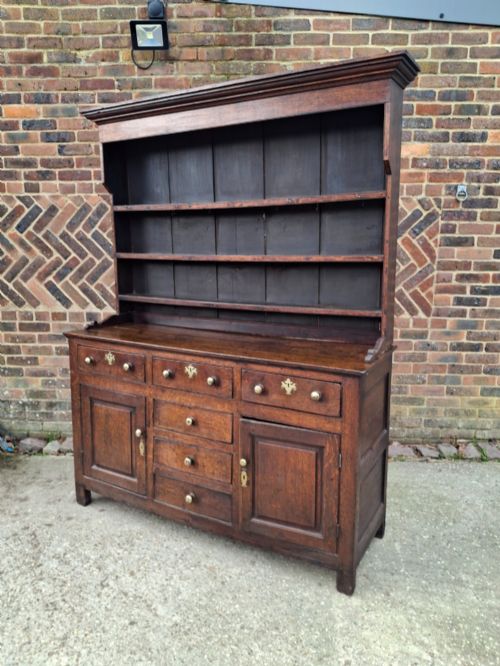
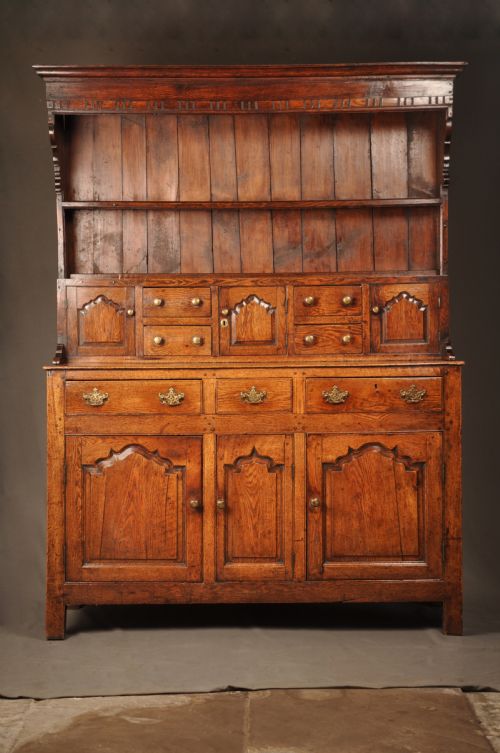
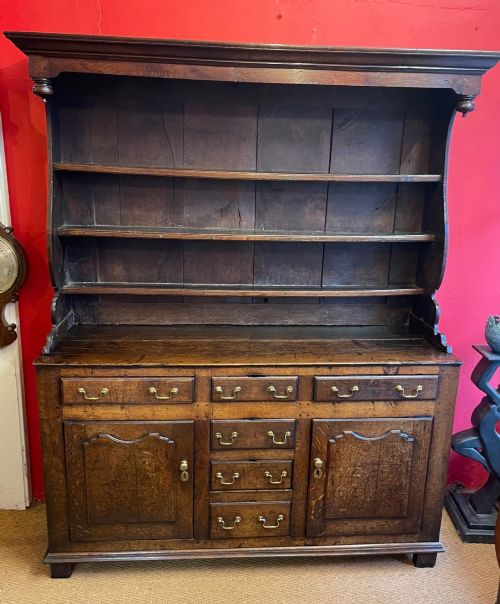
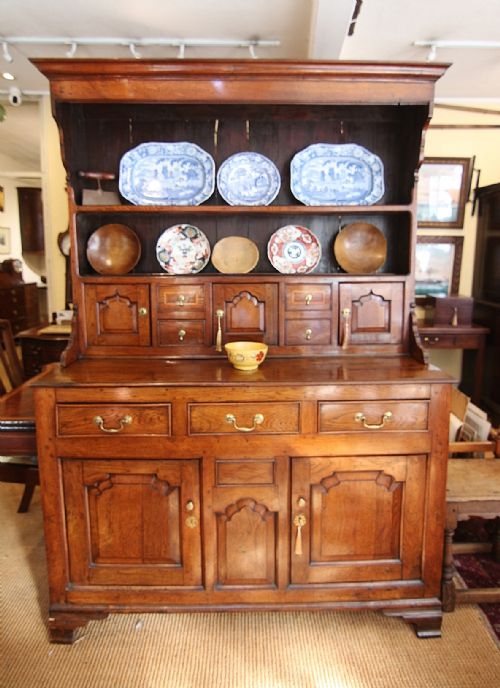
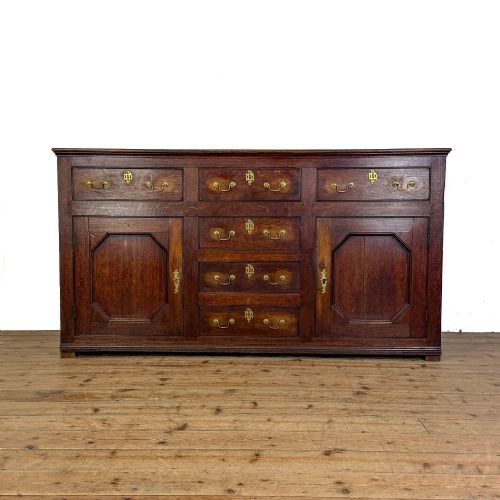


Panelled Oak Kitchen Dresser
A panelled oak kitchen dresser brings honest weight and historic utility to a room, offering deep drawers, plate racks and centuries of accumulated character.
Panelled Oak Kitchen Dresser
When you search for a panelled oak kitchen dresser, you encounter heavy timber storage furniture designed for domestic service, most frequently appearing in eighteenth- and nineteenth-century forms. These pieces combine lower base cupboards or drawers with upper plate racks or enclosed upper cabinets, built to house tableware and provisions in everyday households.
The versions most common on this page span the English and Welsh vernacular traditions alongside continental provincial examples. You meet two-part dressers with open shelving racks, low dresser bases without upper superstructures, and carved buffet cabinets in sturdy oak.
Stylistic influences range from plain country utility to revivalist Jacobean carving and Georgian proportions. The structural honesty of panelled doors and boarded backs remains consistent across the periods represented.
Materials and construction
Makers relied principally on solid oak, selected for its density and durability, occasionally incorporating ash or secondary timbers for internal framing. Panels were typically held within mortise and tenon frames, allowing the timber to expand and contract naturally with seasonal changes in humidity.
Hardware such as brass drop handles, escutcheons and iron hinges were forged or cast by hand, securing doors and drawers that withstood decades of daily kitchen use. Surfaces were finished simply through waxing or centuries of organic polishing from hands and linens.
Panelled Oak Kitchen Dresser Retail Price Guide 2026
Typical asking prices for panelled oak kitchen dresser among the pieces listed under this phrase on Sellingantiques today, from the lower quarter to the upper quarter. They describe what is for sale here now, not the wider market.
Many an antique oak base still bears the quiet scorch mark where a hurried cook rested a hot iron skillet.
Factors of quality
Quality rests primarily in the integrity of the timber and the depth of the patination built up across generations of use. Original backboards, unaltered panelled doors and well-proportioned cornices elevate a piece above later assembled examples.
The crispness of hand-carved details, whether geometric Jacobean panels or provincial foliage, distinguishes superior workshop production from simpler vernacular joinery. Retaining original brass hardware and maintaining sound structural joints without excessive timber replacement preserves the integrity of the piece.
The Panelled Oak Kitchen Dresser Glossary
- Welsh dresser
- A large kitchen storage unit featuring lower cupboards and drawers surmounted by an open plate rack. This form evolved to display pewter and ceramic tableware in the main living spaces of rural homes.
- Dresser base
- The lower portion of a dresser without the upper plate rack or superstructure. These standalone lowboards function similarly to sideboards and offer substantial surface area.
- Buffet a deux corps
- A tall two-part continental cupboard featuring upper and lower cabinet sections separated by panelled doors. This French provincial form provides enclosed storage rather than open display shelving.
- Jacobean Revival
- A nineteenth- and twentieth-century stylistic movement copying seventeenth-century motifs such as geometric mouldings, strapwork and heavy turned legs. Furniture in this style mimics the dark finishes and carved panels of the Jacobean era.
- Vernacular furniture
- Practical items made by local country joiners for everyday domestic use rather than high-style urban production. These pieces prioritize utility and regional traditions over prevailing court fashions.
Panelled Oak Kitchen Dresser: Frequently Asked Questions
What is the difference between a dresser and a sideboard?
A traditional dresser includes an upper plate rack or display shelving attached above the lower storage base. A sideboard consists solely of the low cupboard or drawer base without any superstructure.
Dressers were designed primarily for kitchens and pantries to hold and display domestic tableware. Sideboards emerged later as dining room furniture for serving food and storing linens.
How do I care for antique oak furniture?
Keep oak furniture away from direct heat sources and drastic humidity shifts to prevent the timber from splitting. Feed the wood occasionally with a traditional beeswax polish to maintain the surface sheen.
Avoid silicone-based sprays, which sink into the grain and damage the historic patination. Regular dusting with a soft, dry cloth is usually sufficient for daily maintenance.
Are these dressers supplied in two pieces?
Many traditional dressers are built as two separate sections comprising a heavy base and a lighter upper rack. This construction method made heavy kitchen furniture easier to transport and maneuver into homes.
Some smaller or provincial examples are constructed as a single solid unit. Check the specific dimensions and construction notes for each item to understand how it separates.
How do I date an oak dresser?
Dating relies on examining construction methods, tool marks, timber selection and hardware styles. Hand-sawn boards, pegged joints and vernacular proportions often point toward eighteenth-century or earlier origins, while machine-cut elements suggest later periods.
Revival pieces frequently blend seventeenth-century carving styles with nineteenth- or twentieth-century framing techniques. Comparing the patination on the interior timbers with the exterior surfaces also helps confirm age.