


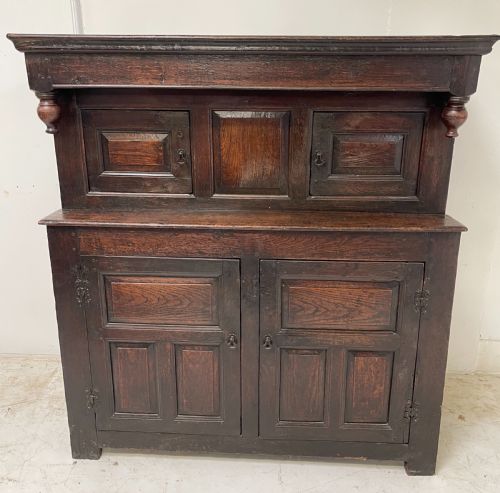


Panelled Oak Court Cupboard
A panelled oak court cupboard is a substantial storage piece built to hold household stores and display plate, bringing centuries of history into a room.
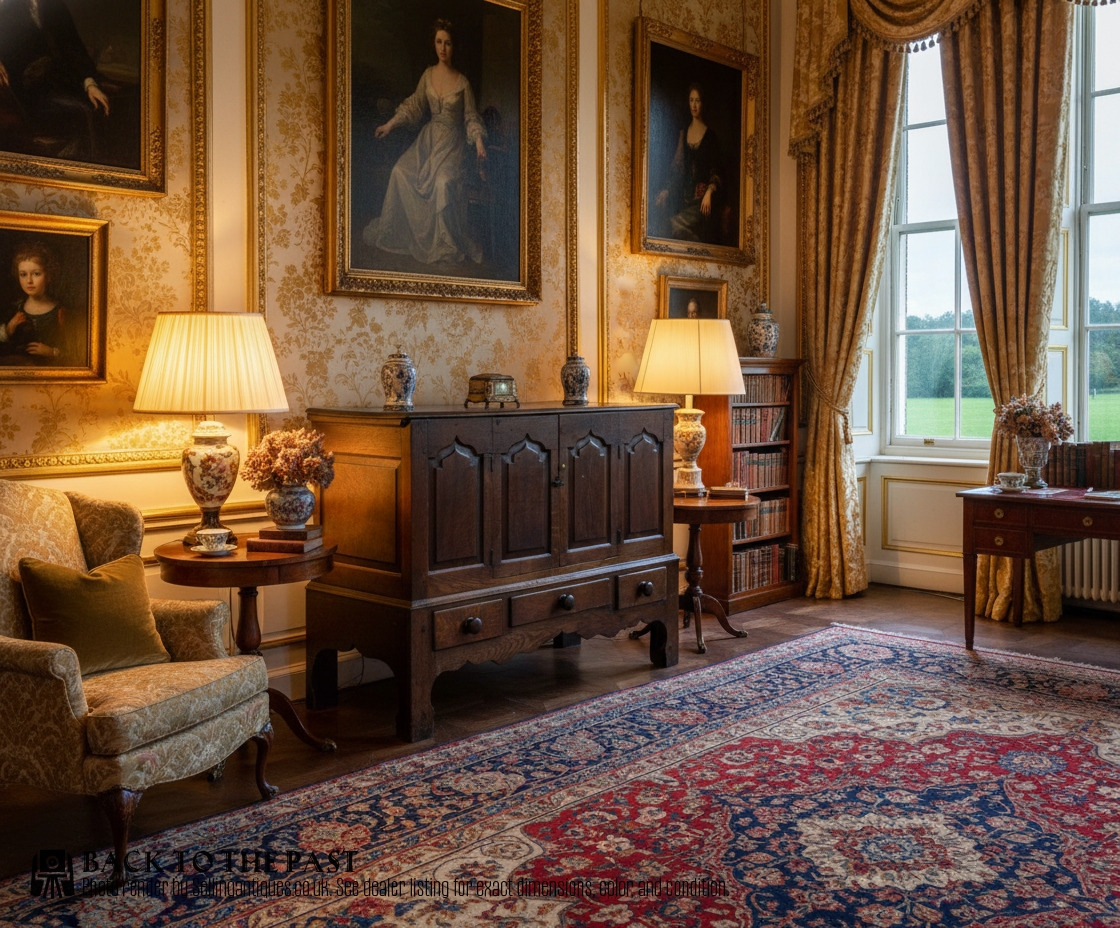
Panelled Oak Court Cupboard
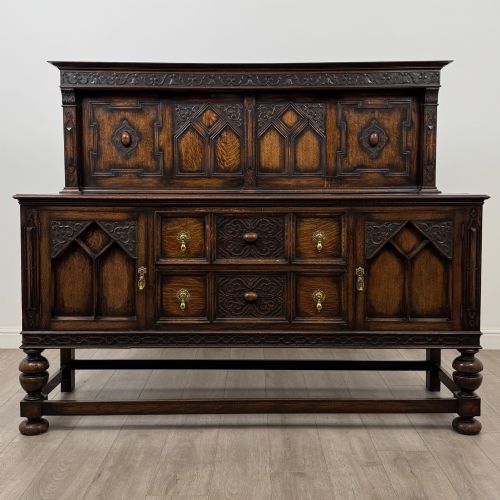
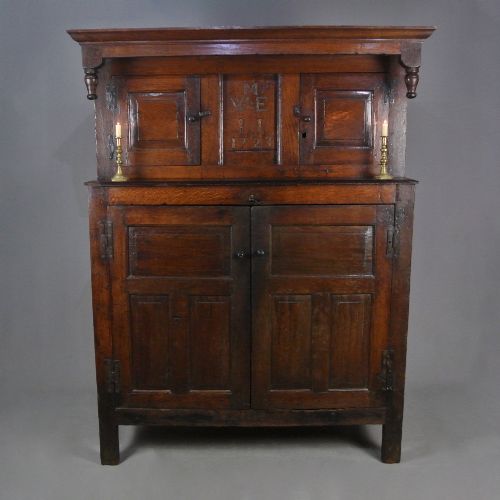
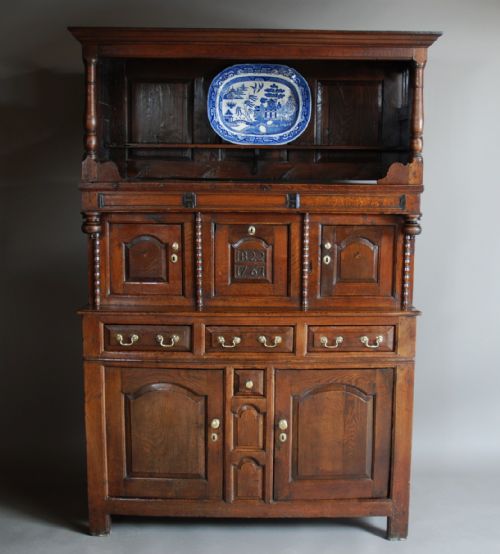
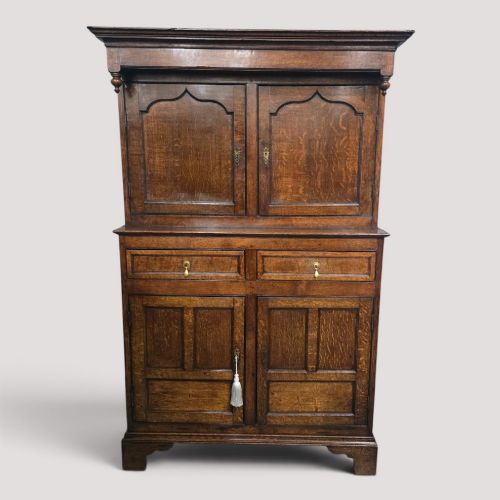
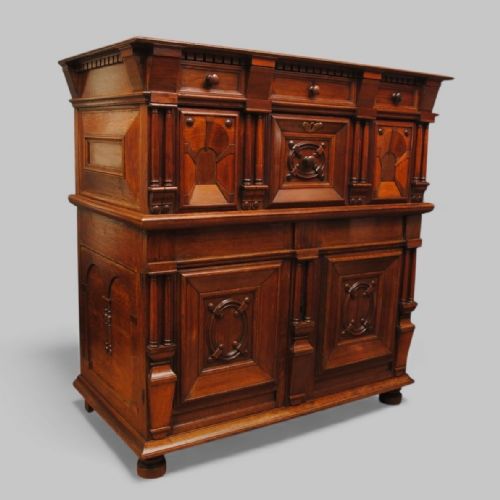
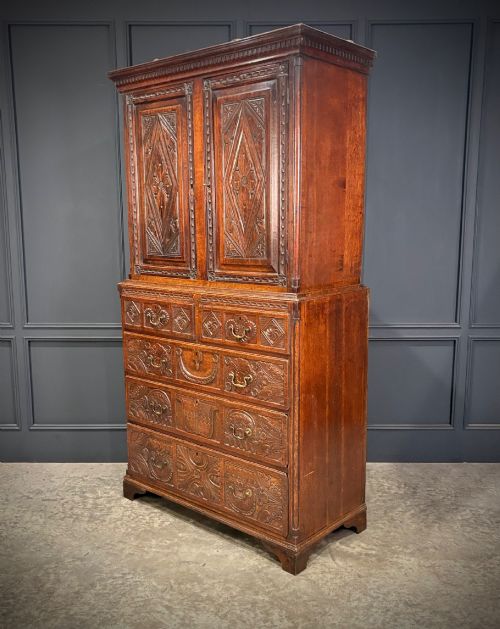
A panelled oak court cupboard is a traditional two-stage or multi-tiered storage unit designed for domestic display and security. The form encompasses regional pieces such as the Welsh cwpwrdd tridarn and deuddarn alongside English seventeenth-century examples.
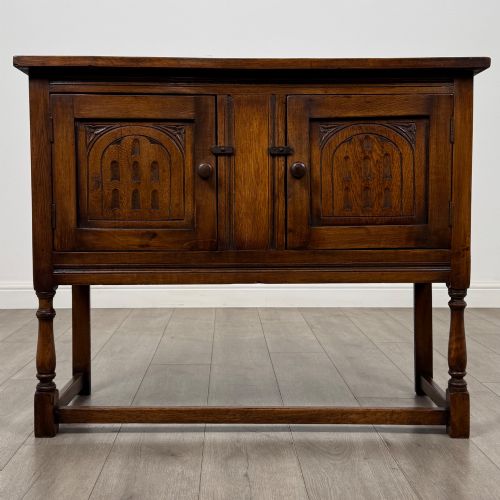
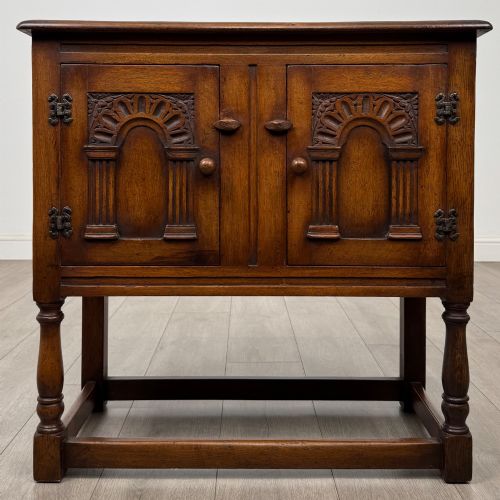
Most pieces seen here date from the seventeenth and eighteenth centuries, constructed with pegged joints and heavy timbers. Later Edwardian revivals also appear, offering the seventeenth-century Jacobean aesthetic in smaller or more adaptable domestic formats.
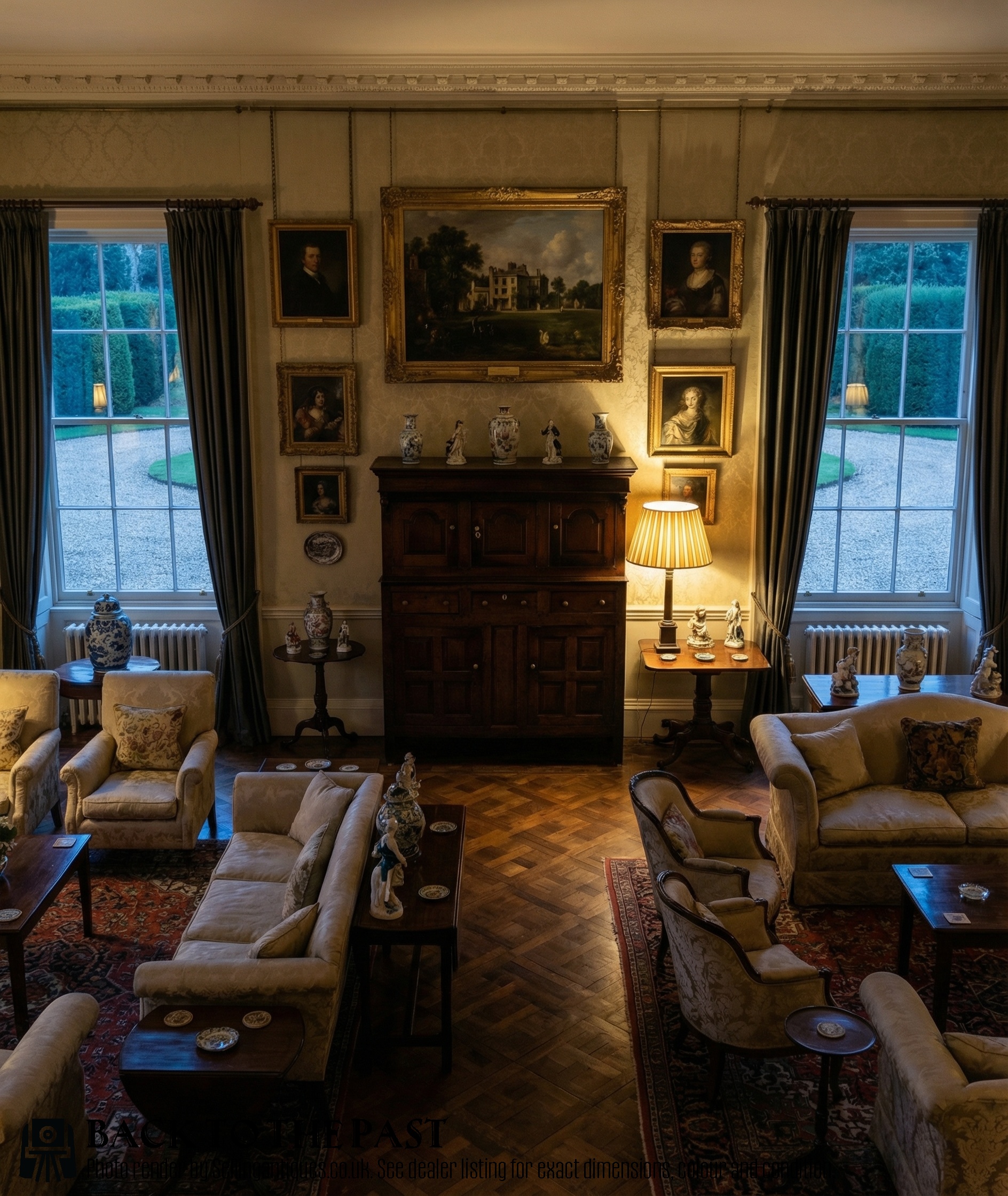
Materials and construction methods
These items rely on solid oak frameworks joined by mortise and tenon techniques secured with wooden pegs. Secondary timbers such as walnut, fruitwood, and elm occasionally appear in regional variations and internal panels.
Hardware consists of forged iron hinges and brass fittings that anchor heavy doors and drawers. Surfaces are often finished with hand-carved panels, mouldings, and applied geometric ornament characteristic of the period.
Panelled Oak Court Cupboard Retail Price Guide 2026
Typical asking prices for panelled oak court cupboard among the pieces listed under this phrase on Sellingantiques today, from the lower quarter to the upper quarter. They describe what is for sale here now, not the wider market.
Listings span multiple centuries, ranging from seventeenth-century joined cupboards and eighteenth-century Welsh examples to Edwardian Jacobean style revivals.
Judging quality and proportion
Quality rests in the integrity of the original timber, the crispness of hand-carved details, and the survival of early surface patination. Pieces that retain their original boarded backs, drawers, and structural pegged joints command greater interest.
Proportion and regional character also dictate distinction, separating restrained vernacular cabinet-making from highly decorated urban workshops. Alterations to feet, cornices, or interior shelving distinguish unmodified examples from heavily restored ones.
The Panelled Oak Court Cupboard Glossary
- Court cupboard
- A traditional short-crowned or multi-tiered cabinet used for storing and displaying plate, often featuring recessed upper stages supported by columns or balusters.
- Cwpwrdd tridarn
- A traditional Welsh three-section oak cupboard featuring an enclosed upper tier, a middle stage, and a base cupboard.
- Deuddarn
- A traditional Welsh two-part oak cupboard comprising an upper cabinet and a lower section without the third tier of a tridarn.
- Pegged joint
- A traditional method of securing mortise and tenon timber joints using shaped wooden pins rather than metal fasteners.
- Patina
- The surface sheen and colour developed by aged timber through decades of handling, polishing, and exposure to light.
Panelled Oak Court Cupboard: Frequently Asked Questions
What is a court cupboard?
A court cupboard is a heavy wooden storage piece featuring recessed upper sections and enclosed lower cupboards. They were originally used in dining halls and parlours to store food and display fine plate.
Over centuries, the form evolved from a status symbol for wealthy households into a practical storage staple across English and Welsh rural homes.
How do I date an oak cupboard?
Dating relies on examining construction marks, tool traces, timber shrinkage, and the style of the carved decoration. Seventeenth-century pieces typically feature hand-rived oak boards and pegged frame construction.
Later revival pieces from the Edwardian era often show mechanical saw marks and standardised joinery methods that differentiate them from early work.
Where were these cupboards made?
These pieces originate from various English counties and Welsh regions, with notable regional variants emerging from Snowdonia and the West Country. Local workshops adapted standard forms to suit regional domestic needs and available timbers.
Differences in mouldings and carving motifs often point directly to the specific geographic workshop or maker tradition.
How should I care for old oak?
Old oak requires a stable indoor environment away from direct heat sources and sudden humidity fluctuations to prevent wood splitting. Regular dusting with a dry, soft cloth preserves the historic surface finish.
Applying a traditional beeswax polish occasionally helps nourish dry timber and maintains the natural patina without sealing the pores.