



Panelled Oak Corner Cupboard
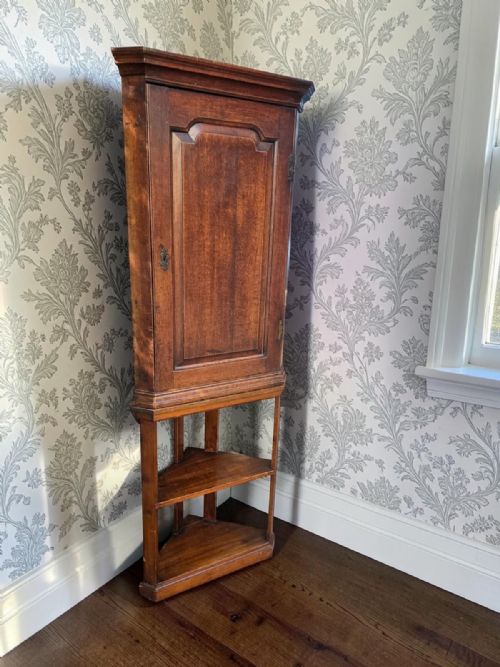
A panelled oak corner cupboard fills an awkward angle with heavy grain and quiet storage, turning unused domestic space into a display.
Panelled Oak Corner Cupboard
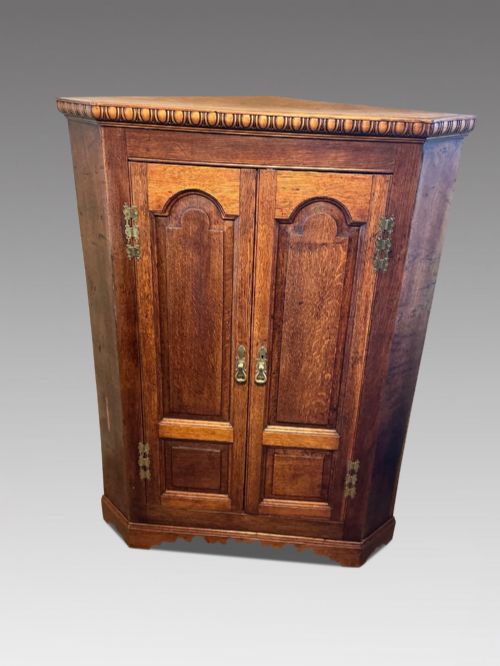
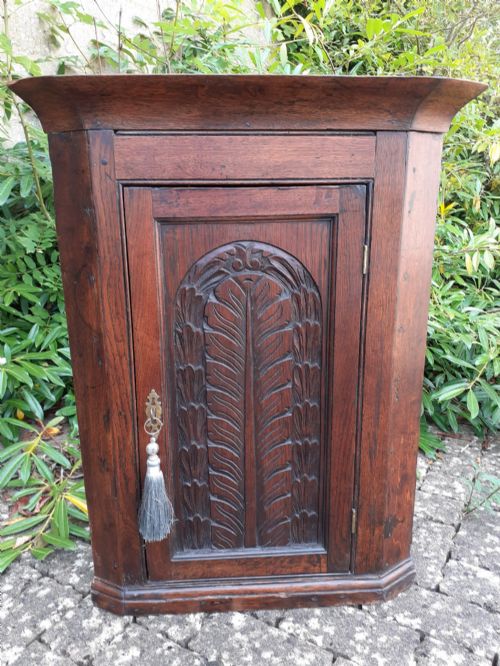
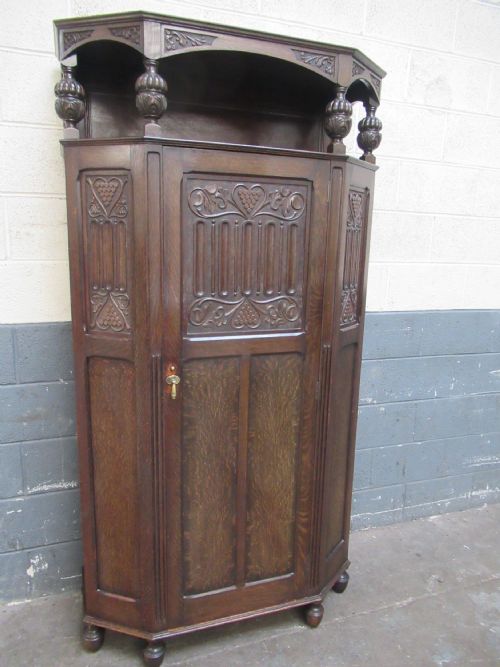
A panelled oak corner cupboard provides architectural storage built specifically to fit room intersections, utilising timber that ages with a deep honey or dark brown tone. Buyers seek these pieces to anchor empty corners in traditional rooms while keeping everyday items out of sight.
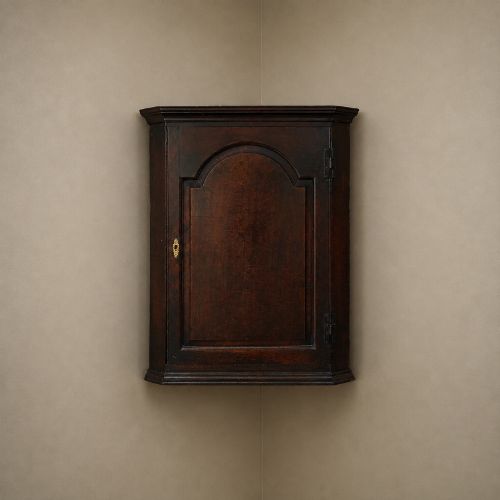
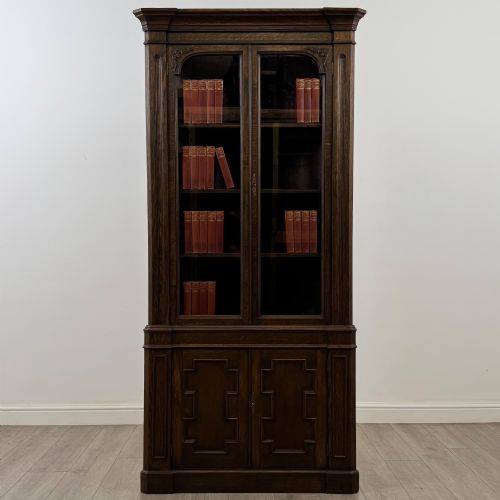
The selections span wall-hanging formats, two-part floor-standing cabinets, and examples elevated on slender stands. Most pieces date from the Georgian and 18th century periods, often originating from regional workshops in Wales and the West Country.
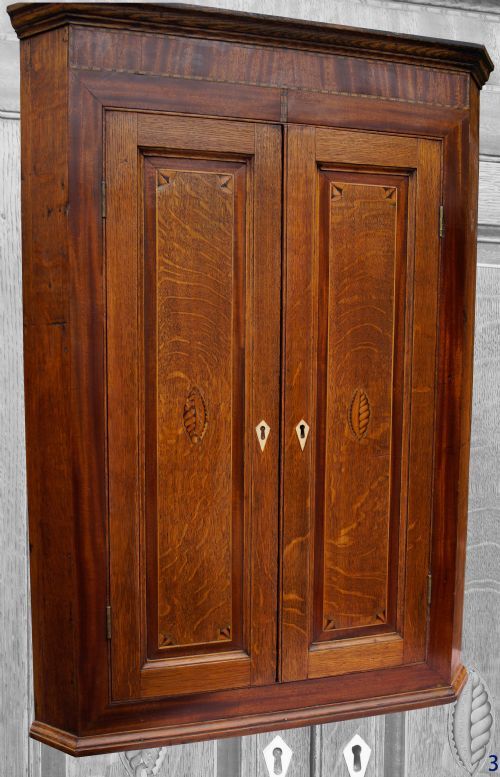
Forms range from compact single-door hanging boxes to tall double-door floor-standing cupboards featuring shaped interior shelves. Variations include carved panels, drawer additions below the main compartment, and occasional simulated timber finishes on pine carcases.
How they were made
Cabinet makers built these cupboards primarily using solid timber planks joined with pegged mortise and tenon frames, housing recessed field panels that allowed the wood to expand and contract naturally. Regional craftsmen selected domestic woods, pairing sturdy oak carcases with fruitwood inlays or secondary pine backs.
Hardware played a functional and decorative role, with heavy brass H-hinges and iron butterfly straps securing the doors, complemented by brass key escutcheon plates. Surfaces received hand-applied wax or oil finishes that built up a rich sheen over decades of domestic use.
Panelled Oak Corner Cupboard Retail Price Guide 2026
Typical asking prices for panelled oak corner cupboard among the pieces listed under this phrase on Sellingantiques today, from the lower quarter to the upper quarter. They describe what is for sale here now, not the wider market.
Listings feature oak alongside alternative materials like mahogany, fruitwood inlay, brass, glass, iron, and simulated pine.
What varies in quality
Proportion and scale dictate the visual weight of the cabinet, where narrow hanging formats or tall two-part floor standing units maintain balanced door panels and cornices. The crispness of the raised field panels and the depth of the hand-carved mouldings separate standard utilitarian boxes from finer regional commissions.
The integrity of the timber, the retention of original brass or iron hardware, and the survival of interior shaped shelving influence the overall standard. Pieces retaining their original stands or integrated lower drawers show greater structural ambition by the original maker.
The Panelled Oak Corner Cupboard Glossary
- Fielded panel
- A wooden panel with bevelled edges that fit into a grooved frame, allowing the centre to remain thicker while reducing overall weight.
- H-hinge
- A traditional butterfly-shaped metal hinge resembling the letter H, surface-mounted onto the cabinet doors.
- Floor standing
- A heavy cabinet design built to rest directly on the ground, often constructed in two separate upper and lower sections.
- Escutcheon
- A protective metal plate surrounding the keyhole, designed to prevent the wood from splitting around the lock.
- Cornice
- The decorative moulded projection running along the top edge of the cupboard body.
Panelled Oak Corner Cupboard: Frequently Asked Questions
How do I hang a wall cupboard safely?
Wall-hanging corner cupboards carry substantial weight due to solid oak construction and require heavy-duty fixings anchored directly into wall studs or masonry. Using proper brackets beneath the base provides additional support alongside the internal hanging points.
Ensuring the wall structure matches the weight of the timber prevents the cabinet from pulling away over time.
Where were these cupboards placed originally?
These cabinets occupied empty room intersections in parlours, dining rooms, and hallways, utilising space that standard square furniture could not reach. Their triangular footprint kept floor areas open while offering reachable storage for glassware and ceramics.
Floor-standing versions anchored larger rooms, whereas hanging variants sat above tables or seating.
How do I tell an 18th century piece from a Victorian revival?
Early pieces display hand-tooled joinery marks, irregular pegged joints, and timber surfaces that show centuries of oxidation and wax accumulation. Revival examples from the 19th and 20th centuries often feature more uniform machine-sawn elements and standardised interior fittings.
Examining the backboards and secondary woods like pine or fruitwood helps confirm the period of construction.
How should I care for the oak surface?
Maintaining the finish requires occasional applications of traditional beeswax, buffed gently with a soft cloth to nourish the dry timber. Avoiding direct sunlight and sudden temperature shifts prevents the oak panels from splitting or warping.
Water and harsh modern cleaners should stay away from the wood to preserve the historic patina.