
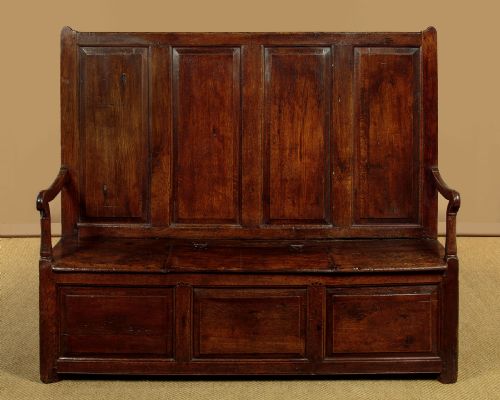
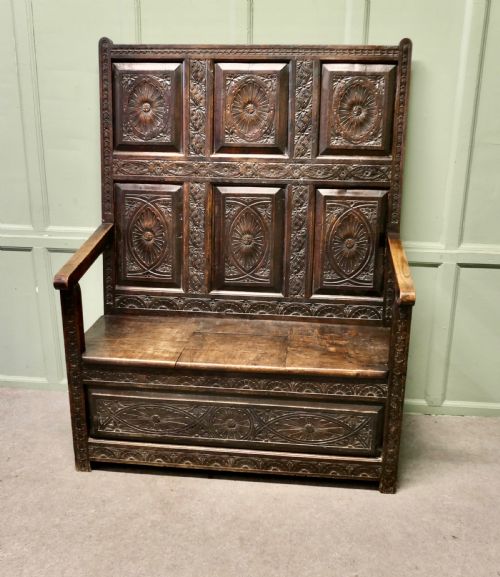
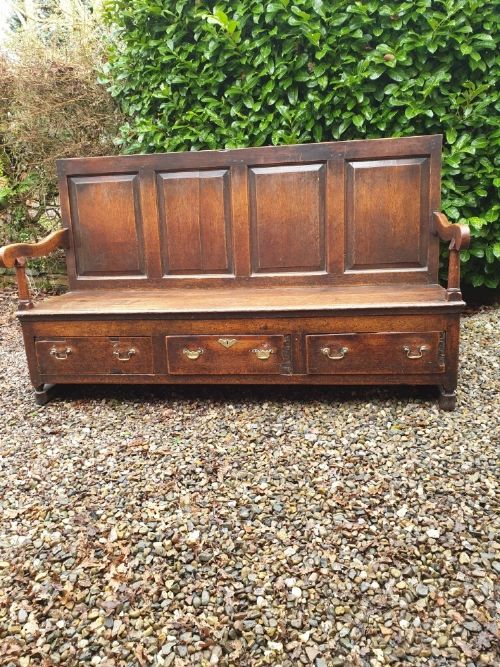
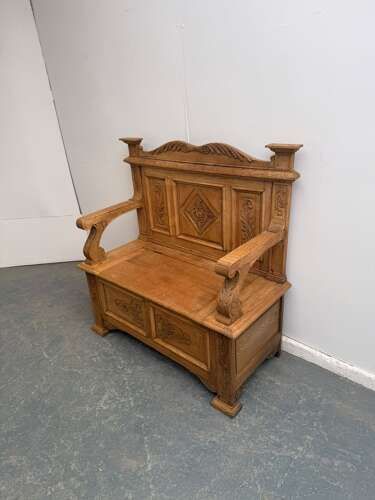
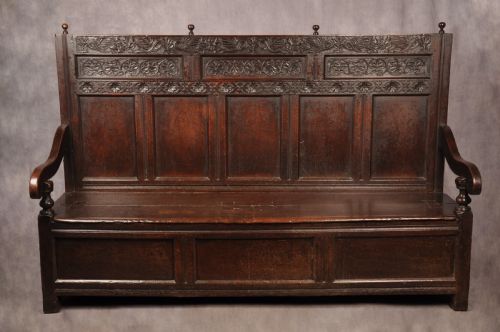
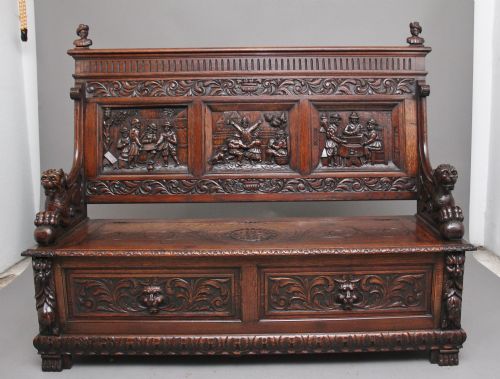

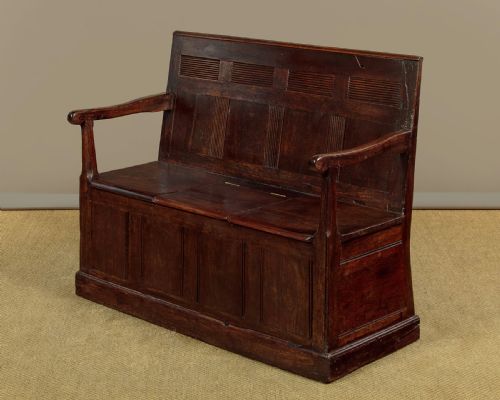
Panelled Oak Box Settle
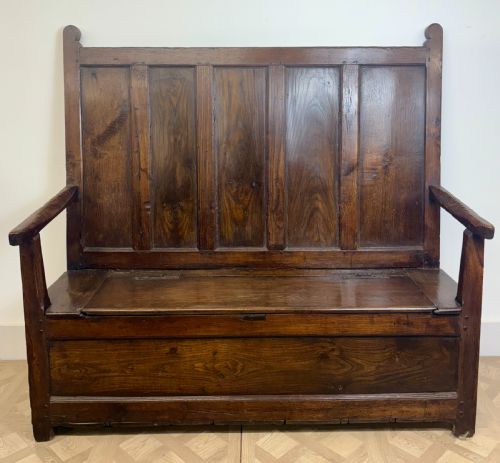
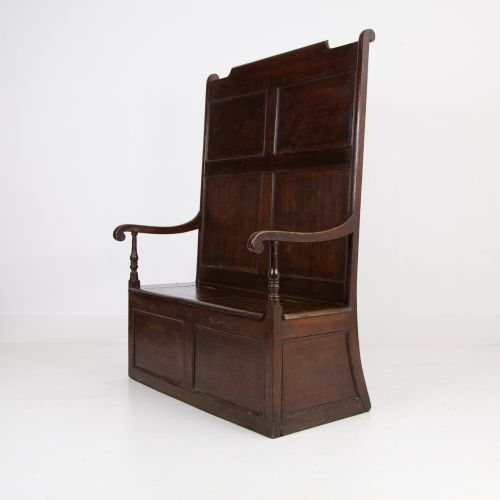
A panelled oak box settle combines high-backed seating with secure interior storage, offering a sturdy seat that keeps draughts at bay.

Panelled Oak Box Settle
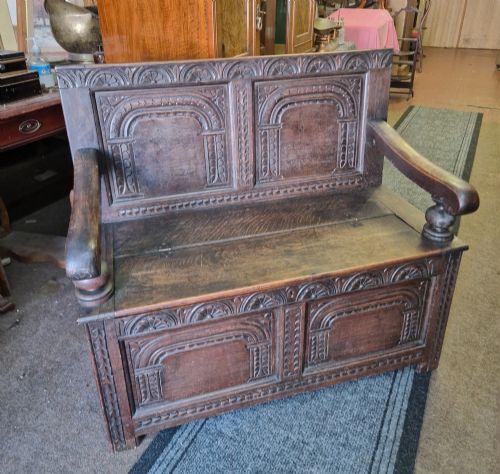
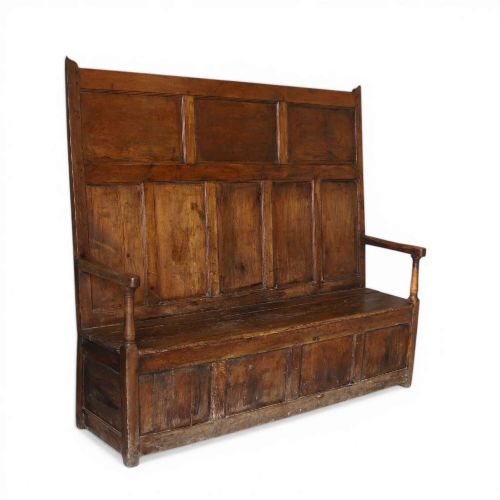
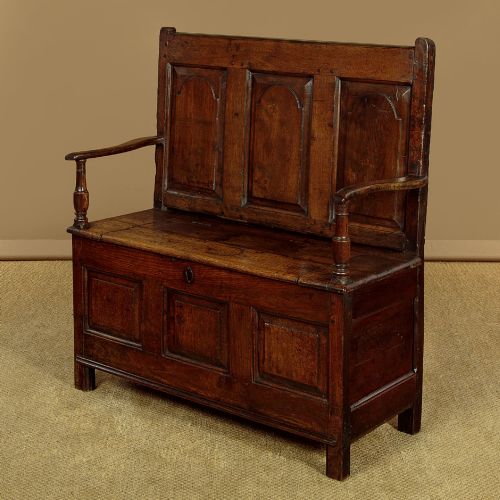
A panelled oak box settle is a substantial seat designed with a high panelled back and a hinged lid enclosing a deep storage chest beneath the seat. These versatile pieces served multiple domestic purposes in traditional interiors, functioning as both communal seating by the hearth and a secure chest for household goods.
The examples found on this page span several centuries, reaching from the seventeenth century through the Georgian period and into the Victorian era. The most common versions encountered here date from the eighteenth century, showing regional vernacular styles originating from Wales, the North Country, and Lakeland.
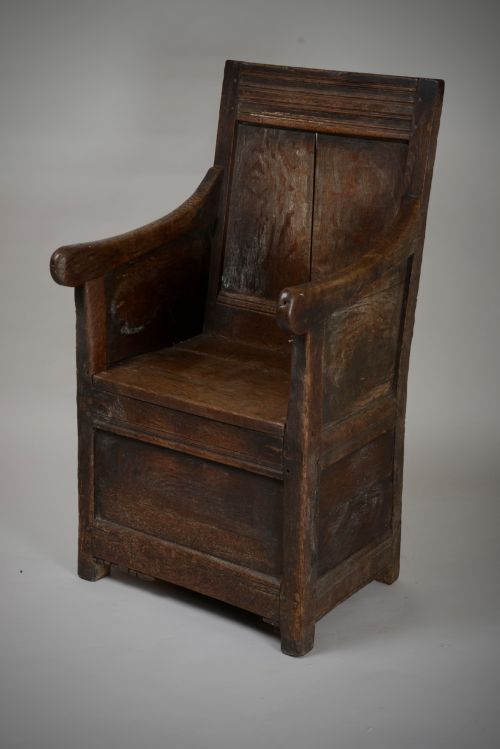
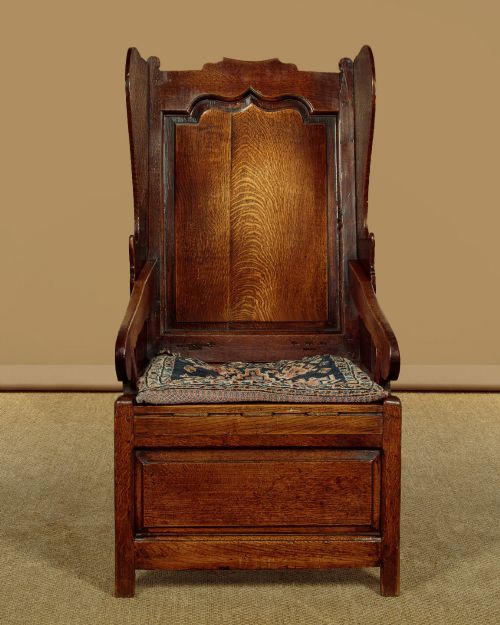
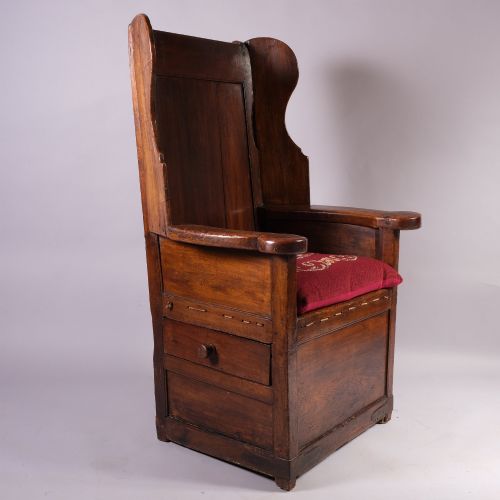
Makers utilised local timbers, leading to variants constructed from elm and ash alongside the predominant oak. Forms range from high-backed panelled settles to specialised lambing chairs and tavern benches featuring enclosed seats.
Materials and construction methods
Construction relies heavily on solid oak, utilising frame and panel techniques to build the high backs and enclosed box bases. This method accommodates the natural seasonal movement of timber without splitting the panels.
Secondary timbers such as elm, ash, and occasional brass or iron hardware appear in hinges, fixings, and structural supports. Joinery relies on traditional pegged mortise and tenon joints, securing the heavy uprights and armrests to the main seat box.
Some settles doubled as indoor windbreaks, keeping the family warm while hiding spare boots in the box below.
Determinants of quality and build
Quality in a panelled oak box settle is determined by the crispness of the original panel carving and the proportion of the high back relative to the storage base. Pieces retaining their original timber patination and untouched surface finishes stand apart from heavily altered examples.
Structural integrity of the internal box base and the survival of early hinges significantly influence the character of the piece. Regional variations, such as deep architectural mouldings or specific vernacular arm designs, show the care taken by the original maker.
The Panelled Oak Box Settle Glossary
- Panel-back
- A seat construction utilising wooden panels fitted within a grooved frame. This technique adds structural rigidity to tall backs and prevents warping.
- Lambing chair
- A specialised high-sided seat, often featuring a box base and solid wings designed to shield the occupant from cold draughts. These pieces frequently appear alongside standard settles.
- Vernacular furniture
- Domestic pieces made by local regional craftsmen using native woods rather than following strict metropolitan design rules. Much of the evidence reflects this regional tradition.
- Box settle
- A form of seating where the base functions as a large lidded chest. The interior provided dry storage in unheated historical rooms.
Panelled Oak Box Settle: Frequently Asked Questions
What is a panelled oak box settle used for?
These pieces provided seating near the hearth while keeping household blankets or provisions stored dry beneath the hinged seat. The high panelled back acted as a windbreak in draughty rooms.
Over time, they moved from farmhouses and taverns into hallways and reception rooms as decorative yet functional furniture.
How do I date an antique oak settle?
Dating relies on examining the joinery, timber grain, and style of the panels. Seventeenth-century examples often display simpler plank or deeply recessed panels, while eighteenth-century versions introduce refined cornices and shaped arms.
Later Victorian and revival pieces frequently exhibit heavier machine-cut elements and darker applied finishes compared to earlier vernacular work.
Were these seats made in specific regions?
Many examples originate from distinct areas such as Wales, Lakeland, and the North Country. Regional makers used local woods like elm and ash alongside oak, creating recognizable local styles.
Tavern variants and country house pieces also developed distinct proportions depending on where they were commissioned.
Is the storage compartment original?
The box base forms the structural foundation of the seat, meaning the chest cavity and bottom boards are integral to the piece. Hinges and lid boards can show signs of repair or replacement over centuries of domestic use.
Checking the interior construction helps determine whether the base retains its original configuration and timber.