

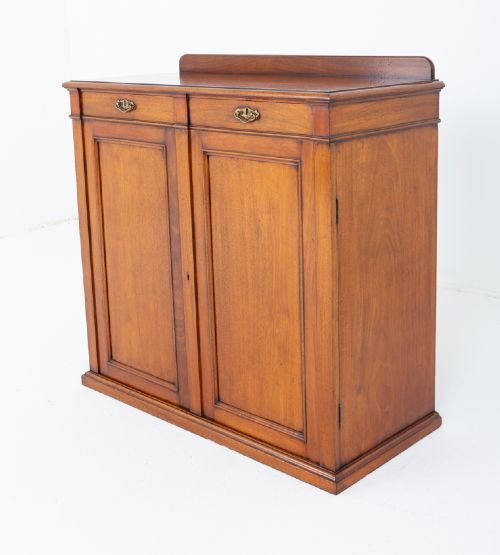
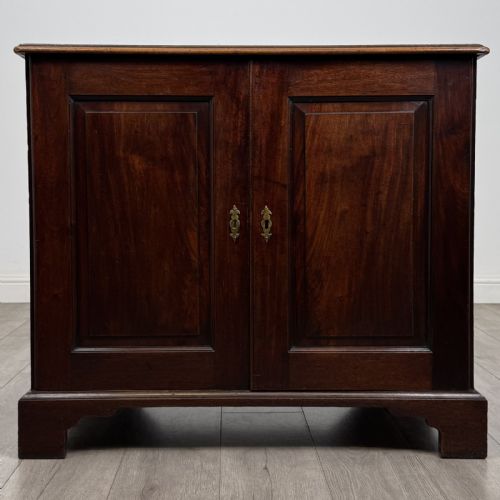
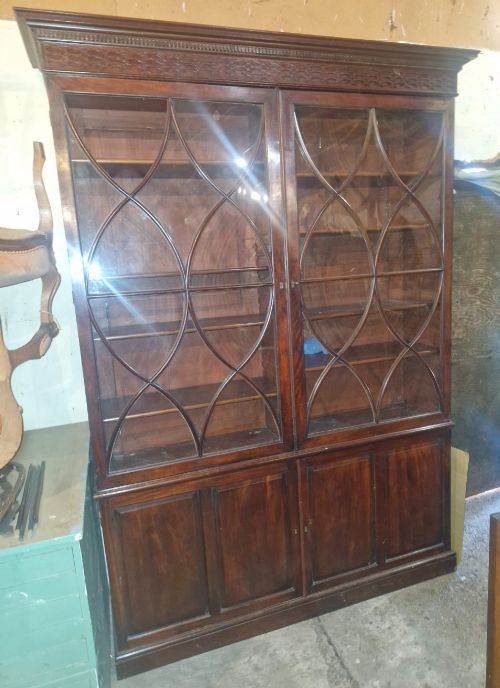
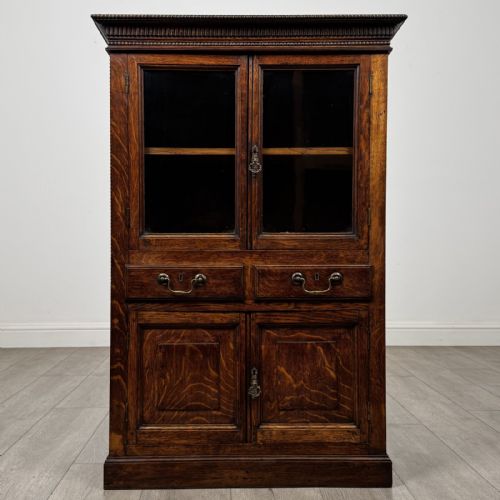
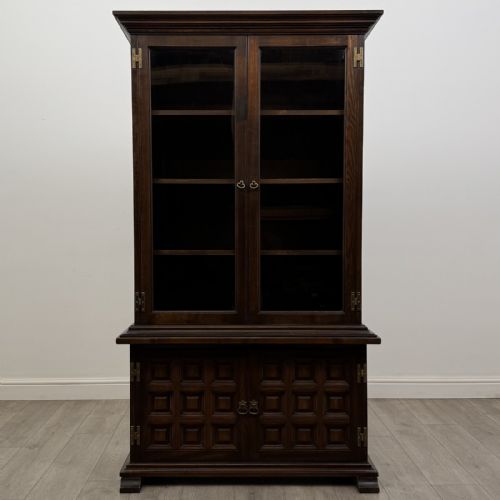
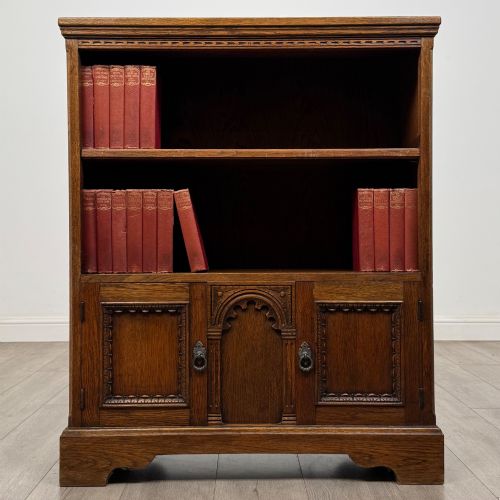
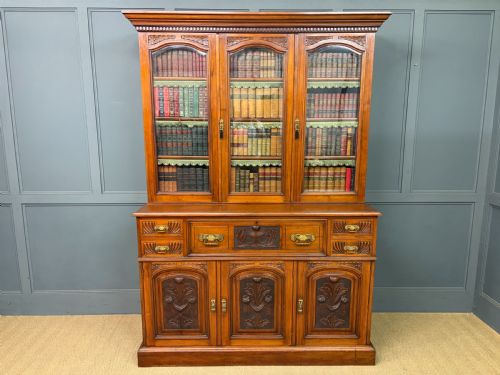
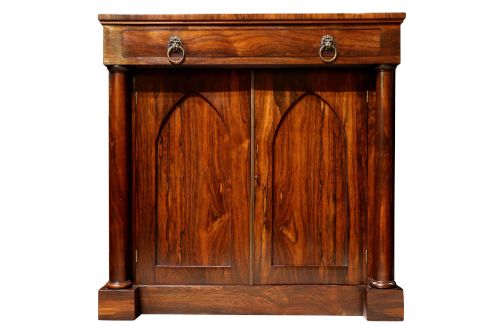
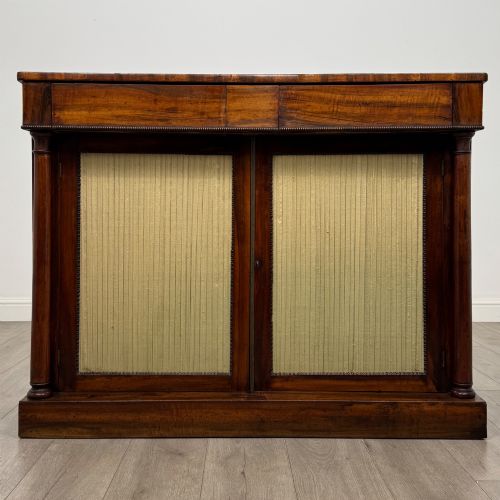
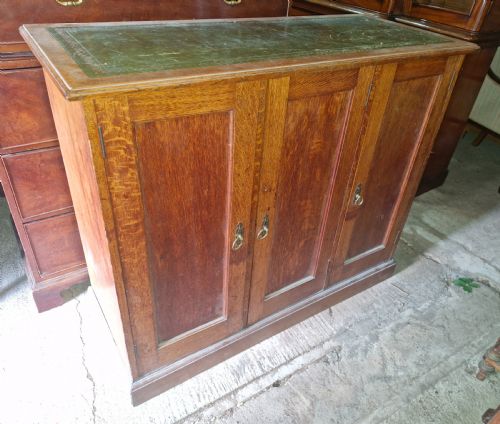
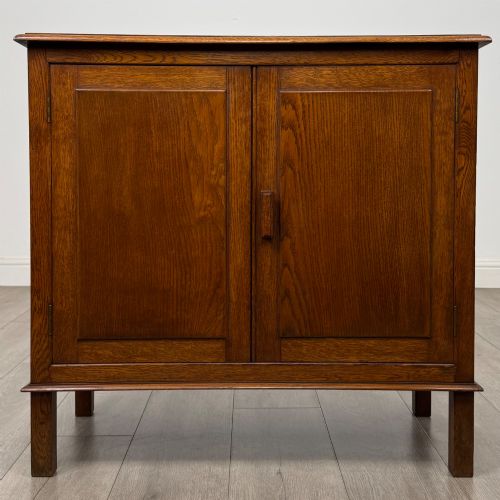
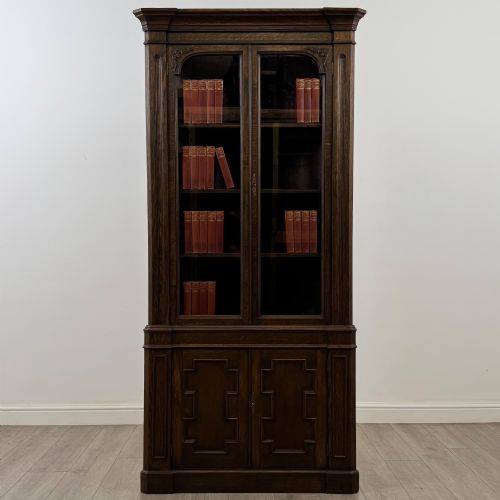
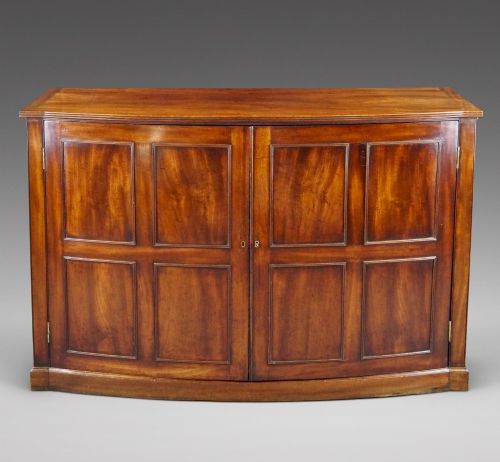


Panelled Door Cupboard Bookcase
These panelled door cupboard bookcase designs combine display shelving with secure storage, offering a practical cabinet for housing a library.
Panelled Door Cupboard Bookcase
A panelled door cupboard bookcase combines upper shelving for books with lower enclosed storage behind wooden doors. This category spans Georgian, Victorian, and Edwardian periods, alongside revival styles.
Makers adapted the form across the eighteenth and nineteenth centuries, producing variations from Scottish chiffoniers to French bleached oak bookcases. Buyers select these cabinets for domestic workspaces and living rooms.
Materials and construction methods
Cabinet makers utilised dense hardwoods such as mahogany and oak, supplemented by walnut, satinwood, and bamboo. Timber selection dictated the weight and structural stability of the bookcase.
Joinery methods included framed and panelled doors to prevent warping, alongside hand-cut dovetails in drawer construction. Glazing bars in upper sections were assembled to hold individual panes of glass securely.
Panelled Door Cupboard Bookcase Retail Price Guide 2026
Typical asking prices for panelled door cupboard bookcase among the pieces listed under this phrase on Sellingantiques today, from the lower quarter to the upper quarter. They describe what is for sale here now, not the wider market.
Captain's bookcases were built sturdy enough to survive turbulent sea voyages before finding permanent anchor in dry land libraries.
Distinguishing quality in the range
Quality rests upon the selection of timber figures and the precision of the joinery within the carcass. Superior examples display thoughtful grain matching across doors and drawer fronts.
The integration of original brass hardware and the crispness of carved details separate standard utility cabinets from fine cabinet-maker pieces. Finer interiors often include adjustable shelving mechanisms and secondary timbers of matching quality.
The Panelled Door Cupboard Bookcase Glossary
- Chiffonier
- A low sideboard or cabinet with enclosed cupboards below, frequently topped by a shelf or bookcase superstructure. It developed during the Regency and Victorian periods for domestic parlours.
- Parquetry
- Geometric wood mosaic work used for decorative surface patterns on furniture. Cabinet makers used contrasting timbers to form precise patterns on doors and panels.
- Glazing bar
- A narrow strip of wood or metal holding glass panes within a window or cabinet door. Early examples tend to be slender and hand-planed.
- Bow-fronted
- A curved cabinet front projecting outward in a convex arc. This shape requires skilled joinery to bend timber and fit corresponding drawers.
- Secretaire
- A desk fitted with a pull-down writing flap concealing small drawers and pigeonholes. It usually sits above enclosed cupboard doors.
Panelled Door Cupboard Bookcase: Frequently Asked Questions
How do I date a panelled door cupboard bookcase?
Dating relies upon timber choice, construction techniques, and stylistic ornament. Georgian examples display different proportions and mouldings compared to later Victorian or Edwardian workshop output.
Examining secondary woods inside drawers and the nature of the fixings provides further confirmation of the manufacturing period.
Where should I place a large library bookcase?
These cabinets require stable wall space away from direct heat sources and strong sunlight to protect dry timber. Placing them in studies or living rooms ensures balanced ambient conditions.
Ensure the floor is level so the doors and internal shelves align correctly within the frame.
Can I adjust the shelves in antique bookcases?
Many period bookcases feature fixed wooden shelving integral to the structural rigidity of the upper section. Later Victorian and Edwardian examples occasionally incorporate ratchet strips or wooden peg supports for height adjustment.
Check the interior uprights inside the cabinet to see if movable shelf supports are present.
What is the difference between an open bookcase and a cupboard bookcase?
Open bookcases provide display space for books without barrier protection, exposing volumes directly to dust and light. Cupboard bookcases add lower enclosed storage behind wooden doors to conceal items.
This hybrid form combines the display function of a bookcase with the utility of a sideboard.