

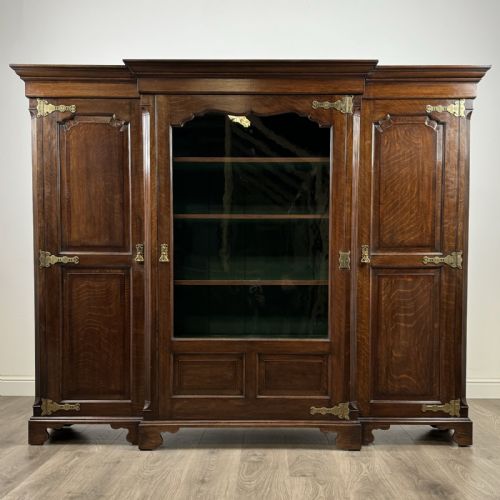
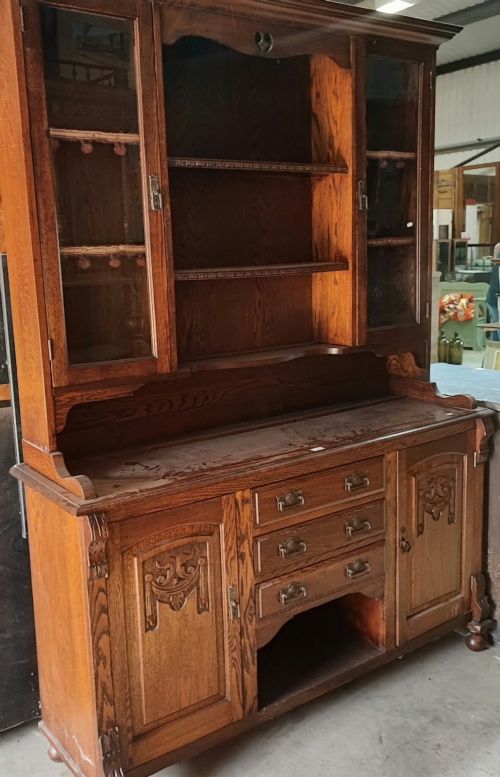
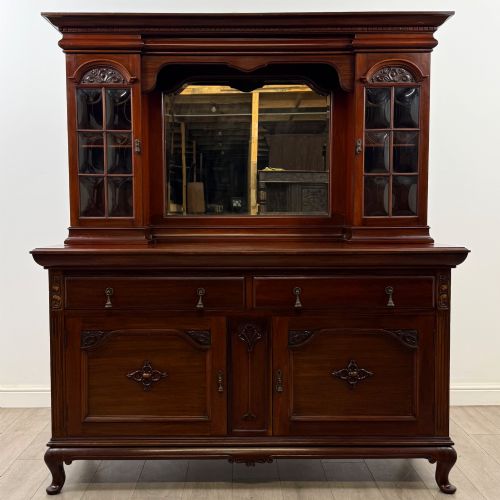


Edwardian Glazed Display Dresser
These edwardian glazed display dresser options combine generous upper display shelves with secure lower storage, offering a practical centrepiece for any dining room.
Edwardian Glazed Display Dresser
An edwardian glazed display dresser brings together timber storage bases and glass-fronted upper sections designed to showcase fine ceramics and glassware.
The pieces seen here bridge the Edwardian period, late Victorian eras and the Arts and Crafts movement, featuring sideboards, bookcases and display cabinets.
Most examples rely on sturdy oak or rich mahogany frameworks, frequently incorporating mirror glass backs and brass hardware to reflect light across the room.
Materials and construction
Cabinetmakers utilised durable hardwoods such as oak and mahogany for the main carcase, ensuring structural stability for heavy book collections and dinner services.
Transparent glass and occasional leaded panes were set into timber doors to protect contents from dust while maintaining clear visibility.
Brass fittings and mirror glass panels completed the assembly, adding functional hardware and decorative reflection to the interior and backboards.
Edwardian Glazed Display Dresser Retail Price Guide 2026
Typical asking prices for edwardian glazed display dresser among the pieces listed under this phrase on Sellingantiques today, from the lower quarter to the upper quarter. They describe what is for sale here now, not the wider market.
Some cabinets hide their book collections behind leaded glass panes.
Assessing quality and finish
Superior examples exhibit careful timber selection with balanced grain patterns across large surfaces, whereas simpler builds rely on plain painted finishes or mixed timbers.
The refinement of carved detailing, inlaid banding and original brass or metal hardware distinguishes bespoke workshop pieces from standard utility furniture.
Maple & Co.
The Edwardian Glazed Display Dresser Glossary
- Edwardian
- Pertaining to the reign of King Edward VII, spanning from 1901 to 1910. This era favoured lighter proportions and renewed interest in historic revival styles.
- Arts and Crafts
- A design movement promoting handcraftsmanship and simple vernacular forms. It reacted against mass production by celebrating honest material construction.
- Hepplewhite Revival
- A late nineteenth and early twentieth-century reinterpretation of eighteenth-century designer George Hepplewhite's elegant, neoclassical furniture forms.
- Lead glass
- Glass panes held together by lead cames, frequently seen in cabinet doors of the period. This technique creates geometric patterns across the window.
- Mirror back
- A reflective glass panel inserted into the rear of a sideboard or dresser superstructure. It brightens displays of porcelain and silver.
Edwardian Glazed Display Dresser: Frequently Asked Questions
What is an edwardian glazed display dresser?
These combination furniture pieces feature a glazed upper cabinet for display and a lower cupboard or sideboard base for concealed storage.
They emerged from domestic needs for practical organisation alongside spaces to exhibit valued household items.
How do I date these cabinets?
Dating relies on timber choices, construction methods and stylistic markers like Arts and Crafts simplicity or Edwardian mahogany inlay.
Earlier Victorian examples tend to be heavier and darker, while Edwardian pieces often present lighter oak or mahogany tones.
Are the glass doors original?
Original glass frequently shows slight surface ripples, minor bubbles and subtle thickness variations typical of early production methods.
Clear modern replacement glass usually appears completely flat and lacks these authentic historical imperfections.
How should I care for the wood?
Regular dusting with a dry, soft cloth prevents particle buildup, and occasional application of appropriate beeswax nourishes the grain.
Keep these cabinets away from direct sunlight and strong heat sources to prevent timber splitting and finish fading.