


Paneled Walnut Credenza
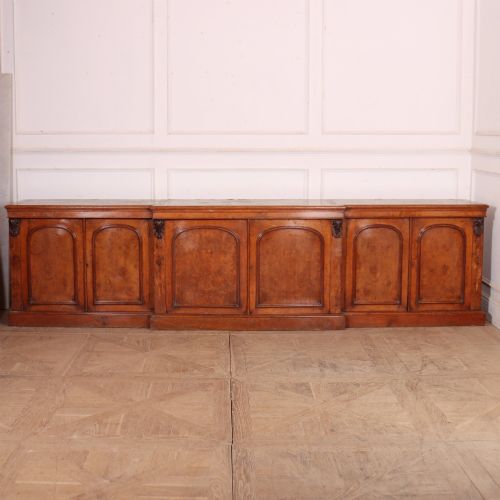
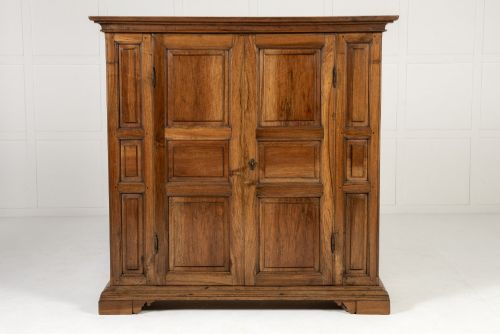
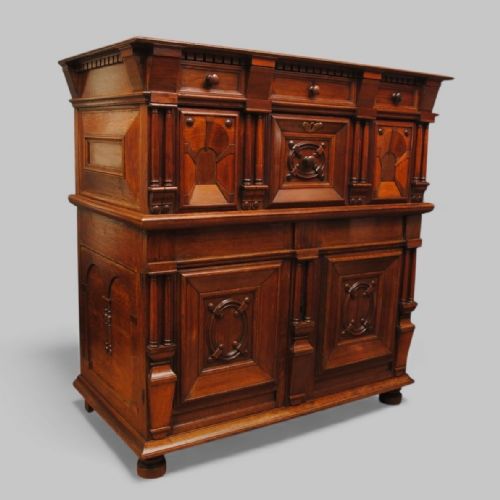
A paneled walnut credenza brings tactile depth and formal gravity to a room through heavy timber construction and architectural framing.
Paneled Walnut Credenza
A paneled walnut credenza comprises substantial storage furniture built around timber frameworks, appearing across periods from the seventeenth century through the twentieth century. These pieces function as sideboards, cabinets, and commodes designed to anchor formal rooms with robust storage capacity.
The versions met most frequently on this page span seventeenth-century origins, eighteenth-century Italian workshops, and later revival movements. Formats range from low sideboards to tall cabinets on stands, dominated by walnut timber and geometric panel construction.
How they were made
Construction relies heavily on solid walnut, oak, and fruitwood, shaped through traditional joinery and deep panel carving. Timber selection prioritises durable domestic hardwoods capable of supporting ornate relief work and structural framing.
Secondary materials such as iron, brass, and marble appear as functional mounts, hardware, and structural tops. Gilt bronze and oil paint occasionally finish specific revival pieces, adding decorative contrast to the dark wood surfaces.
Fruitwood hiding inside a walnut cabinet keeps the secret.
What varies in quality
Quality differences emerge through the depth of carving, the precision of the panel joinery, and the integrity of the timber selection. Pieces executed with crisp, deep relief work and well-figured walnut sit at the upper end of the scale.
The refinement of historical revival details, such as Renaissance or Baroque motifs, dictates the visual success of the piece. Superior examples maintain balanced proportions between the heavy woodwork and supporting architectural elements.
The Paneled Walnut Credenza Glossary
- Credenza
- A sideboard or cabinet used for storing and serving food or displaying objects. This form evolved from ecclesiastical and domestic storage furniture in Italy.
- Panel
- A distinct flat section of wood set within a surrounding frame. This method accommodates seasonal wood movement while creating geometric surface patterns.
- Walnut
- A dense, hard timber prized for rich dark colour and attractive grain figures. It forms the primary structural and visual material for these cabinets.
- Commode
- A low freestanding piece of furniture with drawers or doors, functioning primarily as a storage cabinet. Italian examples frequently utilise walnut construction.
- Renaissance Revival
- An architectural and decorative style drawing inspiration from fifteenth and sixteenth-century art. Pieces in this manner feature pronounced classical motifs and heavy relief carving.
Paneled Walnut Credenza: Frequently Asked Questions
What is a paneled walnut credenza?
A paneled walnut credenza is a heavy storage cabinet built from walnut timber with framed panel construction. These pieces serve as functional sideboards and display units.
Originating across various European traditions, they provide substantial interior storage enclosed by hinged doors or drawers.
How do I style a walnut credenza?
These cabinets suit dining rooms, hallways, and living spaces where their dark wood tones can anchor the room. Pair them with complementary timber furniture and minimal wall decor.
Allow the architectural panels and carved details to remain the focal point without overcrowding the top surface.
How do I identify the period?
Period identification relies on examining the joinery methods, hardware types, and stylistic motifs such as Baroque or Renaissance revival details. Earlier pieces show hand-tool marks and pegged joints.
Later revival items incorporate machine-sawn timber and varied secondary woods like oak or fruitwood alongside marble tops.
What materials are used?
Construction primarily utilises walnut, complemented by secondary structural timbers like oak and fruitwood. Metal elements include brass and iron hardware.
Certain examples feature marble slab tops, oil paint finishes, or gilt bronze accents depending on the specific regional style and date.