



Paneled Pine Pew
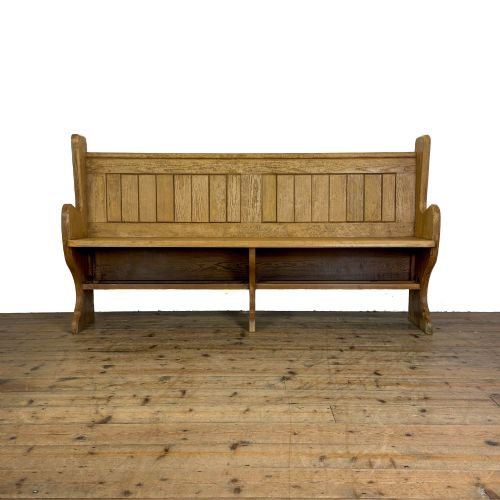
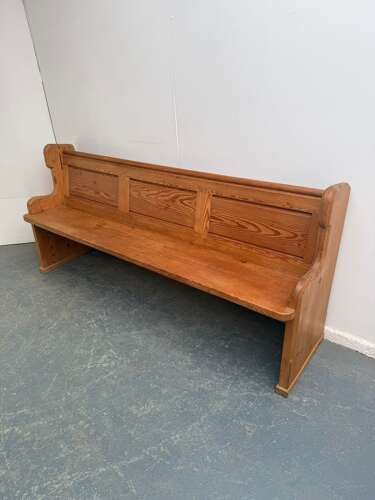
A paneled pine pew brings robust utility and honest joinery into an interior, offering sturdy seating derived from church and farmhouse traditions.
Paneled Pine Pew
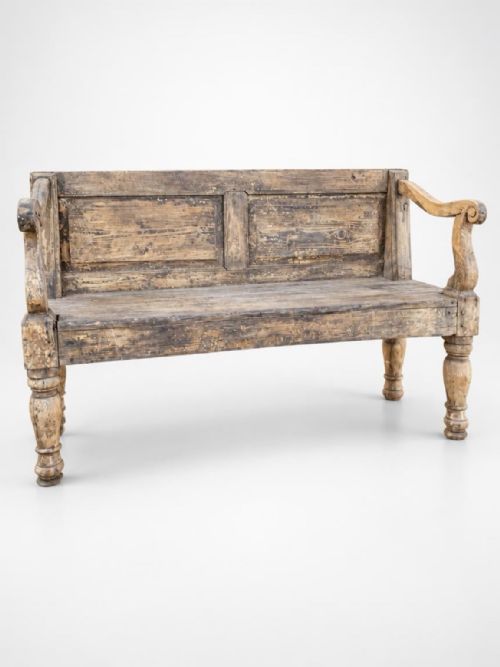
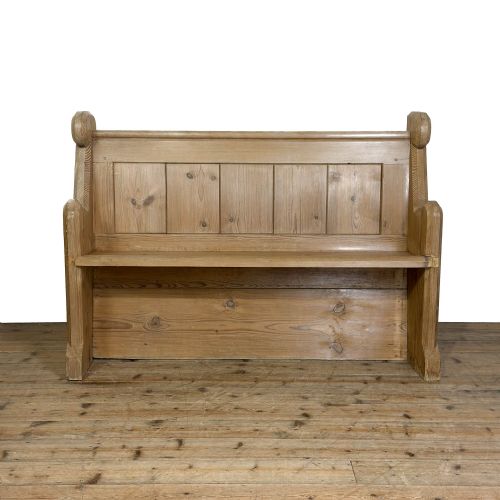
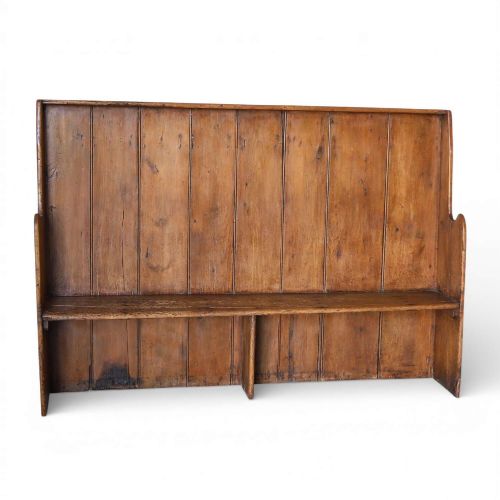
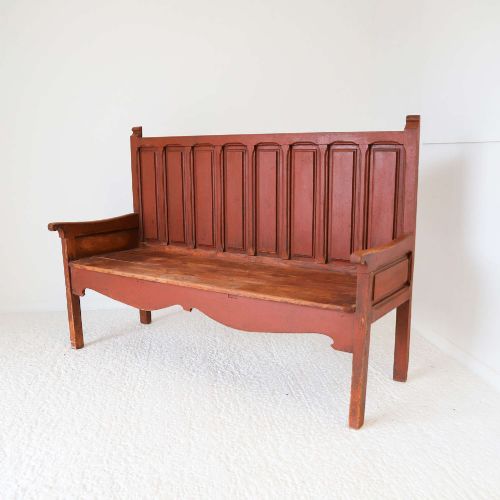
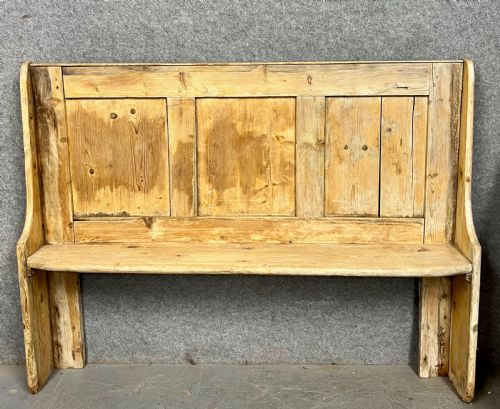
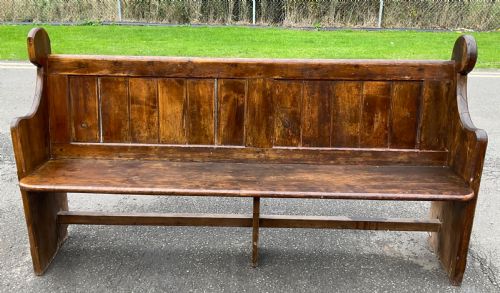
When searching for a paneled pine pew, a buyer is looking at substantial wooden seating forms built from pine and pitch pine, including chapel pews, church pews, high-back settle benches, and long dining benches. These functional items originate predominantly from the nineteenth century, encompassing pieces dated around eighteen eighty and the broader Victorian period.
The most common versions met on this page are high-back settles and chapel or church pews designed for communal seating. Their origins span English, Spanish, French, and general rustic country traditions, showing both painted finishes and waxed surfaces like honey brown patina.
How they were made
Construction relies on solid pine and pitch pine timbers, shaped into heavy benches through traditional carpentry methods. These wooden structures frequently incorporate paneled backs designed to block drafts in large rooms or ecclesiastical spaces.
Surfaces are finished in varied ways, utilising wax to highlight the natural grain of the wood or employing paint for decorative and protective purposes.
Paneled Pine Pew Retail Price Guide 2026
Typical asking prices for paneled pine pew among the pieces listed under this phrase on Sellingantiques today, from the lower quarter to the upper quarter. They describe what is for sale here now, not the wider market.
The listings show nineteenth-century pieces finished in wax, paint, or natural wood, originating from English, French, and Spanish country traditions.
What varies in quality
Quality in these pieces is dictated by the depth of the timber's patina and the integrity of the original construction. Items displaying rich honey brown wax finishes or authentic painted surfaces sit higher in the range than stripped or poorly altered examples.
The architectural presence of the high back and the crispness of the paneling further distinguish a superior settle bench from a plain utilitarian seat.
The Paneled Pine Pew Glossary
- Pine
- A softwood utilised extensively for domestic and institutional furniture due to its availability and workability. It takes both wax and paint finishes readily.
- Pitch Pine
- A denser, more resinous variety of pine often selected for nineteenth-century church seating and heavy benches. It yields a distinctive grain pattern.
- Settle
- A wooden bench with a high back, solid arms, and frequently a box base designed to keep out drafts. These forms date back centuries and served various domestic roles.
- Patina
- The surface sheen and colour developed by wood over decades of handling, exposure, and waxing. A rich patina indicates age and natural wear.
Paneled Pine Pew: Frequently Asked Questions
Where do paneled pine pews work best?
These long benches suit large hallways, boot rooms, and spacious rustic dining areas where substantial seating is required along a wall.
Their straight backs and deep seats make them practical for everyday use in high-traffic spaces.
How do church pews differ from settle benches?
Church pews are typically open at the ends and designed for rows, featuring simpler structural frames meant for congregational seating.
Settle benches incorporate high paneled backs and solid sides intended to shield the sitter from drafts in domestic rooms.
How should I care for a waxed pine bench?
Maintain the wood by applying a quality beeswax periodically to nourish the dry timber and preserve the honey brown patina.
Avoid placing the piece near direct heat sources to prevent the pine from drying out or splitting.
Are these pews comfortable for dining?
Many examples function well at large dining tables, particularly the longer French and English country bench formats.
Adding loose squab cushions can improve comfort during extended periods of sitting.