




Pale Wood Side Table
A pale wood side table brings a bright, weathered surface and straightforward utility to a room.
Pale Wood Side Table
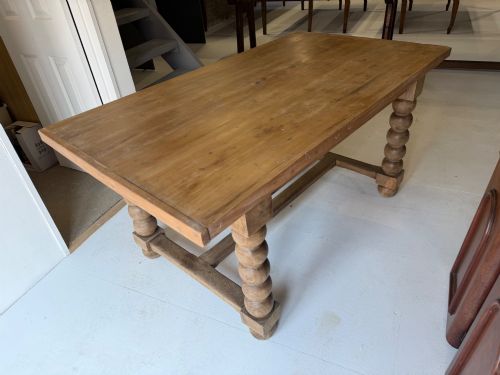
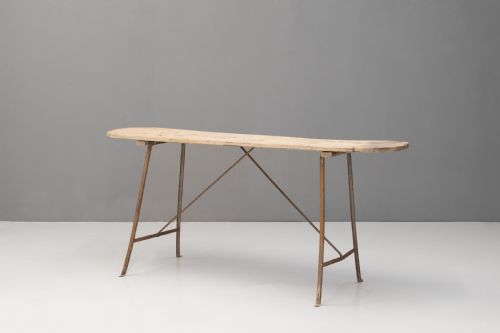
A pale wood side table brings a light, neutral surface and compact utility to a room, drawing on regional European traditions. These pieces include scrubbed sycamore, bleached oak, and elm surfaces shaped for practical domestic tasks.
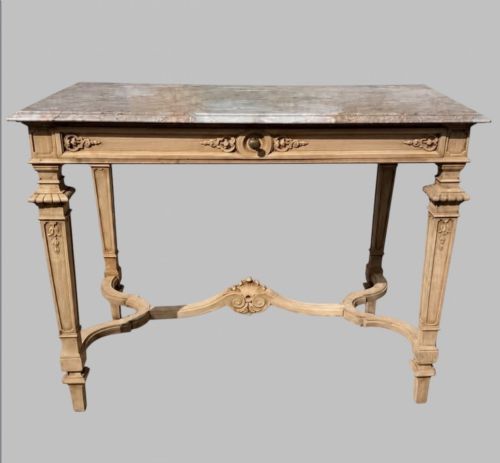
The versions met most often on this page date from the nineteenth century and the Victorian era, spanning French provincial, Gustavian, and rustic farmhouse styles. They appear as console tables, lamp tables, and small occasional pieces.
Makers designed these items for service in kitchens, halls, and parlours, utilising timbers left unfinished or stripped to a pale tone over generations of use and scrubbing.
How they were made
Joiners built these tables using sturdy domestic timbers like oak, elm, ash, and pine, often finished with scrubbed surfaces or left as bare timber. Metal fixings and occasional paint layers appear on specific regional variants.
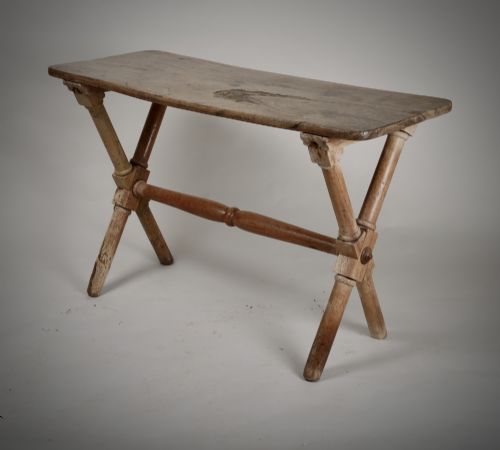
Construction methods relied on traditional joints to handle daily domestic work, from tavern service to kitchen preparation. Surfaces show the marks of hand planes and years of scrubbing rather than heavy factory finishes.
The listings show nineteenth-century pieces dominated by oak, elm, and sycamore in French and Swedish styles.
What varies in quality
The distinction between ordinary utility items and superior examples lies in the handling of the timber and the integrity of the original construction. Better pieces retain balanced proportions and genuine surface patination earned through decades of domestic use.
Subtle differences in timber selection, such as figured sycamore or dense bleached oak, separate standard workshop output from finer regional furniture. The integrity of the joints and the honesty of the scrubbed surface determine the standing of each piece.
The Pale Wood Side Table Glossary
- Bleached oak
- Oak timber treated or weathered to a pale, light tone. This process highlights the grain while removing darker historic finishes.
- Scrubbed finish
- Wood surfaces cleaned repeatedly with water and a stiff brush over generations. This technique leaves the grain raised and the tone pale.
- Demi-lune
- A half-moon shape used for console tables designed to sit flush against a wall. These pieces often feature painted or polished finishes.
- Cricket table
- A small, light three-legged table originating in Britain. The design provided stability on uneven floors.
- Trestle table
- A table structure comprising two or more supports holding a horizontal top. This form allowed for easy dismantling in earlier centuries.
Pale Wood Side Table: Frequently Asked Questions
How do I clean a pale wood table?
Use a dry or barely damp cloth to remove dust from the surface. Avoid harsh chemical cleaners that strip the natural patina.
Keep the timber away from direct heat sources and strong sunlight to prevent the dry wood from splitting or warping over time.
Are these tables from the nineteenth century?
Many examples date from the nineteenth century, including Victorian pieces and items from the eighteen-eighties and eighteen-nineties. Regional styles span French provincial and Swedish workshops.
Construction details and timber types help date each item, reflecting the working practices of nineteenth-century joiners and rural craftspeople.
Can I use a side table for dining?
Most side tables and lamp tables are too low or small for comfortable dining. They suit serving, display, and occasional placement beside seating.
Larger trestle and tavern tables in the selection offer proper height and surface area for meals, unlike compact console variants.
What is Gustavian style?
Gustavian design is the Swedish interpretation of French neoclassical styles, marked by restrained ornamentation and pale painted finishes. This aesthetic brought lighter tones to northern European interiors.
Pieces from this tradition often feature carved details and demi-lune shapes, pairing utility with understated elegance.