


Antique Marble Server Table
An antique marble server table brings heavy stone slabs and rich timber frames together to anchor a dining room or hall with solid utility.
Antique Marble Server Table
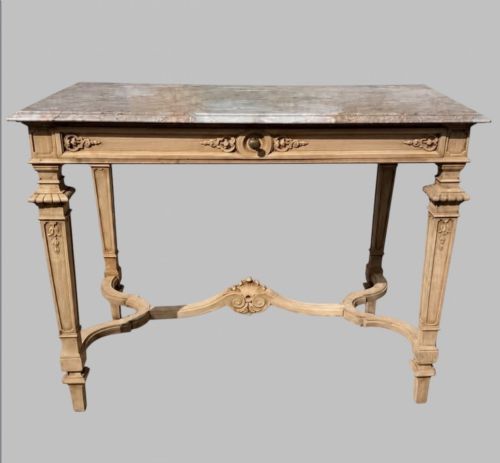
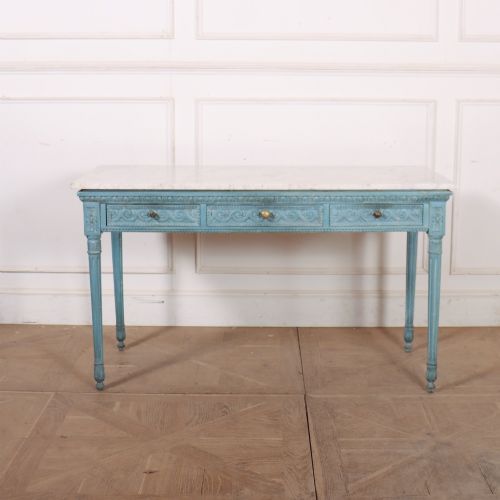
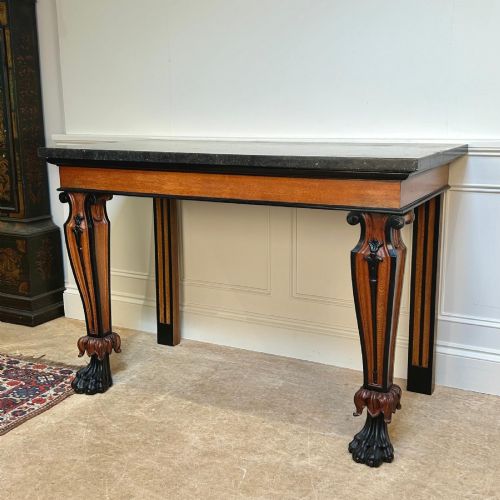
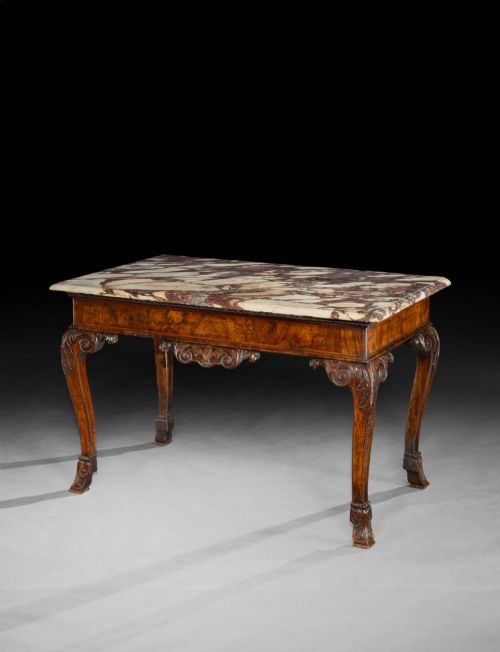
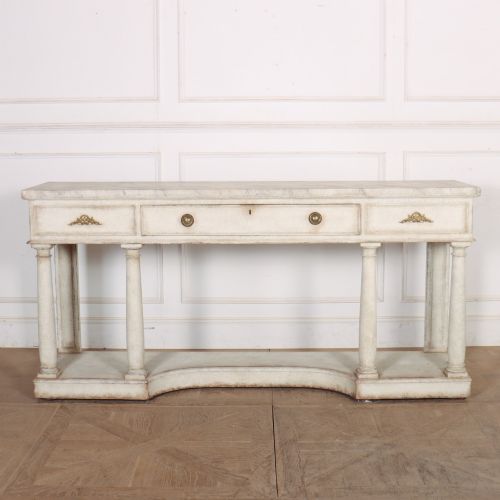
An antique marble server table combines a heavy stone top with a timber base designed for placement against a wall in a dining room or hallway. You will frequently encounter French and English pieces spanning the eighteenth century through to the Edwardian period, taking the form of console tables, side tables, buffets, and washstands. These items served practical purposes in domestic interiors, holding food, drinks, or washing apparatus while displaying the natural grain of marble.
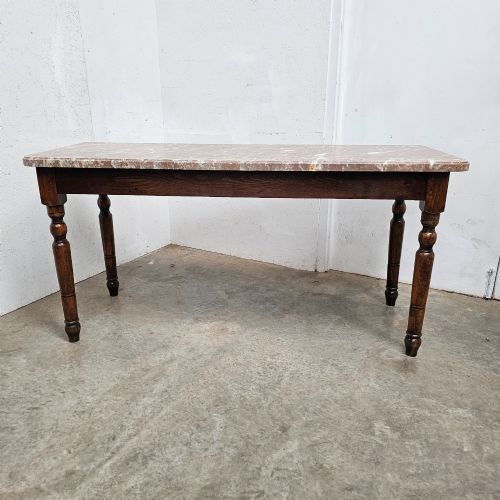
The selection ranges from Regency oak and George II walnut to ornate French Louis Revival consoles and mahogany washstands. Walnut, oak, mahogany, and painted wood provide the structural support for slabs of white, grey, or rouge marble. Each piece reflects the stylistic preferences of its origin, whether Italian neoclassical restraint, French provincial carving, or Irish lion masks and paw feet.
Materials and Construction Methods
Cabinetmakers constructed the timber bases of an antique marble server table using solid mahogany, walnut, oak, and pine, often enhancing them with brass mounts, ormolu, or painted finishes. Joinery relied on traditional mortise and tenon techniques to support the substantial weight placed upon the frame. Carved details such as lion masks, scrolling foliage, and gadrooning required skilled hand work by artisans in workshops across Britain, France, and Italy.
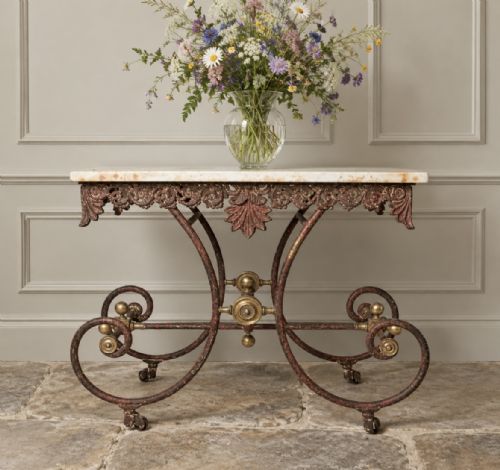
The stone surfaces consist of thick slabs of marble, sometimes paired with specialised cabinetry like the rouge marble found on Victorian washstands or the patisserie display slabs seen on French tables. These tops were cut and polished by hand to fit precisely onto the wooden chassis, secured by their own considerable weight or discreet fixings. The integration of wood and stone demanded exact measurements to ensure stability across console tables and serving buffets.
Listings feature items from the eighteenth century through to the Edwardian period, utilising walnut, oak, mahogany, and pine.
Distinctions in Quality and Craft
Quality in an antique marble server table rests upon the crispness of the timber carving and the selection of materials. Fine examples display deeply chiselled ornamentation, such as the paw feet and lion masks on Irish oak pieces, executed with control and depth. Lesser pieces rely on mechanical stamping or soft pine framing covered by heavy paint rather than figured walnut or dense mahogany.
The integration between the stone top and the wooden base marks another clear division. Superior pieces feature custom-fitted marble slabs with finely polished bevels and matching timber carcasses that bear the stone without sagging. Inferior construction shows mismatched repairs, poorly joined frames, or replacement marble tops that do not respect the proportions of the original base.
KRIEGER of Paris
The Antique Marble Server Table Glossary
- Console table
- A table designed to be fixed against a wall, typically supported by two front legs and secured with wall brackets. These pieces often feature decorative aprons and marble tops suited for display.
- Ormolu
- Gilded bronze or brass applied as decorative mounts to furniture frames. This technique gained prominence in French revival pieces and empire cabinets.
- Rouge marble
- A striking reddish-coloured limestone with white or dark veining used frequently for high-status Victorian and French tabletops. It adds deep colour and pattern to the surface.
- Chiffonier
- A small sideboard or cabinet featuring shelves and drawers, developed in the nineteenth century for storage and display. They frequently incorporated marble tops for durability.
- Washstand
- A domestic piece fitted with a stone top to resist water damage from basins and ewers. Edwardian and Victorian examples often include tiled backs or lower storage shelves.
Antique Marble Server Table: Frequently Asked Questions
What is an antique marble server table?
An antique marble server table is a heavy furniture piece with a stone top and a wooden base, built to stand against a wall for serving food or displaying items.
These items draw on styles from the eighteenth century through the Edwardian era, incorporating materials like mahogany, oak, and walnut beneath polished marble slabs.
How were these tables used originally?
These tables functioned as sturdy surfaces in dining rooms for holding dishes, or in hallways and bedrooms as console tables and washstands.
The cool stone top provided a practical, wipe-clean workspace that resisted moisture and heat during domestic service.
How do I identify the period of a table?
Period identification relies on examining the timber species, structural joinery, and the decorative carving style. For instance, George II walnut pieces exhibit different proportions and leg forms compared to later Victorian or Edwardian mahogany washstands.
Cabinetmaking techniques evolved from hand-sawn timbers and pegged joints to factory-produced components by the late nineteenth century.
Are the marble tops original to the tables?
Most marble slabs on these tables are original to their bases, cut and fitted specifically for the frame during manufacture. You can check the underside and edges for matching age, wear patterns, and fit against the wooden rebate.
Replacement marble is occasionally fitted if an original top was broken, though period stone usually shows consistent patination.
How do I care for marble and wood?
Care involves dusting the timber with a dry cloth and feeding the wood occasionally with appropriate wax, avoiding silicone polishes. Marble requires neutral soap and water for cleaning, as acidic liquids will etch the polished surface.
Placing felt pads beneath objects on the stone prevents scratching and preserves the finish.