




Pale Wood Kitchen Table
A pale wood kitchen table brings lightness and utility to a room, offering a durable surface shaped by everyday use.
Pale Wood Kitchen Table
A pale wood kitchen table brings together practical surfaces and lighter timber tones derived from periods spanning the nineteenth and early twentieth centuries. These pieces encompass dining tables, trestle tables, butcher blocks, drapers tables, and serving tables designed for daily domestic use.
Makers utilised solid timbers alongside scrubbed finishes to achieve the pale appearance desired in modern and traditional interiors alike. The forms range from simple four-legged dining variants to X-frame trestles and tables equipped with single drawers.
What varies in quality
The character of a pale wood kitchen table depends heavily on the integrity of its timber and the honesty of its surface wear. Tables retaining their original structural framing alongside authentic patination display a superior physical presence.
Proportion and execution distinguish regional vernacular pieces from standard utilitarian work. The subtlety of a scrubbed top or the balanced placement of stretchers and legs determines the overall visual weight of the piece.
Materials represented across the inventory include oak, pine, bleached oak, elm, poplar, beech, sycamore, and walnut.
The Pale Wood Kitchen Table Glossary
- Scrub top
- A wooden table top cleaned repeatedly with water and a stiff brush, which lightens the timber and exposes the grain. This finish was common on utilitarian kitchen tables.
- Trestle table
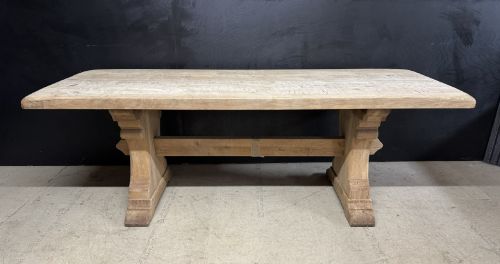
- A table comprising two or more supports connected by a horizontal beam or stretcher, holding a loose or fixed top. This form provides maximum legroom along the length of the surface.
- Refectory table
- A long narrow dining table traditionally used for communal meals. Examples appear from the Edwardian period onward in sturdy oak constructions.
- Bobbin legs
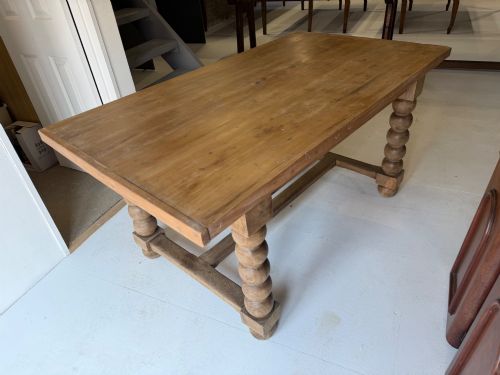
- Turned furniture legs shaped like a series of wooden bobbins or spools stacked end to end. This decorative turning appears on nineteenth century beech supports.
- Drapers table
- A long utility table traditionally used for measuring and cutting fabric, featuring a narrow profile and frequently fitted with drawers. These tables translate well into modern serving or dining roles.
Pale Wood Kitchen Table: Frequently Asked Questions
How do I clean a scrubbed top table?
Use warm water and mild soap with a soft brush to remove surface dirt without damaging the pale timber grain. Avoid harsh chemical sealants that alter the natural texture.
Allow the wood to dry naturally after washing to prevent warping or splitting of the pine, oak, or elm surfaces.
Are these tables suitable for daily dining?
These pieces were built for heavy domestic tasks, making them robust enough for everyday family meals and kitchen activities. The solid timber construction handles regular use without losing structural stability.
Using placemats and coasters helps protect the historic surface from excessive moisture and heat marks while maintaining the patina.
What is the difference between a farmhouse and a trestle table?
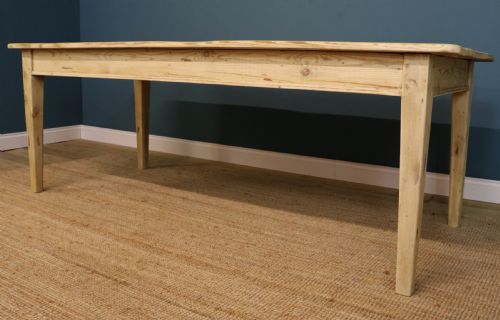
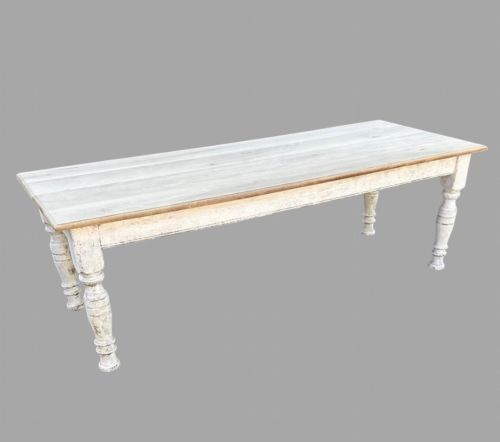
Farmhouse tables typically rest on four distinct vertical legs, sometimes joined by simple stretchers or equipped with storage drawers. They offer a stable, traditional silhouette suited for kitchen environments.
Trestle tables rely on end supports connected by a longitudinal beam, allowing unrestricted seating along the entire length of the flanks.