




Pale Oak Kitchen Table
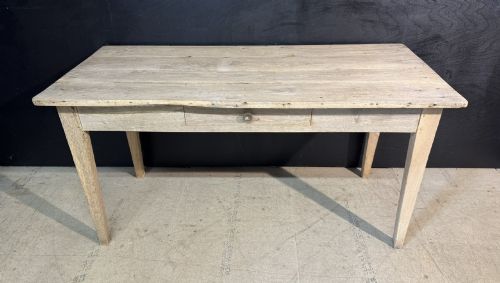
A pale oak kitchen table brings a bright, weathered surface and sturdy country utility straight into the heart of a home.
Pale Oak Kitchen Table
When you search for a pale oak kitchen table, you are looking at practical dining and work surfaces shaped by country traditions across Europe and Britain. These pieces combine robust construction with lighter timber tones that suit modern domestic spaces without losing their historical character.
The versions you are most likely to meet on this page span the nineteenth century, the Edwardian era, and the nineteen-twenties. They appear in styles ranging from rustic farmhouse and French provincial to Scandinavian, Italian, and English country house designs.
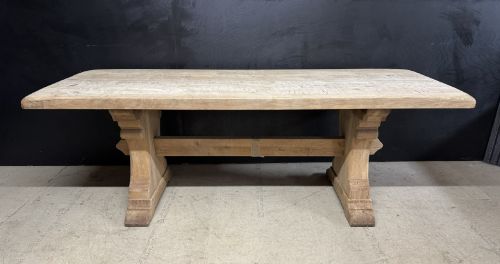
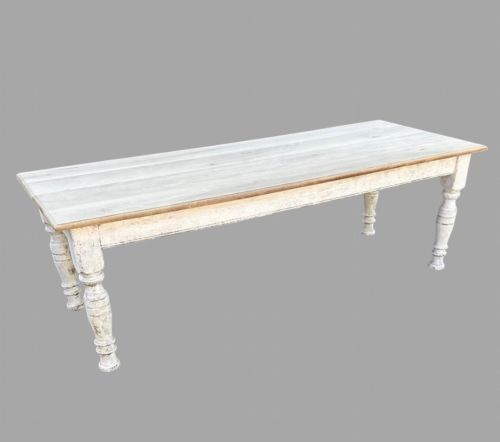
Beyond standard dining tables, the selection includes drapers tables, trestle tables, refectory tables, console tables, and serving tables. Their forms reflect functional workshop and kitchen origins, utilising solid oak alongside supporting woods like beech, pine, poplar, and occasional painted finishes.
How they were made
Construction relies heavily on solid oak timber paired with structural secondary woods such as pine, beech, and poplar. Makers utilised durable joinery to ensure these large surfaces could withstand daily domestic and trade use.
Many examples feature bleached or pale oak finishes that lighten the natural grain of the wood. This process highlights the tactile quality of the timber while maintaining the structural integrity built by nineteenth-century and early twentieth-century craftsmen.
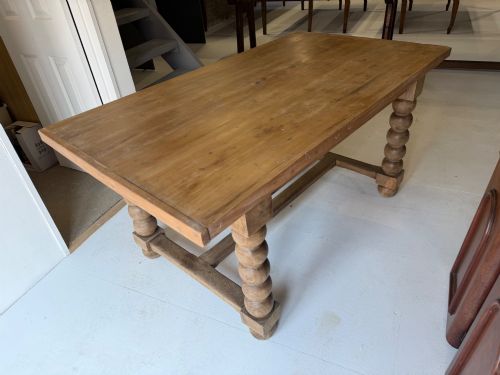
Some nineteenth-century tables come equipped with bobbin legs, turning utility timber into cheerful rows of wooden spools.
What varies in quality
Quality rests in the purity of the timber selection and the structural honesty of the frame. Pieces built entirely from solid oak command different architectural presence compared to those utilising secondary woods for internal framing or stretchers.
Proportion and the handling of the bleached finish also separate standard utility items from finer country house examples. The definition of the legs, whether bobbin turned, trestle-based, or tapering, dictates the overall refinement of the piece.
The Pale Oak Kitchen Table Glossary
- Bleached oak
- Timber treated to lighten its natural dark tone, creating a pale surface popular in French and Scandinavian country furniture. This process accentuates the grain pattern while softening the visual weight of the wood.
- Trestle table
- A form comprising two or more supports connected by a horizontal beam that holds a long top. This design allowed for stability and maximum seating space in domestic and working environments.
- Drapers table
- A long, narrow utilitarian table originally used in shops for folding cloth. Their generous length and shallow proportions make them practical for modern kitchens and serving spaces.
- Refectory table
- A long dining table traditionally used in communal dining halls. They are characterised by sturdy legs linked by low stretchers for added rigidity.
- Bobbin legs
- Turned furniture legs shaped with a series of rounded, spool-like swellings. This decorative turning technique appears on nineteenth-century seating and tables.
Pale Oak Kitchen Table: Frequently Asked Questions
What is a pale oak kitchen table?
A pale oak kitchen table is a durable dining or work surface constructed from light or bleached oak timber. These pieces typically originate from nineteenth-century and early twentieth-century rural traditions across Europe and Britain.
They appear in forms such as farmhouse dining tables, trestle tables, and drapers tables. Their lighter finishes make them adaptable to contemporary interiors while retaining historic character.
How do I clean pale oak?
Cleaning pale oak requires simple, gentle methods that protect the untreated or bleached surface of the wood. Using a dry or barely damp cloth prevents moisture from lifting the grain or staining the light timber.
Avoid harsh chemical cleaners and abrasive scouring pads that strip the natural finish. Regular dusting preserves the dry, tactile quality characteristic of antique country furniture.
Where were these tables made?
These tables originate from various country house and provincial workshops across Britain, France, Italy, Scandinavia, and the Netherlands. Each region developed distinct proportions and leg styles suited to local domestic architecture.
French and Swedish examples frequently feature bleached trestle designs, while British pieces often showcase solid oak farmhouse or serving table constructions.
Are these tables suitable for daily use?
These tables were originally built for heavy daily work in kitchens, dining rooms, and shops. Their solid oak construction and robust frames ensure they withstand normal modern household activity.
Using placemats and coasters helps protect the historic surface from heat and moisture rings. Embracing minor marks allows the timber to continue developing its natural patina over time.