

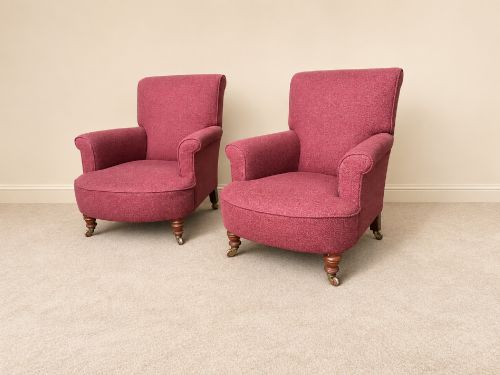
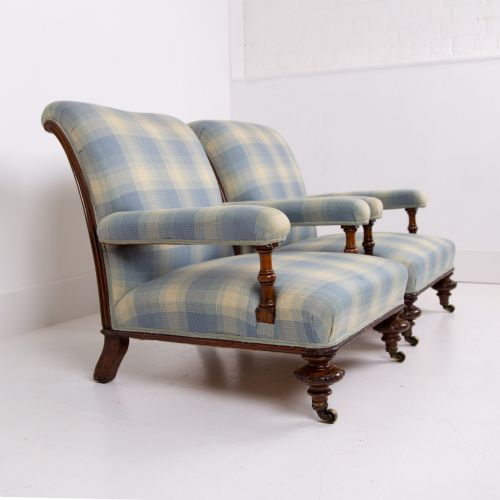
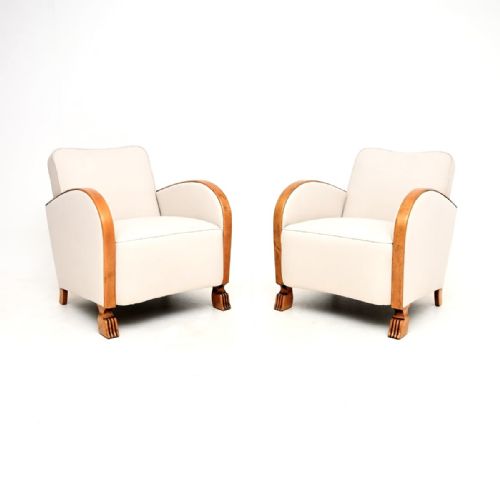
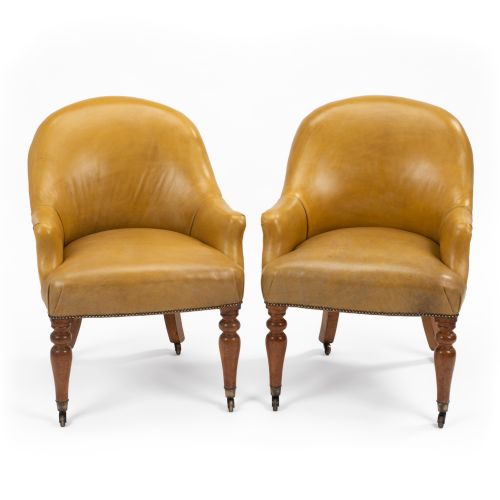
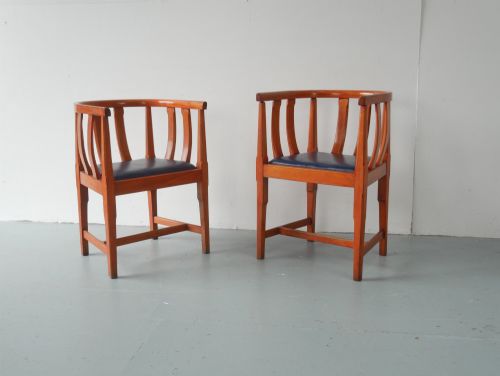
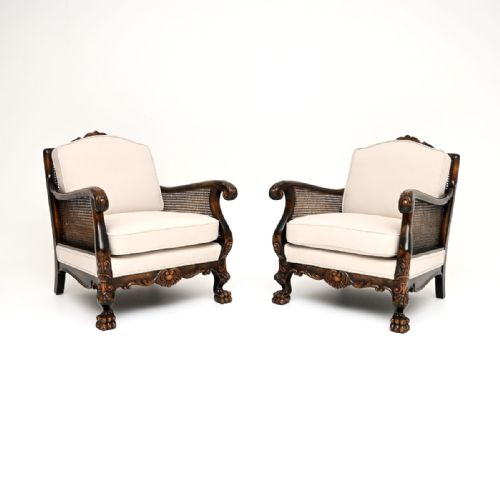
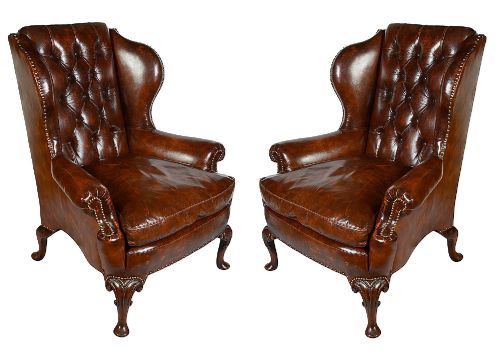
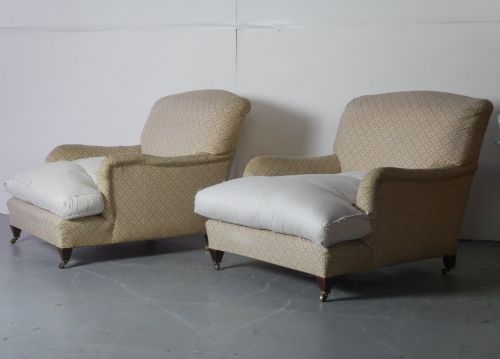
Paired Club Armchairs
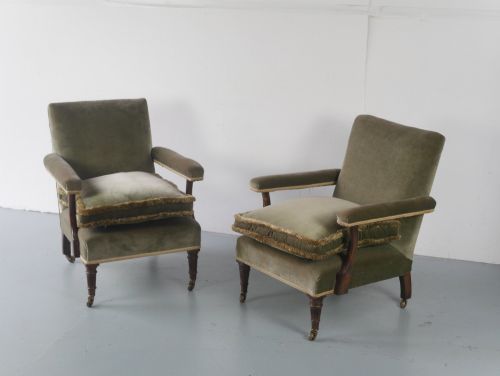
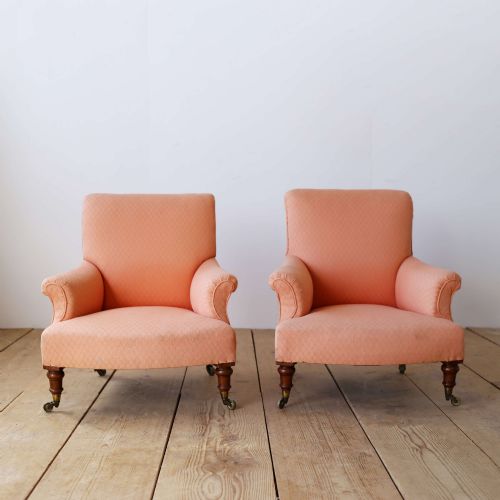
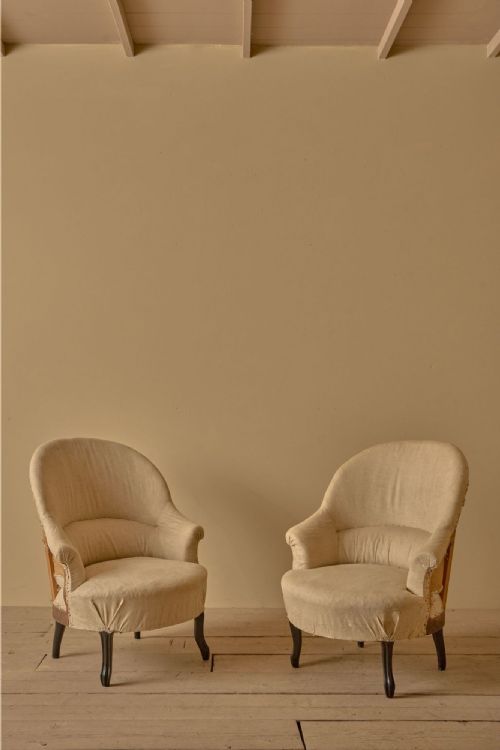
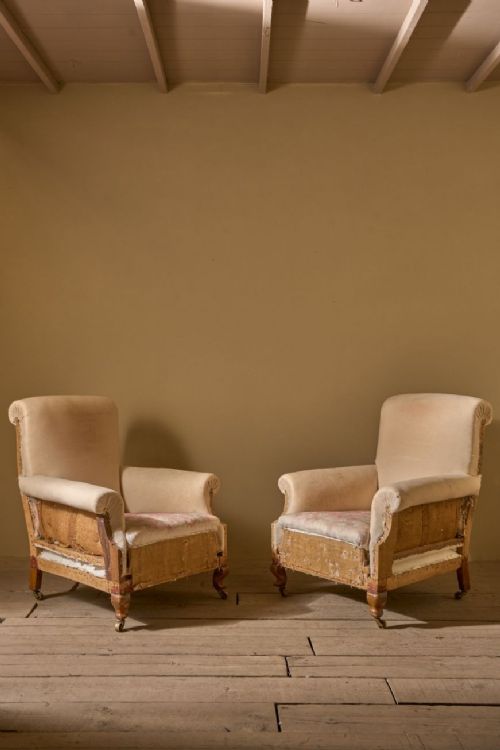
Paired club armchairs bring matching deep-seated comfort and enduring design to a room, offering a balanced seating arrangement for any interior.
Paired Club Armchairs
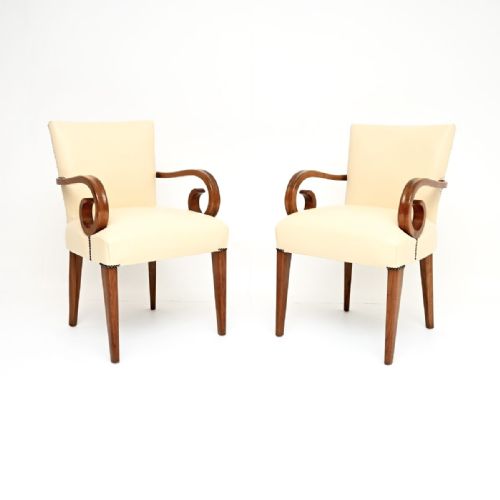
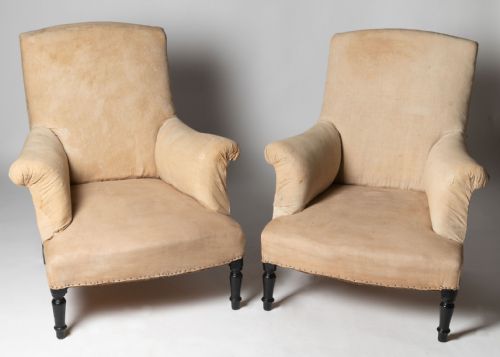
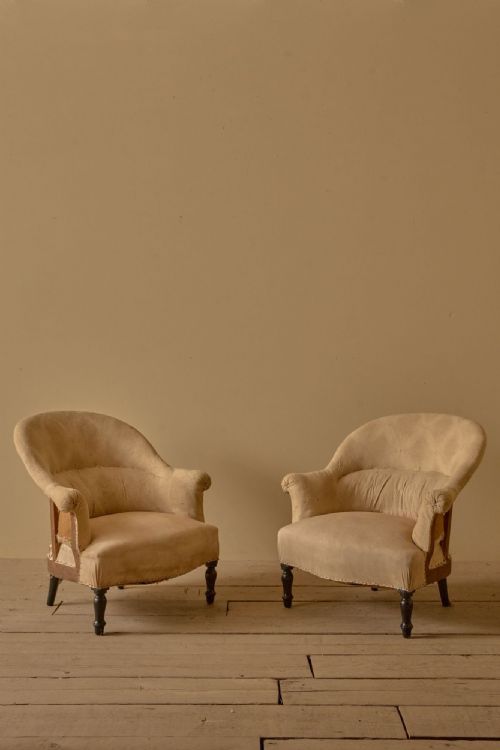
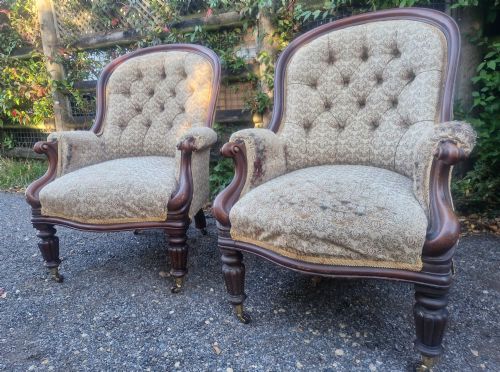
Paired club armchairs encompass heavy, upholstered seating designed for relaxation, frequently encountered in forms from the nineteenth century through the Art Deco era and the mid-twentieth century. Buyers seeking paired club armchairs find matching sets rooted in diverse traditions, including French Parisian designs, English Chesterfield styles, and Swedish Art Deco creations.
The selection ranges from robust oak-framed examples to sleek walnut and satin birch frames, alongside comfortable tub chairs and library armchairs. These matched pairs provide a unified seating solution, appearing in materials such as leather, fabric, and cane across various historical periods.
Materials and Construction
Makers utilised timber frames constructed from walnut, mahogany, maple, oak, and satin birch to provide structural integrity for paired club armchairs. These wooden skeletons support substantial upholstery, including button-tufted backs, calico padding, and supportive interior springing.
Surface treatments incorporate leather, rexine, and various fabrics, often detailed with brass accents. Cabinetmakers and upholsterers combined these elements to achieve both durability and deep-seated comfort.
Paired Club Armchairs Retail Price Guide 2026
Typical asking prices for paired club armchairs among the pieces listed under this phrase on Sellingantiques today, from the lower quarter to the upper quarter. They describe what is for sale here now, not the wider market.
Listings feature paired club armchairs spanning the nineteenth century, the Edwardian period, Art Deco designs from the 1930s, and mid-twentieth-century French workshop pieces.
Distinction in Quality
Quality in paired club armchairs rests upon the integrity of the underlying timber frame and the execution of the upholstery work. Superior examples exhibit harmonious proportions, robust joinery, and high-grade materials such as supple leather or finely figured satin birch.
The distinction between standard production and finer pieces lies in the refinement of the carving, the synchronicity of the matched pair, and the enduring resilience of the internal construction.
Maurice Adams·Whytock and Reid·Hille·Howard and Sons
The Paired Club Armchairs Glossary
- Bergère
- An enclosed upholstered armchair with wooden framing exposed around the sides and back, frequently featuring cane work. This French seating style often utilises satin birch or walnut.
- Rexine
- A brand of leathercloth made from fabric coated with nitrocellulose, utilised as an upholstery material on chairs from the early twentieth century. It offers a smooth, wipeable surface mimicking leather.
- Chesterfield
- A traditional style of heavily upholstered seating characterised by deep buttoning and rolled arms of equal height to the back. These pieces frequently feature leather upholstery.
- Tub chair
- An armchair featuring a rounded back that curves continuously into low arms, forming a single enclosed shape. This compact form appears across nineteenth-century and later designs.
- Spoon back
- An upholstered chair back shaped in the concave contour of a spoon, designed to fit the human spine. This Victorian framing style provides ergonomic support.
Paired Club Armchairs: Frequently Asked Questions
What defines paired club armchairs?
Paired club armchairs are matching deep-seated upholstered chairs designed for relaxation, originating from periods such as the Victorian era, the nineteenth century, and the Art Deco movement.
They combine robust wooden frames with substantial padding, offering a symmetrical seating option for libraries, drawing rooms, and studies.
How do I identify Art Deco club chairs?
Art Deco club chairs typically date from the 1930s and display streamlined geometric forms, smooth leather upholstery, and polished wood frames such as walnut and satin birch.
They prioritise clean lines and functional comfort, contrasting with the more ornate Victorian and Edwardian styles.
What timber was used for frames?
Makers constructed chair frames using a variety of accessible and decorative hardwoods, including walnut, mahogany, oak, maple, and satin birch.
The choice of timber often reflects the period of manufacture, from heavy nineteenth-century oak to lighter twentieth-century satin birch.
Are these chairs suitable for daily use?
These robust seating options were originally built for heavy domestic or library use, utilising sturdy internal construction and durable coverings like leather and heavy fabric.
Their deep seating and supportive frames make them practical for contemporary living spaces requiring comfortable daily seating.