

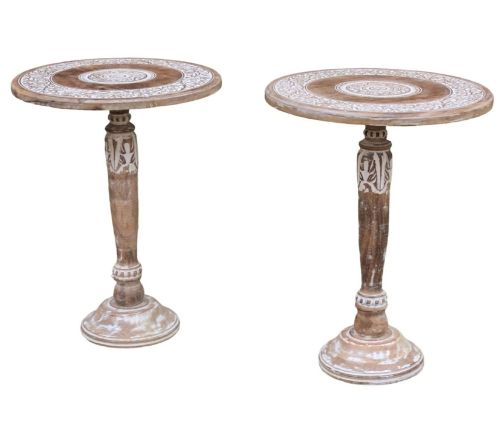
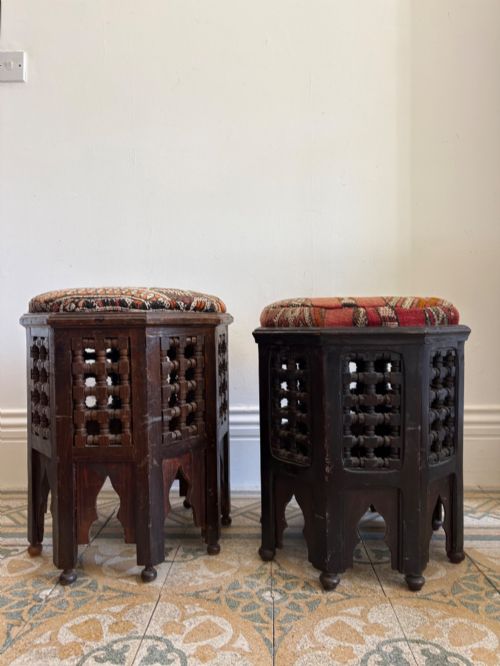
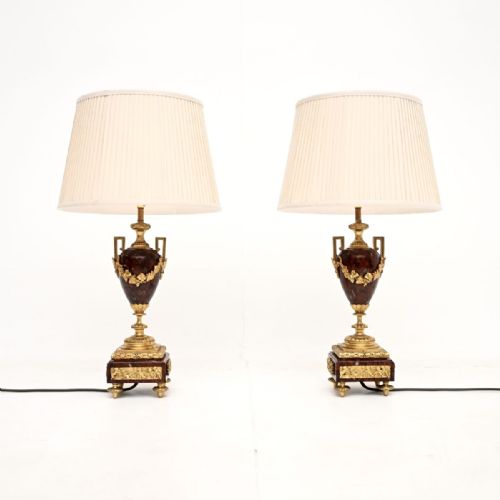
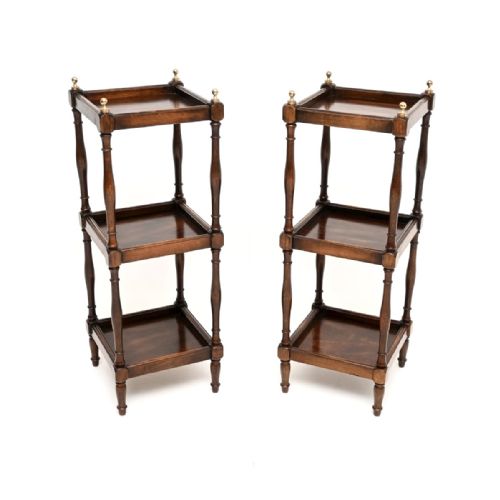
Paired Accent Tables
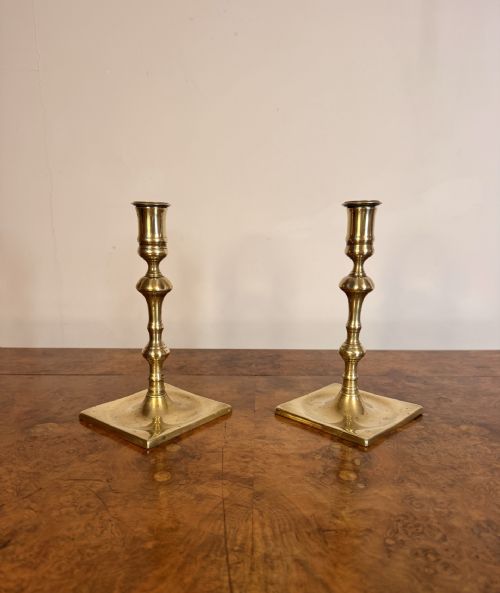
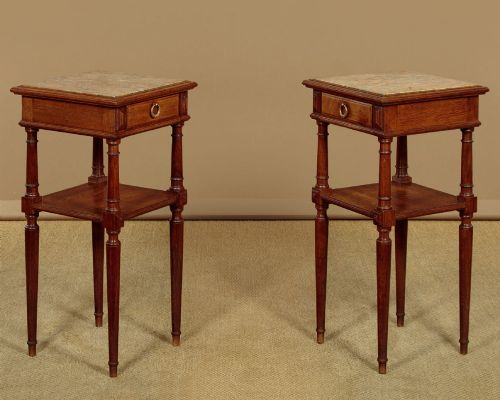
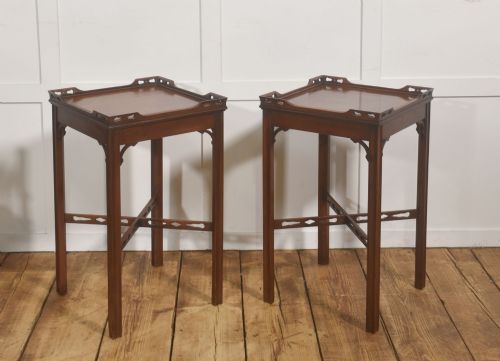
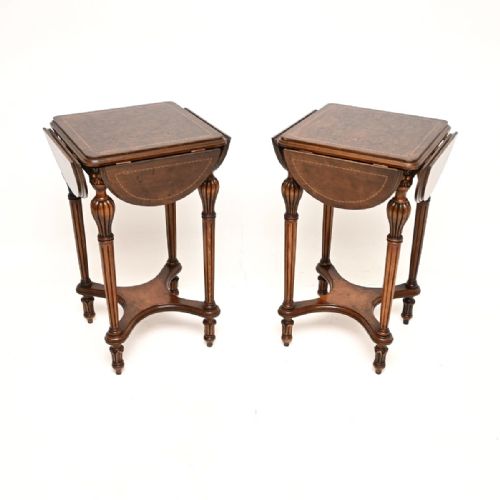
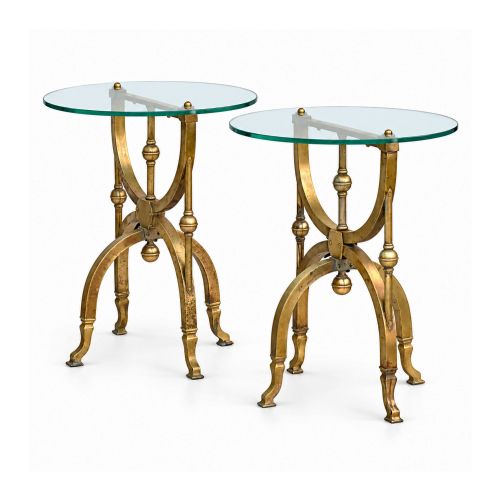
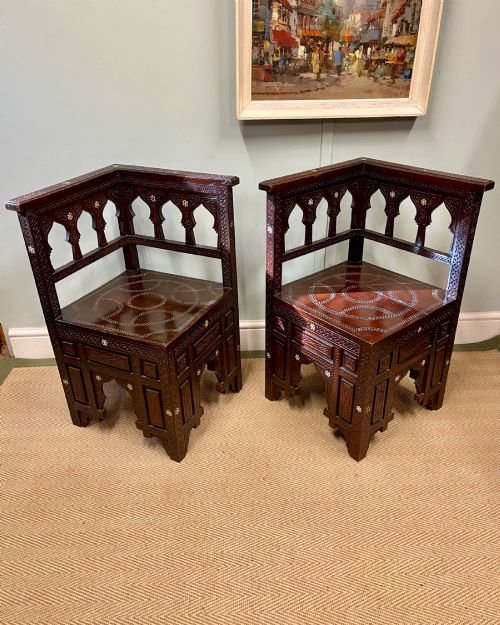
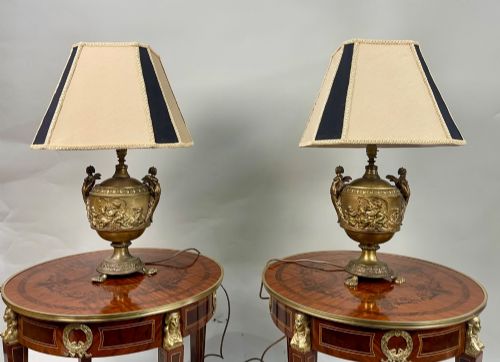
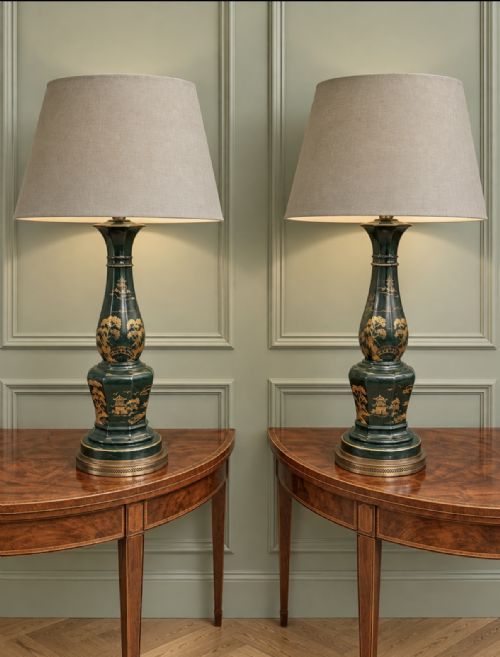
Paired accent tables bring symmetry and character to a room, offering matched surfaces and lighting in walnut, mahogany, marble, and brass.
Paired Accent Tables
Paired accent tables encompass side tables, lamp tables, occasional tables, and bedside tables designed to sit together in a room. Buyers search for this phrase to create balance across a scheme, using matching surfaces to flank a sofa, bed, or fireplace.
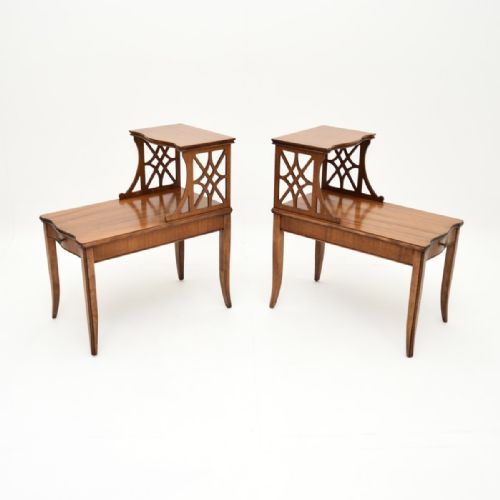
The versions most commonly met on this page span the nineteenth century and the early decades of the twentieth century, including Edwardian, Victorian, and later periods. They appear in forms such as corner tables, low tables, tier tables, and occasional tables.
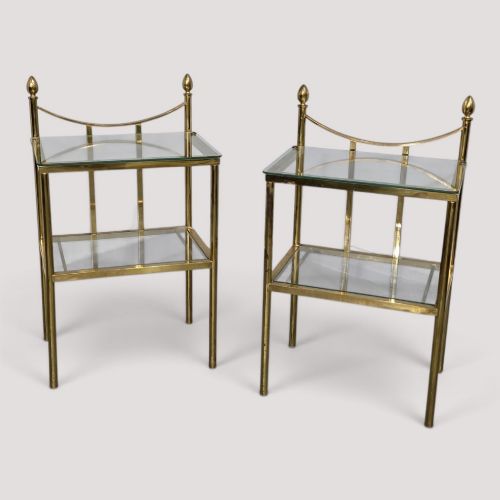
Materials range from traditional timbers like mahogany, walnut, oak, and yew to exotic hardwoods, bamboo, and metal mounts. Many pieces integrate decorative elements like marquetry inlay, marble tops, and brass galleries.
How they were made
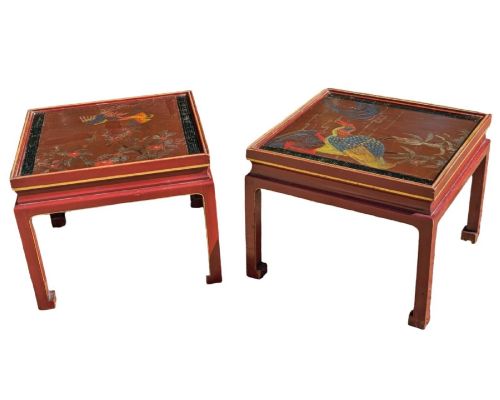
Cabinetmakers utilised solid timbers and selected veneers such as mahogany, walnut, kingwood, and birdseye maple, often applying marquetry or lacquer work to the surfaces. Construction methods involve traditional joinery, turned supports, and occasionally chip carving or bamboo framing.
Metal components, including gilt bronze, brass, ormolu, and gilt metal, are cast and chased to form mounts, galleries, trim, and lamp bases. Marble tops and inserts are shaped and polished to fit snugly within wooden or metal frames.
Paired Accent Tables Retail Price Guide 2026
Typical asking prices for paired accent tables among the pieces listed under this phrase on Sellingantiques today, from the lower quarter to the upper quarter. They describe what is for sale here now, not the wider market.
Listings feature periods from the 18th Century through the 1930s, utilising materials like brass, mahogany, marble, and walnut in diverse styles.
What varies in quality
Quality rests in the precision of the timber selection and the crispness of the joinery and decorative carving. Pieces with finely matched veneer grains, sharp marquetry, and substantial mounts distinguish themselves from simpler utilitarian examples.
The integrity of the matching pair matters greatly, as true pairs share identical dimensions, timber patination, and wear patterns. Matched sets gathered together later differ subtly in proportion or colour, which affects the visual harmony.
Garrard & Co·Liberty & Co
The Paired Accent Tables Glossary
- Marquetry
- Inlays of various woods or other materials fitted together to form decorative patterns on furniture surfaces. This technique adds pictorial detail to tabletop borders and drawer fronts.
- Ormolu
- Gilt bronze mounted on furniture or used for decorative objects. The process involves applying a gold amalgam to bronze before heating.
- Gallery
- A raised ornamental border, typically pierced brass or wood, surrounding the edge of a tabletop. It prevents items from sliding off the surface.
- Demi-lune
- Half-moon shaped furniture designed to stand flush against a wall. These tables often serve as side or console surfaces in tighter spaces.
- Vernis Martin
- A type of fine carriage varnish applied to furniture, named after the Martin brothers in eighteenth-century France. It creates a translucent, glossy finish over decorative scenes.
Paired Accent Tables: Frequently Asked Questions
How do I use paired accent tables in a living room?
Place them symmetrically flanking a fireplace, sofa, or console to create visual balance and order in the layout. They provide convenient surfaces for lamps, decorative objects, and everyday items.
Matching tables anchor a room's design scheme while offering functional table space at seating height. Their coordinated appearance helps unify disparate seating arrangements.
What is the difference between a side table and a lamp table?
A side table is a general term for small tables used beside seating or walls for various functional purposes. Lamp tables are specifically proportioned to hold lighting fixtures.
Lamp tables often incorporate lower tiers or shelves to accommodate cords and switches while supporting the lamp base securely.
How can I tell if a pair of tables is a true match?
Inspect the timber grain, dimensions, construction details, and wear patterns side by side to confirm they originated from the same workshop at the same time. True pairs exhibit identical hand-cut joinery and proportional characteristics.
Assembled pairs may look similar at a glance but often reveal minor discrepancies in height, wood tone, or decorative carving under close examination.
How do I care for antique wood and marble tables?
Dust wood surfaces regularly with a soft cloth and apply quality wax sparingly to maintain the polish and protect the grain. Avoid placing them in direct sunlight or near heat sources to prevent timber splitting.
Clean marble tops with a damp cloth and mild soap, avoiding acidic cleaners that can etch the polished stone surface. Use coasters to protect both wood and marble from moisture rings.