



Pair Wall Corbels
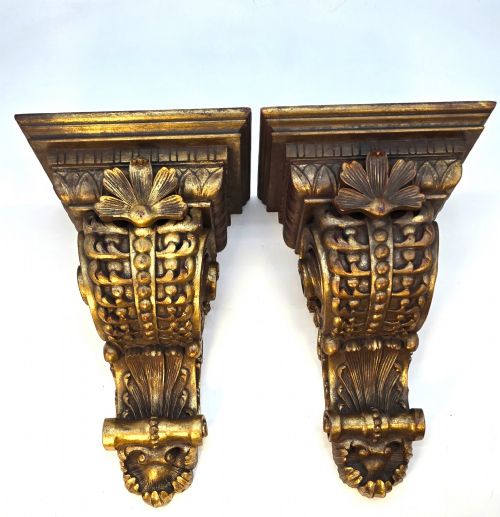
Pair wall corbels support heavy timber or display ornaments, bringing robust architectural weight and sculptural presence to interior walls.
Pair Wall Corbels
Pair wall corbels encompass architectural salvage, wall brackets, and structural supports designed to project outward from vertical masonry or plaster surfaces. When you search for pair wall corbels, you find matching sets intended to balance weight or frame a focal point symmetrically within a room.
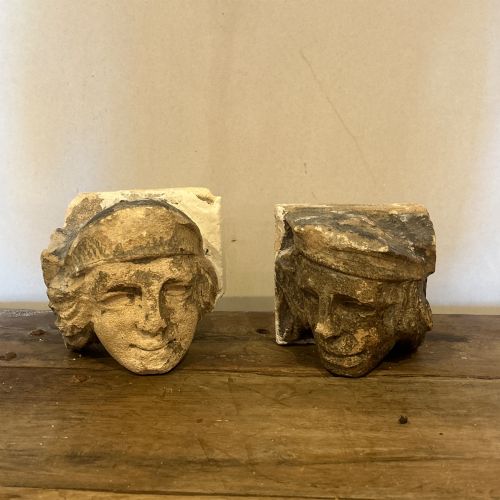
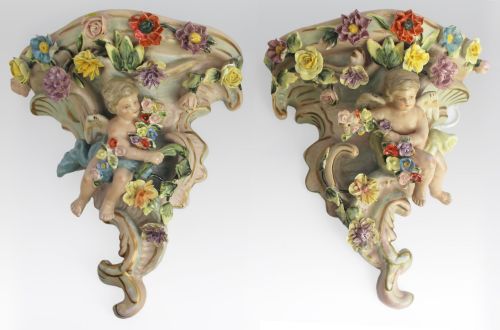
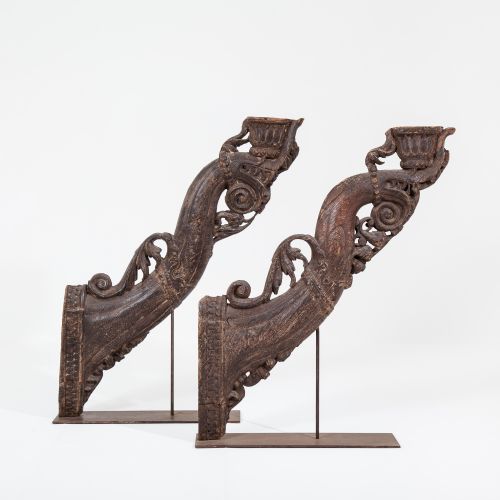
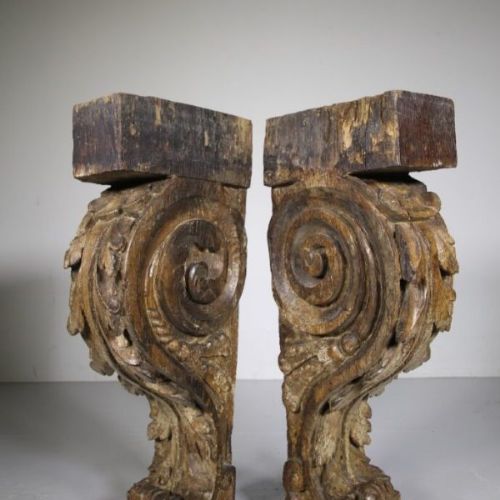
The selections span centuries of craftsmanship, ranging from pre-sixteenth century medieval limestone pieces and seventeenth-century oak carvings to eighteenth-century continental designs and Victorian innovations. Wooden examples dominate the current inventory, supplemented by terracotta, iron, plaster, and porcelain forms.
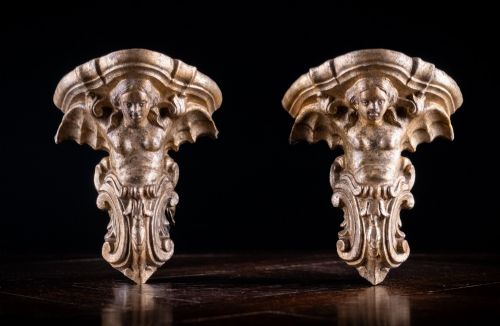
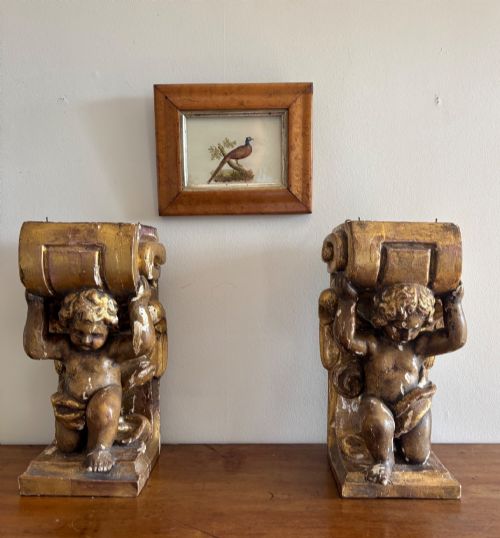
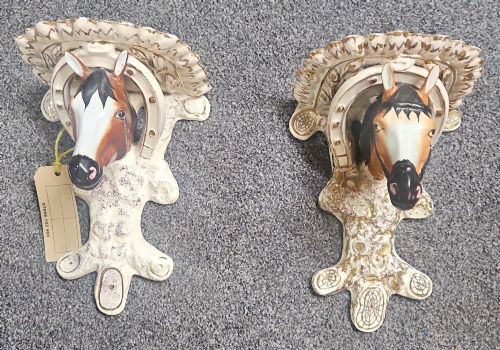
Stylistic influences vary widely across these groups, drawing heavily on Baroque Revival, Rococo, Medieval Gothic, and Italian Neoclassical traditions. Most commonly, these items serve as decorative shelf supports, capitals, or figural brackets bearing cherubs, horses' heads, and winged sirens.
How They Were Made
Makers shaped these supports primarily through traditional carving methods applied to timbers like oak, pine, limewood, and giltwood. Skilled artisans also utilised cast iron, plaster, terracotta, and porcelain to produce repeating motifs and intricate figural details.
Surface treatments frequently involved applying gesso, gold leaf, gilding, and paint to enhance the sculptural depth of the woodwork and ceramics. These finishes protected the underlying material while adding rich reflectivity and colour to the architectural elements.
Winged sirens and horses' heads occasionally keep watch from your walls.
What Varies in Quality
The standard of carving dictates much of the visual appeal, separating spirited, deeply undercut artisanal work from mechanical or blunt execution. Crisp anatomical details in figural subjects, such as cherubs or sirens, indicate a higher level of workshop competence.
Material integrity and the preservation of original surface finishes significantly influence the character of each piece. Retained layers of early gilding, paint, or natural patination on older woods and metals provide authenticity and visual depth.
Meissen
The Pair Wall Corbels Glossary
- Corbel
- A structural piece of stone, wood, or metal projecting from a wall to carry a weight above it. In decorative contexts, they often function as ornamental shelf supports.
- Capital
- The uppermost member of a column, pilaster, or bracket that spreads the load onto the vertical support. These are often carved with classical motifs like the Corinthian style.
- Giltwood
- Wood that has been treated with gold leaf or a gold-coloured finish. This technique highlights carved details through reflective surfaces.
- Architectural salvage
- Building elements rescued from older structures before demolition for reuse in interior design. This category includes stone corbels and heavy wooden brackets.
- Rococo Revival
- A nineteenth-century design movement characterised by asymmetrical scrollwork, naturalistic shell motifs, and exuberant ornamentation. It heavily influenced Victorian wall brackets.
Pair Wall Corbels: Frequently Asked Questions
Where should I mount heavy wall brackets?
Heavy wooden, iron, or stone supports require secure fixing directly into wall studs or solid masonry backing. Because pairs often carry significant weight or support display shelves, proper structural anchoring is essential.
Position them at eye level or above doorways to maximise their visual impact and ensure stability.
How do I identify the period of a corbel?
Dating relies on examining the tool marks, timber species, and stylistic vocabulary unique to each era. Medieval pieces show hand-hewn limestone work, while seventeenth-century items often feature dense oak and robust carving.
Victorian and later nineteenth-century examples frequently incorporate revival styles like Baroque or Rococo alongside industrial casting methods.
Can I use antique corbels as shelf brackets?
Matched pairs provide exceptional strength and visual character when repurposed underneath timber shelving boards. Ensure the depth of the bracket matches the width of the board for proper proportion.
Check the weight capacity of both the wall fixings and the corbels before placing heavy objects on the resulting shelf.