






Pair Victorian Planters
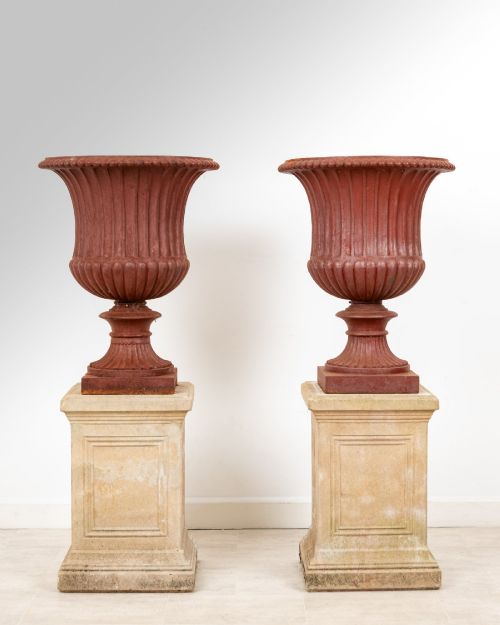
These pair victorian planters bring symmetry to garden terraces and pathways, offering robust cast iron or terracotta forms designed to elevate outdoor planting.
Pair Victorian Planters
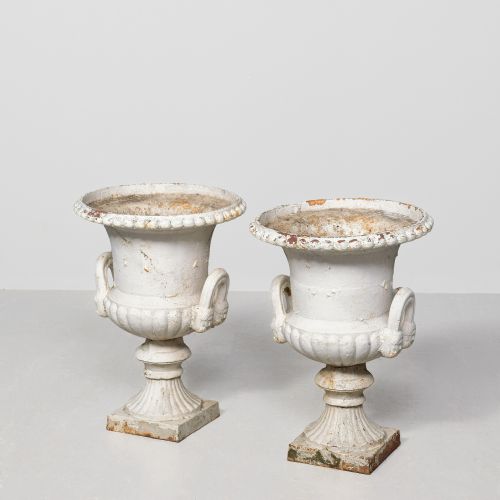
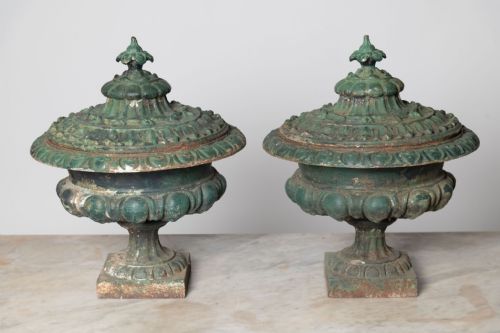
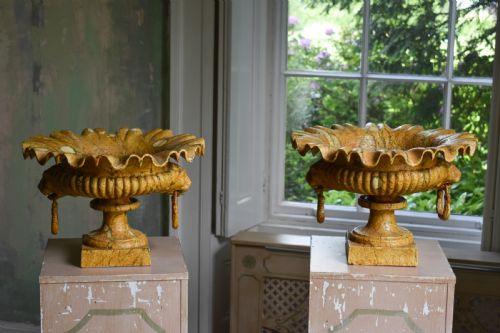
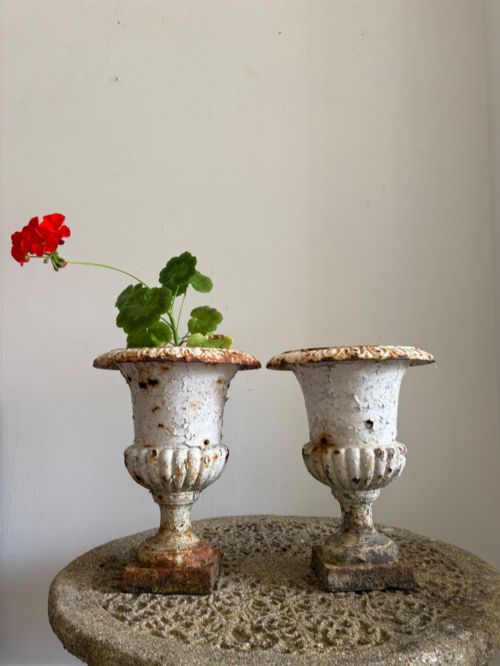
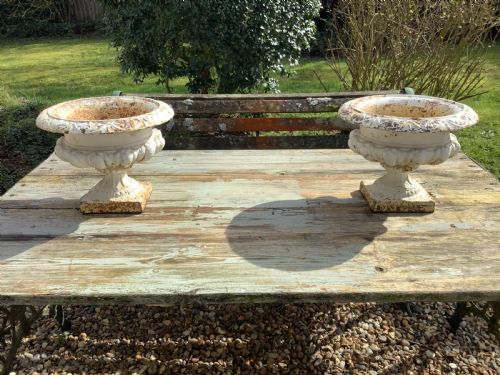
When you search for pair victorian planters, you encounter symmetrical containers created for nineteenth-century gardens, conservatories, and terraces. The selection centres heavily on cast iron campana urns and pedestal planters, often cast in matching halves or matched sets for balanced outdoor placement.
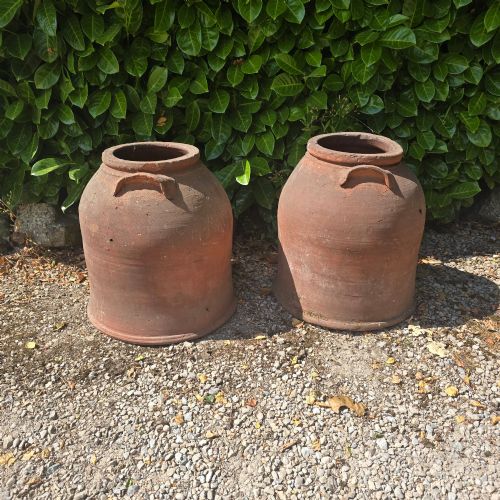
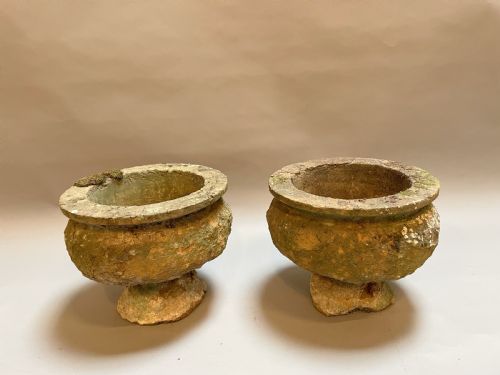
Beyond iron, the forms extend to terracotta garden urns, salt-glazed vessels, and specialised agricultural shapes like rhubarb forcers. These objects served functional roles in large country houses and gardens, designed to house specimen plants while providing architectural punctuation to paths and formal lawns.
Materials and methods
Foundries utilised durable cast iron poured into sand moulds, producing heavy garden urns, tazza vessels, and decorative plant stands with crisp relief ornament. These metal pieces frequently received coats of protective paint to withstand outdoor exposure.
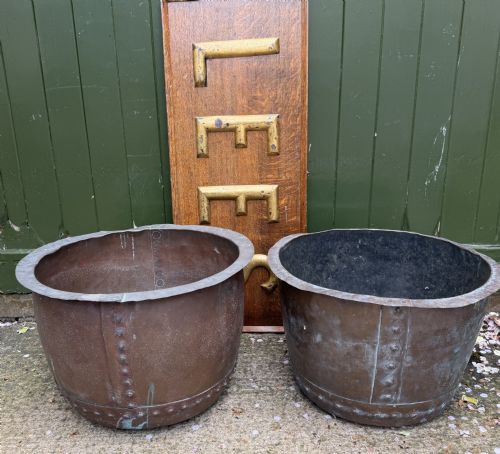
Terracotta and salt-glazed ceramic pieces relied on fired clay shaped through moulding or throwing, capturing classical revival details. Artisans also constructed wrought iron strapwork, copper, and brass planters, joining sheet metals through riveting and soldering for conservatory and tabletop use.
Pair Victorian Planters Retail Price Guide 2026
Typical asking prices for pair victorian planters among the pieces listed under this phrase on Sellingantiques today, from the lower quarter to the upper quarter. They describe what is for sale here now, not the wider market.
Periods represented span the nineteenth century through the mid-twentieth century, encompassing Victorian, Arts and Crafts, and neoclassical design movements.
Assessing quality and character
The distinction in quality rests upon the crispness of the casting detail and the architectural proportion of the base or plinth. Finer examples display deeply struck neoclassical motifs, well-defined fluting, and substantial metal thickness rather than shallow, blurred surface ornament.
Surface history dictates visual appeal, where original paint layers, weathered verdigris on copper, and honest patination from prolonged outdoor weathering elevate the object. Matched sets that retain their corresponding pedestals or original lids command greater architectural cohesion than assembled pairs.
Dunfermline Clay Company·Coalbrookdale·Kister·Scheibe Alsbach
The Pair Victorian Planters Glossary
- Campana urn
- A bell-shaped garden vessel with an everted rim, widely cast in iron or formed in terracotta during the nineteenth century.
- Tazza
- A shallow cup-shaped garden ornament or urn raised upon a central stem and footed base.
- Salt-glazed
- A ceramic finish achieved by throwing common salt into the kiln during high-temperature firing, creating a characteristic pebbled texture on stoneware planters.
- Rhubarb forcer
- A specialised agricultural earthenware or clay vessel placed over plants to exclude light and accelerate tender growth.
- Plinth
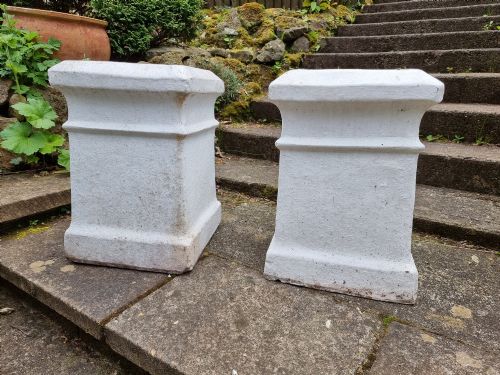
- A heavy rectangular or square block base designed to elevate garden urns and planters above ground level.
Pair Victorian Planters: Frequently Asked Questions
How were pair victorian planters used in gardens?
These vessels were positioned symmetrically flanking doorways, gateway entrances, and terrace steps to frame views and guide movement through formal nineteenth-century gardens.
Inside conservatories or country house orangeries, similar pairs held exotic specimen plants, ferns, and flowering shrubs to bring architectural formality to interior spaces.
Can cast iron planters stay outside all winter?
Cast iron garden containers tolerate cold weather well, provided drainage holes remain clear so expanding ice does not fracture the metal body.
Terracotta and ceramic versions require more careful winter management, as trapped moisture inside porous clay walls can cause cracking during severe frost.
How do I distinguish nineteenth-century iron urns from later reproductions?
Authentic nineteenth-century pieces display heavier metal weight, hand-finished casting seams, and layers of historical paint or oxidized patination accumulated over decades.
Modern reproductions often lack the deep surface relief, tool marks, and organic weathering patterns found on genuine period garden ornaments.