



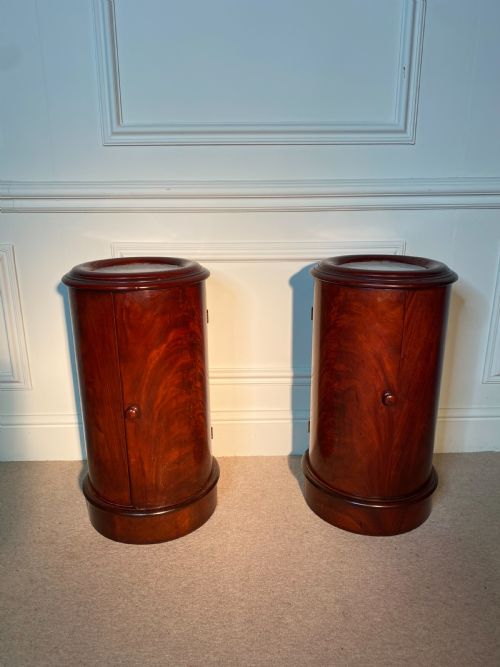
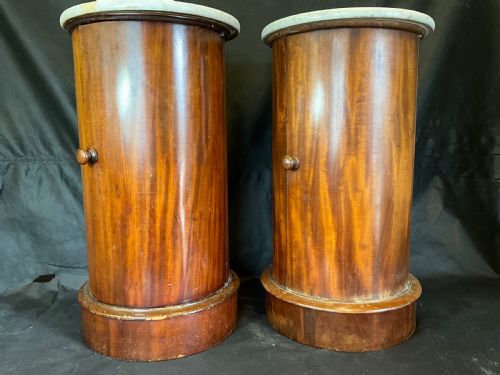

Pair Victorian Nightstands Marble
These pair victorian nightstands marble offer practical bedside storage topped with stone, bringing period character and durable surfaces to a bedroom.
Pair Victorian Nightstands Marble
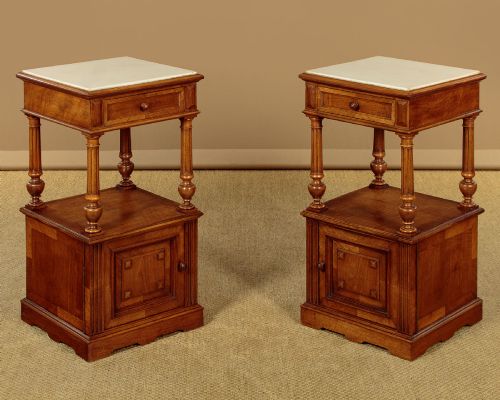
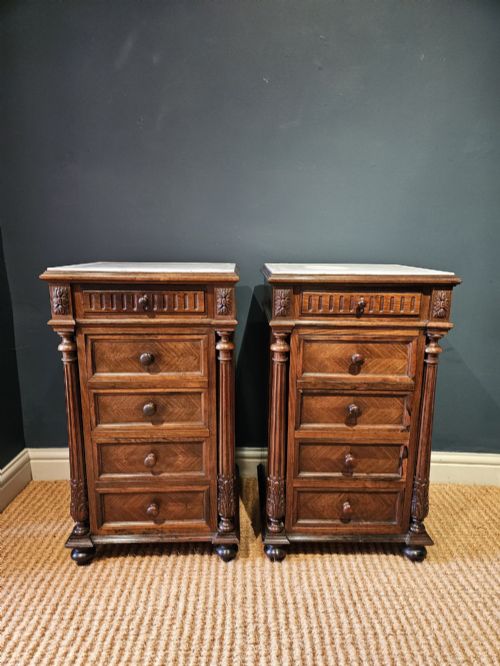
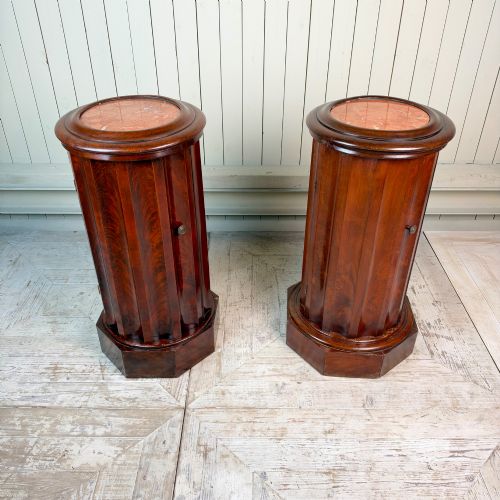
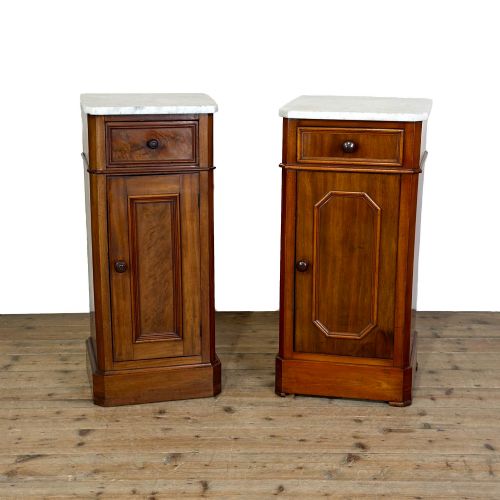
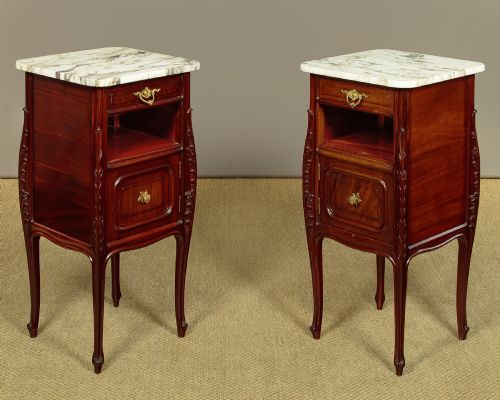
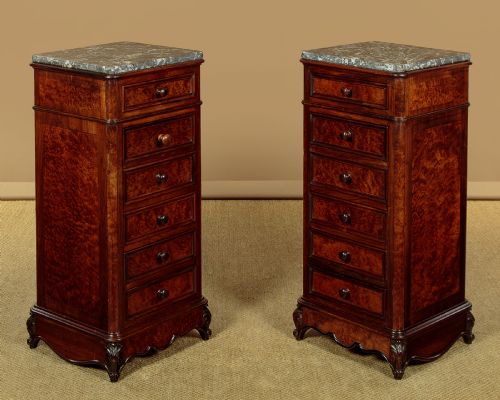
When you search for pair victorian nightstands marble, you encounter nineteenth-century bedside furniture designed to hold chamber pots, personal items, and nighttime necessities. These pieces typically take the form of enclosed cupboards, cylindrical pedestals, or small chests fitted with stone tops.
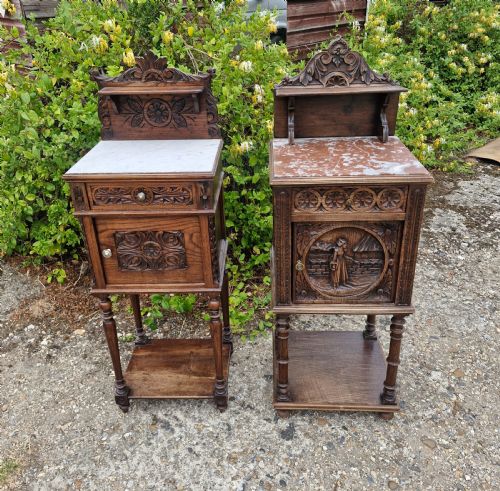
The versions you are most likely to meet on this page span the Victorian era, including late Victorian examples and pieces reflecting French and revival styles. They appear in Woods like mahogany, walnut, rosewood, and oak, paired with contrasting marble surfaces.
Makers of the period produced matching pairs intended to flank a bed symmetrically, utilising local cabinet-making traditions alongside continental design influences. Their forms range from simple rectangular pot cupboards to sophisticated drum-shaped cabinets with fitted interiors.
Construction and materials
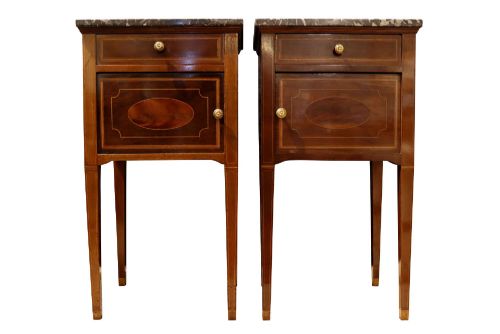
Cabinetmakers constructed the main bodies of these pieces using solid and veneered hardwoods such as mahogany, walnut, and rosewood, sometimes adding satinwood or amboyna inlay for decorative contrast. The carcase frames house panelled doors or curved tambour elements, while brass fittings provide functional hardware.
The defining feature is the inset stone surface, typically utilising white, grey, or rouge marble to create a durable, water-resistant top that could easily withstand bedside use. Skilled stonemasons shaped and polished these heavy slabs to fit precisely onto the timber frames.
Pair Victorian Nightstands Marble Retail Price Guide 2026
Typical asking prices for pair victorian nightstands marble among the pieces listed under this phrase on Sellingantiques today, from the lower quarter to the upper quarter. They describe what is for sale here now, not the wider market.
Cylindrical bedside cabinets appear alongside traditional rectangular cupboards and drawer pedestals across the nineteenth century.
What separates the finest examples
Quality rests in the selection of timbers and the precision of the joinery, particularly in curved cylindrical forms where seamless execution demands exceptional skill. The grain pattern of the mahogany or walnut and the intricacy of any satinwood inlay dictate the visual refinement of the timber body.
The character and thickness of the marble top, along with the crispness of hand-carved wood details or brass mounts, distinguish superior pieces from standard utilitarian items. Matched pairs that retain their original stones and balanced proportions command greater appreciation.
The Pair Victorian Nightstands Marble Glossary
- Pot cupboard
- A small bedside cabinet originally designed to house a chamber pot behind a single door. These pieces often feature an internal shelf and a drawer above the main compartment.
- Rouge marble
- A distinctively rich, reddish limestone with white or grey veining used extensively for decorative furniture tops during the nineteenth century. It adds warmth and colour to the timber carcase.
- Cylindrical
- Built with a circular or drum-shaped profile rather than a traditional rectangular box. This curved form requires advanced woodworking techniques to construct the doors and frame.
- Sheraton Revival
- A late nineteenth-century design movement inspired by the lighter furniture styles of the eighteenth century. It typically incorporates satinwood inlay and elegant, restrained proportions.
- Amboyna
- A highly decorative, dense timber prized for its intricate, swirling grain pattern. It appears as a veneer on select nineteenth-century luxury furniture.
Pair Victorian Nightstands Marble: Frequently Asked Questions
How do I clean the marble top?
Wipe the stone surface using a soft cloth dampened with warm water and a mild, neutral soap. Avoid acidic cleaners, vinegar, or harsh chemicals that can etch or dull the polished finish.
Dry the marble thoroughly afterwards to prevent water spots. Applying a specialist stone wax periodically helps protect the surface from everyday wear.
Were these always made as pairs?
Many nineteenth-century bedside cabinets were manufactured as matching sets to flank a double bed symmetrically. Some listings feature closely matched pairs assembled later by pairing two similar single cabinets.
Examining the timber grain, dimensions, and marble characteristics helps determine whether the pair originated together in the workshop. Both original pairs and matched sets offer balanced bedside presentation.
Can I use them as standard side tables?
Their compact dimensions and sturdy stone surfaces make them practical for various rooms beyond the bedroom. They function effectively as lamp tables in a living room or small storage stands in a hallway.
The enclosed cupboard space provides hidden storage for books or small items while the marble top handles drinks and decorative objects safely.