
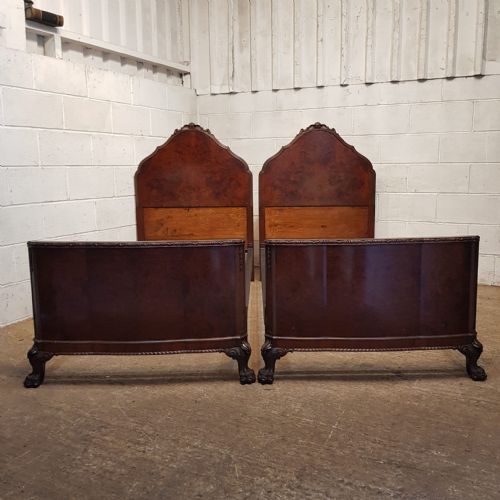


Pair Twin Headboards
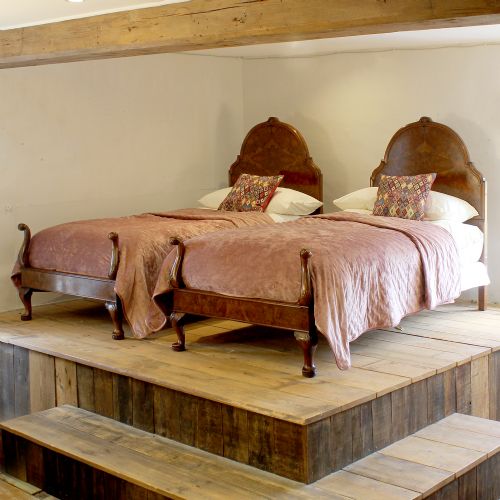
Pair twin headboards summon matching double sleeping quarters, built from timber and metal across Victorian, Edwardian and Art Deco decades.
Pair Twin Headboards
Pair twin headboards bring together matching sleeping frameworks designed for twin arrangements, appearing here through single beds, bed frames and bedsteads spanning the nineteenth and twentieth centuries.
The selections on this page draw predominantly from Edwardian, Victorian and Art Deco eras, alongside nineteenth century pieces shaped in walnut, iron, brass and satinwood.
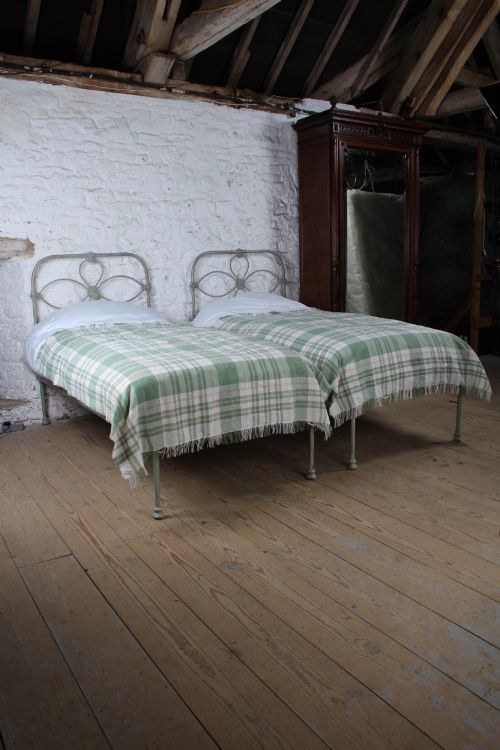
Forms range from simple iron structures to elaborate panelled timber headboards, incorporating stylistic influences from Queen Anne, Louis styles and Arts and Crafts traditions.
Materials and construction methods
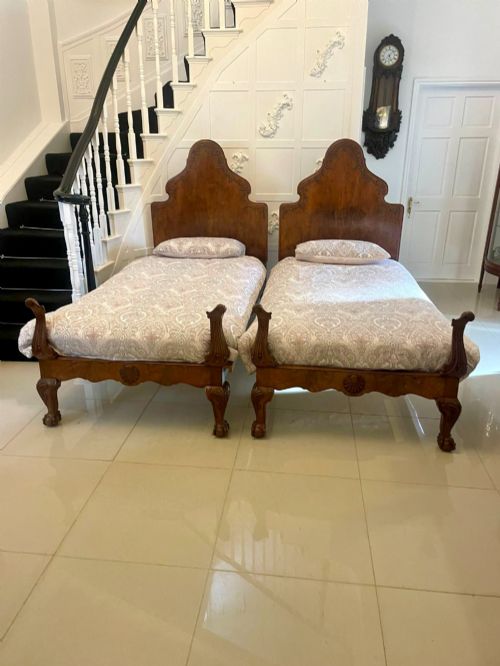
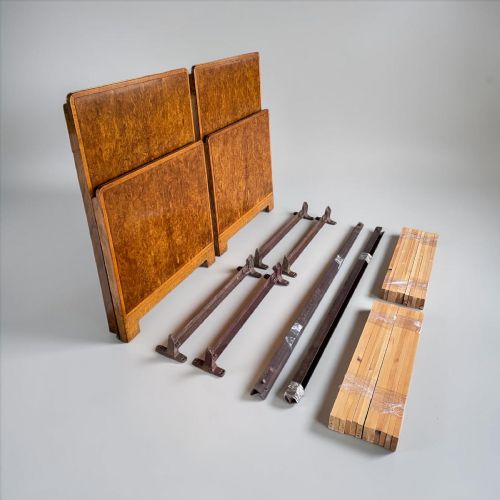
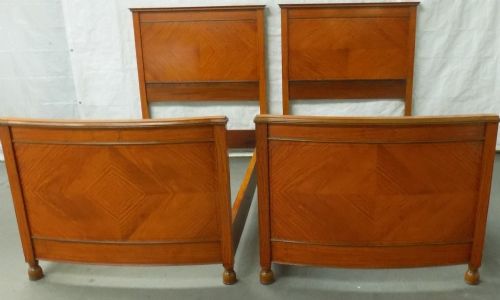
Cabinetmakers utilised solid timbers and veneers including walnut, burr walnut, satinwood, oak and fruitwood, often applying carved details, inlay and parquetry to the wooden surfaces.
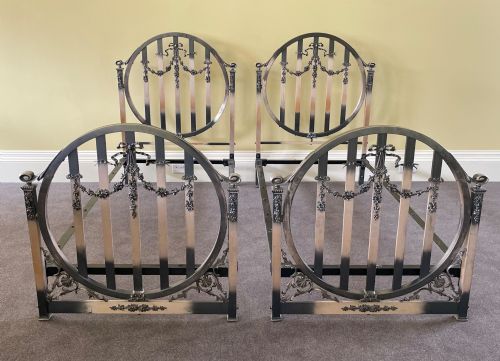
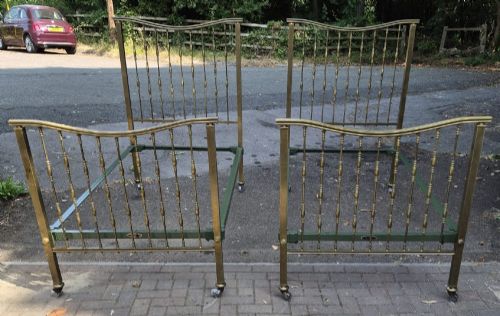
Metal components relied on cast iron, wrought iron, brass and nickel plating, frequently paired with wooden frames or formed into standalone metal bedsteads.
Upholstered elements integrated leather panels and fabric coverings, while specific examples incorporated painted finishes and integrated bedside furniture.
Some iron single beds arrive ready to be lined, offering a quiet nod to historic interior comforts.
Distinctions in craftsmanship
Quality rests upon the selection of timber veneers, such as figured burr walnut and satinwood, matched against the crispness of hand-carved ornamentation and inlay work.
Structural integrity appears in the weight and solidity of the iron and brass castings, alongside the precision of joints in wooden frames designed to stand as a matching pair.
Hoskins and Sewell·Shapland and Petter·Heal and Son
The Pair Twin Headboards Glossary
- Bedstead
- The complete framework of a bed, including the headboard, footboard and side rails, supporting the mattress base.
- Inlay
- A decorative technique where contrasting woods or materials are set into the surface of a primary timber to create patterns.
- Bergere
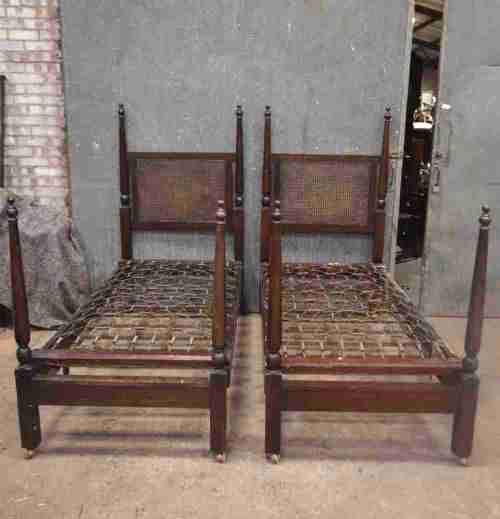
- A type of chair or bed component featuring woven cane panels, seen in specific period wooden frames.
- Parquetry
- Geometric wood mosaic work used for decorative flooring or furniture surfaces, appearing on select period bedframes.
- Nickel plated
- Covered with a thin layer of nickel to provide a bright, corrosion-resistant metallic finish on iron frameworks.
Pair Twin Headboards: Frequently Asked Questions
Can twin headboards be joined together?
Certain period single beds and headboards are noted as capable of being joined to form a wider sleeping arrangement, depending on the original design of the side rails and fixings.
Buyers should examine the specific construction details of each pair to understand how the components link together in practice.
What periods do these headboards come from?
The listings span from the nineteenth century through the Victorian and Edwardian eras, extending into Art Deco designs of the nineteen-thirties.
Each period brings distinct stylistic traits, from ornate carved walnut to streamlined geometric forms.
What materials are commonly used?
Construction relies heavily on timbers such as walnut, burr walnut, satinwood and oak, frequently combined with iron, brass and nickel plating.
Painted finishes and upholstered leather or fabric panels also appear across various styles.
How do I identify Art Deco headboards?
Art Deco pieces from the nineteen-thirties typically showcase streamlined forms, symmetrical matching walnut or satinwood veneers, and sometimes integrated bedside tables.
They offer a distinct contrast to the more ornate Victorian and Edwardian carved wooden styles.