



Edwardian Oak Bedstead
An edwardian oak bedstead offers sturdy architectural timber frames and panelled headboards that ground a traditional bedroom with understated presence.
Edwardian Oak Bedstead
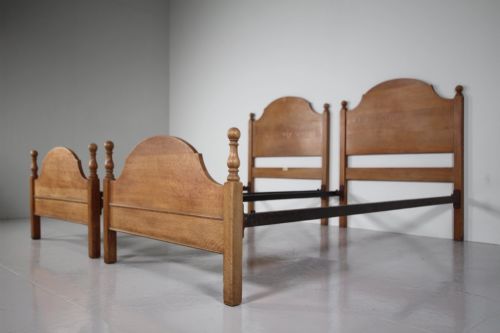
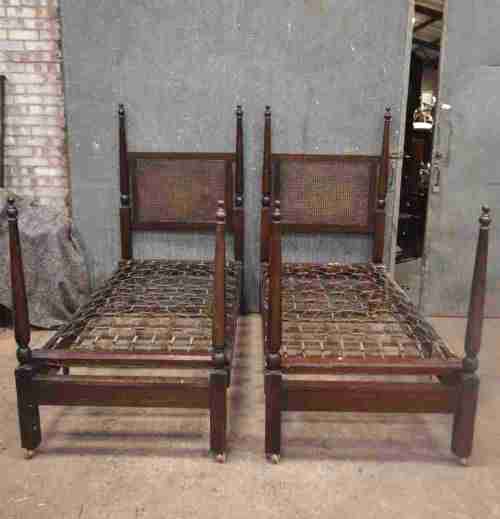
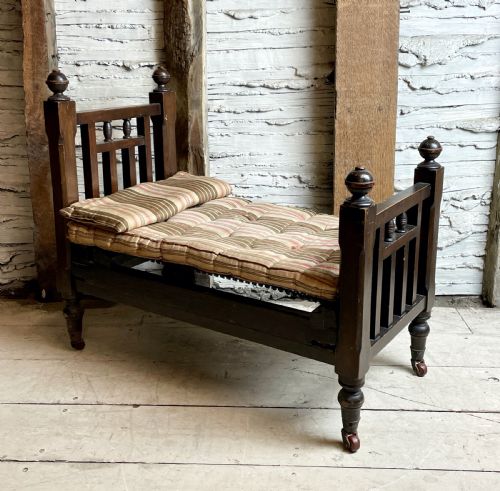
When you search for an edwardian oak bedstead, you encounter substantial wooden furniture spanning single beds, small doubles, and larger four poster frames. The core of what is available centres on Edwardian pieces, supplemented by items from around nineteen hundred to the nineteen twenties and forties, alongside occasional miniature doll beds.
Makers such as Heal and Son appear among the listings, alongside items created in the manner of Heals or within the Arts and Crafts style. You will find single beds often offered in pairs, as well as robust panelled bedsteads and carved designs.
The materials recorded across these pieces combine solid oak with iron, brass, cane, and fabric inserts. This variety ranges from straightforward single wooden framed beds to imposing four poster structures and colonial revival forms.
What varies in quality
The distinction between standard production and top-tier execution rests on the depth of carving and the crispness of panel construction in the oak timber. Pieces bearing maker labels, such as those from Heal and Son, demonstrate superior workshop provenance compared to unmarked equivalents.
Proportion and scale also define the hierarchy, ranging from standard single bed frames to large-scale four poster structures and intricate miniature furniture. The integration of secondary materials like quality brass hardware and well-woven cane further elevates the standing of an individual piece.
Edwardian Oak Bedstead Retail Price Guide 2026
Typical asking prices for edwardian oak bedstead among the pieces listed under this phrase on Sellingantiques today, from the lower quarter to the upper quarter. They describe what is for sale here now, not the wider market.
Listings feature solid oak alongside iron, brass, cane, and fabric, spanning the Edwardian era through to the nineteen forties.
Heal and Son·Heals
The Edwardian Oak Bedstead Glossary
- Edwardian
- Pertaining to the reign of King Edward VII, spanning from nineteen hundred and one to nineteen hundred and ten, characterised by lighter furniture forms than the preceding Victorian era.
- Arts and Crafts
- A design movement that valued traditional craftsmanship, honest construction, and simple forms over mass-produced ornamentation. It heavily influenced the plain timber aesthetic of these bedsteads.
- Four Poster
- A bed with four vertical columns supporting a tester or canopy frame above, seen in larger and more imposing antique oak sleeping furniture.
- Bergere
- A type of chair or bed panel filled with woven cane webbing, offering a lighter textural contrast to solid oak timber.
- Bedstead
- The framework of a bed, comprising the headboard, footboard, and side rails designed to support a mattress base.
Edwardian Oak Bedstead: Frequently Asked Questions
What sizes do these oak beds come in?
The selection includes single beds, small double frames, and large four poster variations. Pairs of single beds frequently appear alongside standard single and double bedsteads.
Miniature doll beds also exist within the record as smaller scale decorative items rather than full sized sleeping furniture.
Are these beds sold in pairs?
Multiple listings comprise matched pairs of single beds, often originating from established workshops like Heal and Son. These matched sets provide uniform styling for twin bedroom layouts.
Single individual bedsteads also appear regularly alongside small double and four poster frames.
What styles accompany these oak frames?
The dominant aesthetic aligns with the Edwardian period and the Arts and Crafts movement, favouring visible timber grain and structural simplicity. Occasional pieces reflect colonial revival influences or Jacobean Revival carved detailing.
Construction methods combine solid oak with iron brackets, brass fittings, and cane panel inserts.
How do I identify a labelled piece?
Certain pieces carry physical paper labels or stamps identifying the original maker, most notably Heal and Son. These marks confirm workshop attribution and add historical documentation to the timber frame.
Unmarked pieces frequently share stylistic traits with known workshops, reflecting the broader manufacturing standards of the early twentieth century.