
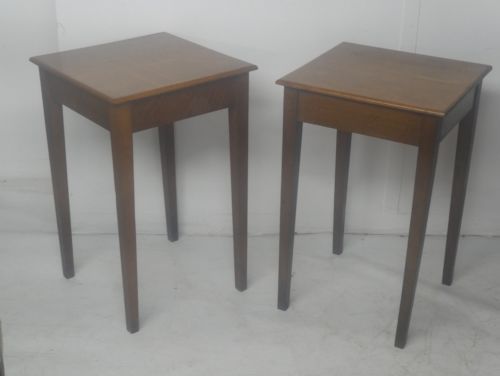
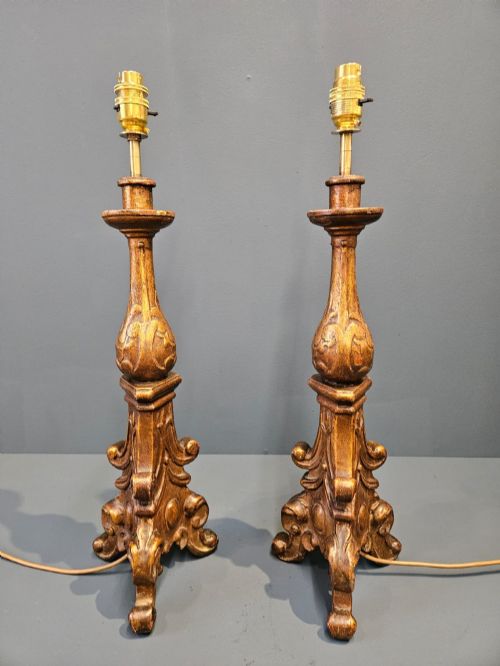

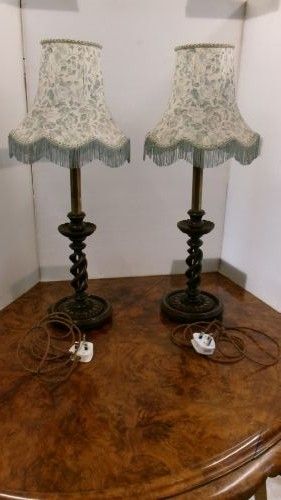
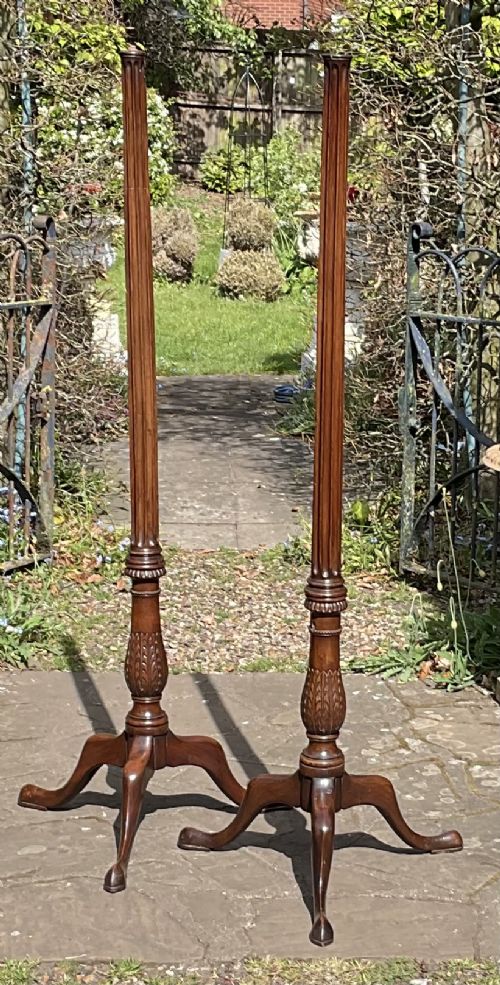


Pair Tall Wooden Lamps
Pair tall wooden lamps deliver commanding vertical presence and warm illumination, transforming dark corners with dual symmetry.
Pair Tall Wooden Lamps
Pair tall wooden lamps bring balanced vertical illumination and classical presence to residential interiors, appearing in variations spanning the Georgian era to the Art Deco period. These objects frequently take the form of standard lamps, floor lamps, or tall table lamps designed to anchor a room with matching proportions.
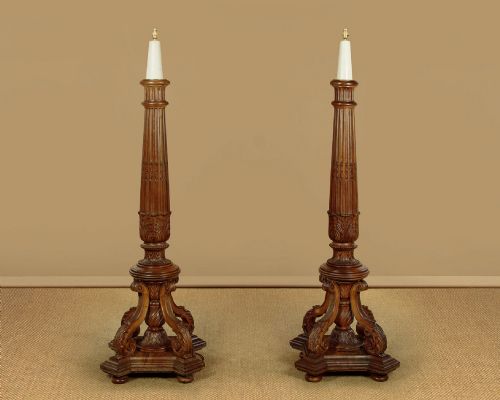
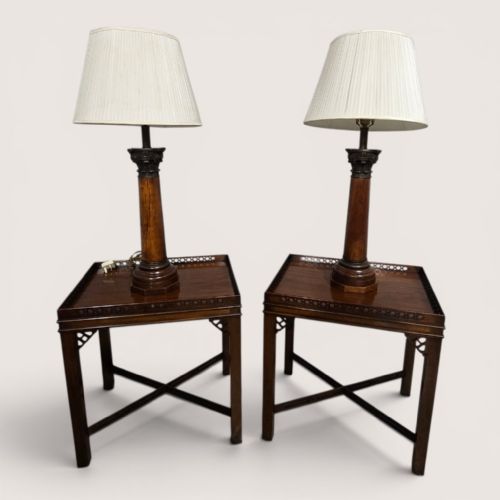
The inventory on this page demonstrates that pair tall wooden lamps arrive in styles ranging from Victorian and Edwardian to Italian Baroque and Neoclassical. Buyers encounter timber forms executed in mahogany, oak, walnut, burr elm, and giltwood, often retaining fabric shades or standing as modified candlesticks.
How they were made
The construction of pair tall wooden lamps relies on dense hardwoods such as mahogany, oak, and walnut, turned on lathes or hand-carved with intricate details. Cabinetmakers utilised traditional joinery and turning techniques to ensure structural stability across elevated shafts.
Surface decoration frequently incorporates gesso, giltwood, or intricate inlay work, combining rich timber grains with gilded highlights or marbleised finishes. These decorative layers reflect the stylistic preferences of periods spanning the eighteenth century through to the 1930s.
Some tall wooden lamps started life as stately candlesticks before industrious hands wired them for electricity.
What varies in quality
Quality in pair tall wooden lamps rests upon the selection of timber, the crispness of the carved or turned detail, and the integrity of the structural core. Finer examples display figured woods like burr elm or deep mahogany with well-preserved patination.
The proportion and balance of the standard dictate the overall sophistication of the piece, distinguishing master-carved or architecturally inspired items from simpler utilitarian turnings. Original surface treatments and consistent matching within the pair further elevate the stature of the objects.
The Pair Tall Wooden Lamps Glossary
- Standard lamp
- A tall floor-standing lamp designed to illuminate a room from a raised height. These pieces often feature turned wooden columns and sturdy weighted bases.
- Giltwood
- Timber that has been coated with a thin layer of gold leaf or gold paint. This technique adds reflective brilliance to carved architectural details.
- Turned
- Shaped on a lathe by rotating the timber against cutting tools. This method creates symmetrical circular profiles along the shaft of a lamp.
- Patina
- The deep sheen and surface texture developed on wood over decades of handling and exposure. It serves as an indicator of age and careful preservation.
Pair Tall Wooden Lamps: Frequently Asked Questions
Where should I place pair tall wooden lamps?
These lamps suit large living rooms, hallways, or studies where their vertical height can fill empty vertical space. Position them symmetrically beside large pieces of furniture or flanking a fireplace to create a balanced focal point.
Ensure the height of the lamp complements the scale of the room and the surrounding furniture. Standard floor lamps work particularly well in dark corners that require substantial illumination.
How do I date tall wooden lamps?
Dating relies on examining the timber species, turning styles, and surface finishes against known period characteristics. For example, Neoclassical and Georgian styles exhibit classical proportions and specific carving motifs.
Secondary evidence such as wiring methods, fixings, and the nature of the wood grain help narrow the decade of production. Stylistic cues often align with the furniture design eras represented in the listings.
Can I use modern shades on antique lamps?
Modern shades can be paired with antique wooden lamps provided the fitter size and proportions match the scale of the base. Selecting neutral or complementary fabrics helps maintain the visual harmony of the piece.
Pay attention to the weight of the shade to ensure the tall wooden shaft remains stable and balanced. The shade should diffuse light evenly without overwhelming the turned woodwork below.
How do I care for wooden lamp bases?
Maintain the timber by dusting regularly with a soft, dry cloth to prevent the accumulation of grime on carved surfaces. Avoid placing the lamps in direct sunlight or near heat sources to protect the wood and finish.
Periodically check the electrical fittings and stability of the base to ensure safe daily operation. Occasional application of appropriate furniture wax preserves the natural lustre of mahogany, oak, and walnut.