



Neoclassical Wooden Table Lamps
Neoclassical wooden table lamps bring classical order to a room, offering warm illumination paired with enduring architectural dignity.
Neoclassical Wooden Table Lamps
Neoclassical wooden table lamps draw upon ancient architectural motifs such as columns and carved gilt surfaces to create formal illumination. When you search for neoclassical wooden table lamps, you encounter pieces that range from carved giltwood structures to converted candle standards and mahogany shafts.
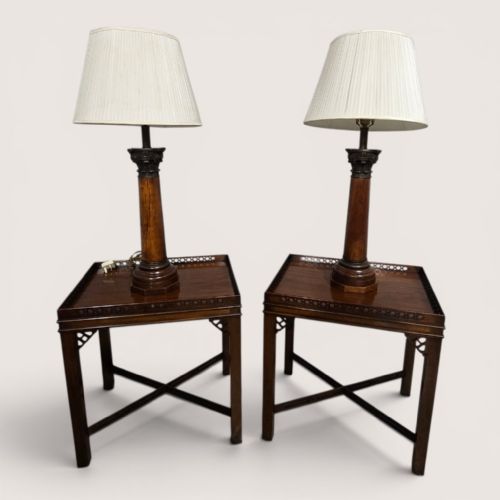
The selections available here lean heavily toward nineteenth-century origins alongside early twentieth-century interpretations. Many examples utilise paired formats, featuring carved wooden bases enriched with classical details like brass galleries or marbleised finishes.
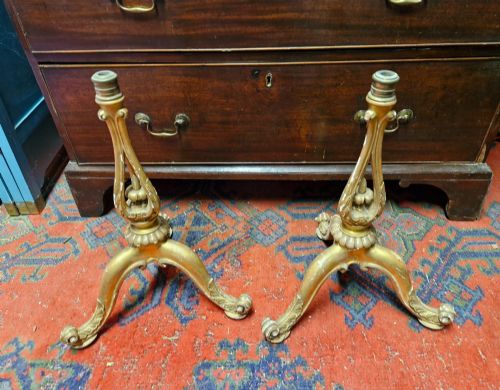
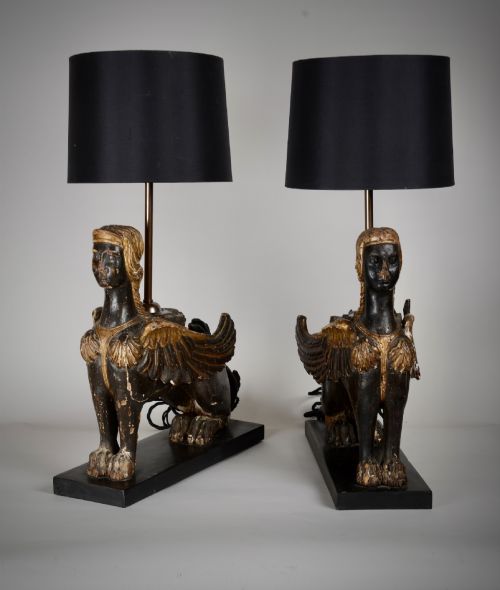
Makers often adapted older forms, converting candlesticks and sphinx figures into functional lighting while retaining strict symmetrical lines. These fixtures bridge decorative arts and practical utility, maintaining the restrained elegance associated with eighteenth-century revivals.
Materials and construction methods
Construction relies upon traditional cabinet timbers such as mahogany and oak, often paired with applied ornamentation in giltwood, ormolu, and brass. Artisans carved solid woods directly to shape fluted columns, tripod bases, and architectural capitals.
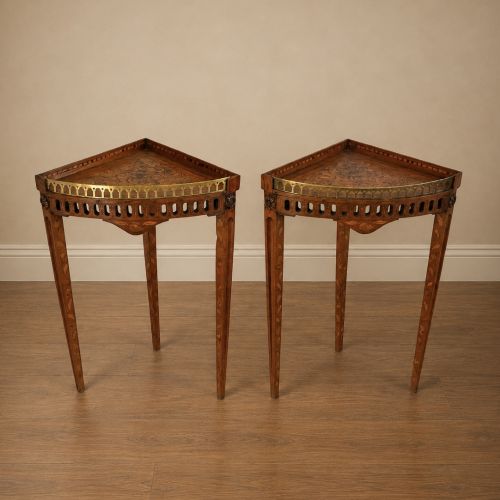
Surface treatments define the aesthetic, combining fine marquetry inlay with painted or gilded highlights over wood. Metal mounts in bronze or brass secure structural junctions and frame marble elements, binding disparate materials into cohesive classical silhouettes.
Listings feature woods such as mahogany, oak, and satinwood, frequently enriched with marble, ormolu, and fabric elements across multiple centuries.
Assessing quality and execution
Quality rests in the crispness of the wood carving and the integration of decorative mounts. Superior pieces display deep, hand-carved details in giltwood or mahogany rather than shallow mouldings, showing precise attention to classical proportions.
The integrity of the original material conversion dictates value, distinguishing bespoke adaptations from hurried modifications. Finer examples retain harmonious proportions between the wooden standard and its brass or marble garnitures, preserving an authentic architectural silhouette.
The Neoclassical Wooden Table Lamps Glossary
- Giltwood
- Wood carved and coated with a thin layer of gold leaf. This technique creates a luminous, reflective surface frequently used in classical ornamentation.
- Ormolu
- Cast bronze that has been mercury gilded to achieve a rich golden finish. It appears as decorative mounts and accents upon wooden furniture and lamp bases.
- Marquetry
- The art of applying small pieces of veneered wood to a structure to form decorative patterns. Craftsmen utilise contrasting timbers to create geometric or pictorial designs on table surfaces.
- Sphinx
- A mythical creature with a human head and a lion body, often employed as a decorative support in neoclassical design. These motifs reflect archaeological discoveries translated into domestic furnishings.
Neoclassical Wooden Table Lamps: Frequently Asked Questions
What defines a neoclassical lamp base?
A neoclassical lamp base incorporates classical architectural elements such as columns, urns, and symmetrical geometric lines derived from ancient Greek and Roman designs. These forms are typically rendered in carved wood, giltwood, or mahogany.
Such pieces often feature classical motifs like acanthus leaves, fluting, or bronze mounts that distinguish them from more ornate baroque or rococo styles.
How do I date a wooden lamp?
Dating relies upon examining the timber species, joinery methods, and the character of the carved or gilded surface finishes. Nineteenth-century examples often show hand-tooled execution and specific patination on the underlying wood.
Later twentieth-century adaptations can sometimes be identified by modern internal wiring channels or machine-cut components hidden beneath the classical exterior.
Where should I place these lamps?
These lamps suit formal sitting rooms, libraries, or sideboards where their architectural presence can anchor a room's decorative scheme. They work particularly well on occasional tables or mahogany cabinetry.
Pairing them on matching surfaces enhances their symmetrical design, drawing the eye to their classical proportions and reflective gilt or brass details.
What are lamp conversions?
Lamp conversions are historical pieces, such as antique candlesticks or carved wooden figures, that have been professionally adapted to hold electrical fittings. This practice preserves decorative antique forms while granting modern utility.
Collectors appreciate these items for retaining their original hand-carved woodwork and period patination despite the internal mechanical changes.