
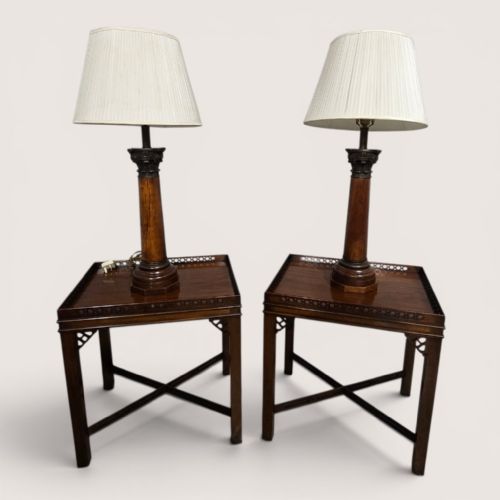


Corinthian Column Lamp Pair
A corinthian column lamp pair brings classical architectural proportion and warm illumination to a room, offering matched symmetry that anchors a traditional interior scheme.
Corinthian Column Lamp Pair
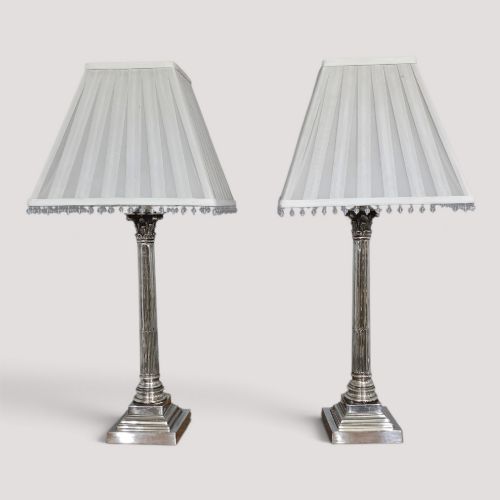
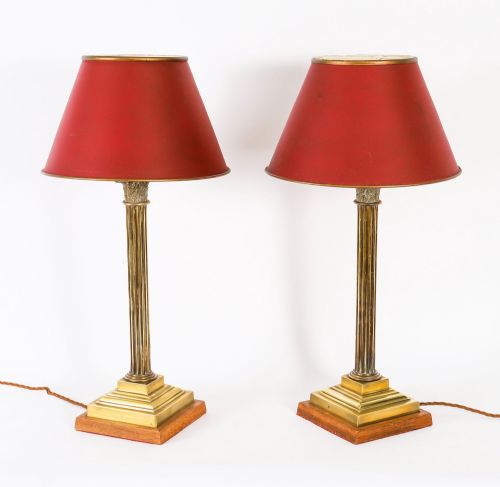
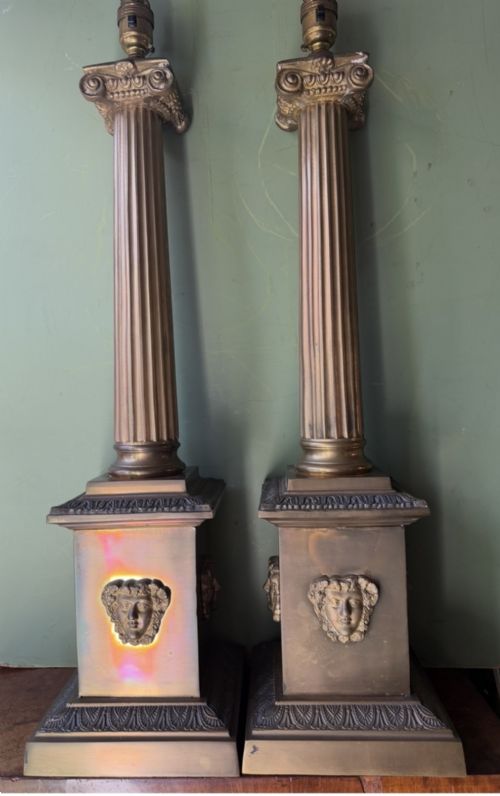
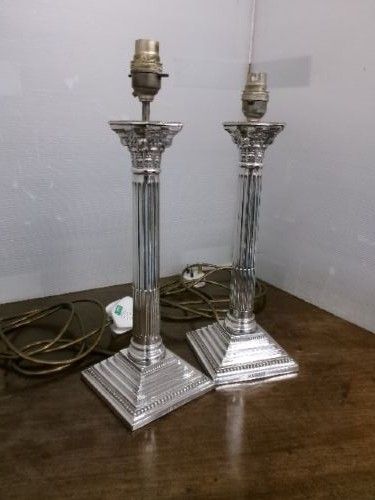
A corinthian column lamp pair consists of matched table lamps or standard lamps designed in the Neoclassical or Victorian style, drawing directly upon ancient architectural orders. These pieces translate stone temple columns into domestic lighting fixtures, complete with ornate capitals featuring acanthus leaves and volutes.
Most items function as table lamps, though taller standard lamp formats appear in the archive and current selections. The overarching appeal lies in the balanced symmetry of a matched pair, making them suitable for flanking a sideboard, mantelpiece, or desk.
How They Were Made
Metal casting forms the structural foundation of these pieces, utilising brass, gilt-bronze, or base metals finished with silver plate. Makers cast the stepped plinths, fluted shafts, and intricate capitals in separate sections before assembling and securing them around a central core.
Alternative materials introduce contrasting textures, with wood turners shaping solid oak columns and stonemasons working marble and onyx components. Craftspeople combined these denser elements with cast metal mounts to ensure stability for the finished lighting standard.
Some tall standard versions feature telescopic mechanisms, allowing a room's lighting height to be adjusted up and down like an oversized brass spyglass.
What Varies in Quality
The definition and crispness of the cast capital separate standard production from superior examples. Master makers ensured that the acanthus leaves and scrolled corners retain sharp relief and deep undercutting rather than appearing soft or smoothed over.
Proportion and scale dictate visual success, with heavier gauge metals and weighted stepped bases providing a substantial presence. Silver-plated surfaces and mercury-gilt finishes require careful handling during production to achieve an even lustre across both matching columns.
Hinks and Sons
The Corinthian Column Lamp Pair Glossary
- Fluted
- Having parallel shallow grooves running vertically along the shaft of the column. This technique adds visual rhythm and references classical stone architecture.
- Plinth
- The heavy square or stepped base block that supports the column shaft. A well-proportioned plinth provides necessary weight and stability for the lamp.
- Silver Plate
- A thin layer of silver applied to a base metal core such as brass or copper. This finish provides the bright reflective quality seen on many formal examples.
- Neoclassical
- A style spanning the eighteenth and nineteenth centuries that revives the classical aesthetic of ancient Greece and Rome. It emphasises symmetry, straight lines, and architectural orders.
Corinthian Column Lamp Pair: Frequently Asked Questions
Where should I place a matching pair?
These lamps perform best when given symmetrical placement to balance a room. Use them to flank a large mirror, a sideboard, or opposing ends of a long console table.
Because they provide height and formal presence, they also suit placement on heavy timber desks or nightstands where matched illumination is desired.
How do I date a brass column lamp?
Dating relies upon examining the weight of the metal, the method of base construction, and the wiring channels used inside the shaft. Late nineteenth and early twentieth-century examples often feature heavy cast components and heavier gauge brass than later reproductions.
Stylistic cues such as stepped square plinths and cast capital detailing help narrow the period down to the Victorian or Edwardian eras.
Are standard lamps different from table lamps?
Standard lamps refer to floor-standing models designed to rest directly on the floor, occasionally featuring telescopic adjustments to alter height. Table lamps are shorter formats intended for placement on furniture.
Both types share the architectural column vocabulary, but their differing scales dictate entirely separate placement within a room layout.
What shades work best with these columns?
Fabric shades with simple tailored lines or subtle pleated designs allow the ornate metal or wooden column to remain the visual focus. Neutral tones in silk, linen, or parchment complement the metallic finishes of brass and silver plate without competing with the capital detailing.
Proportion is key, ensuring the shade diameter matches the visual weight of the heavy stepped base below.