
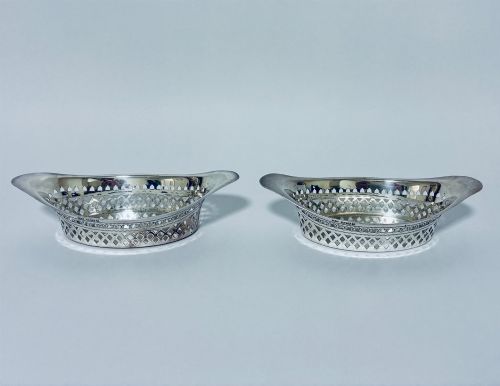
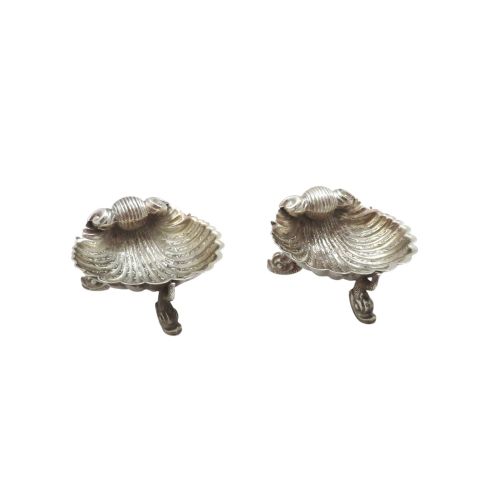
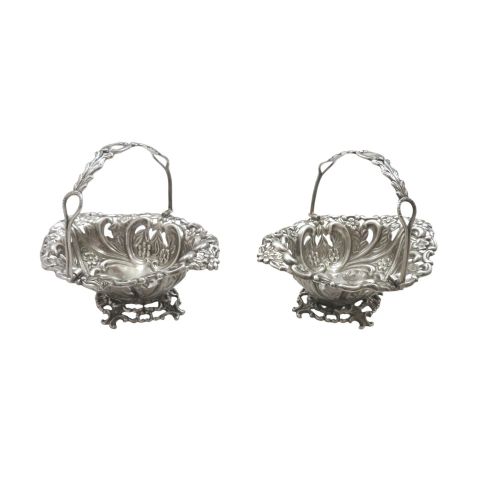
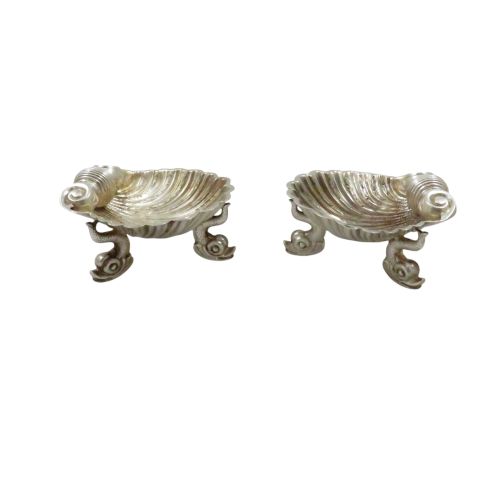

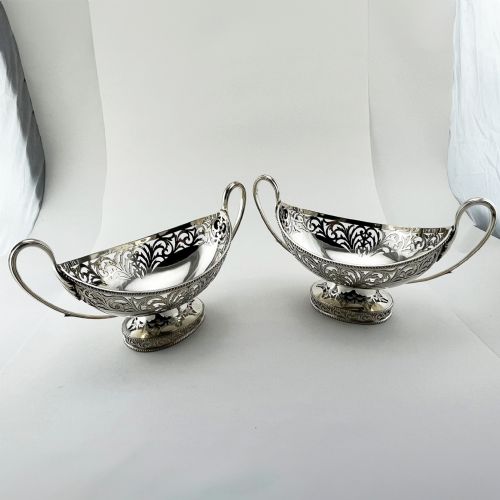
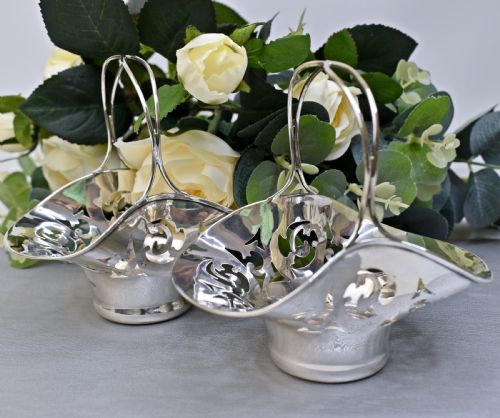


Pair Silver Dishes
When you handle a pair silver dishes, you encounter everything from modest Georgian salt cellars to substantial Victorian entree vessels designed to balance formal dining tables.
Pair Silver Dishes
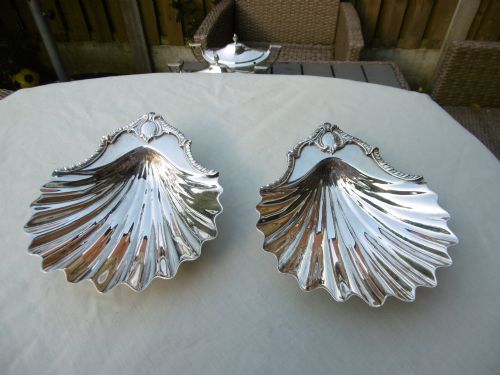
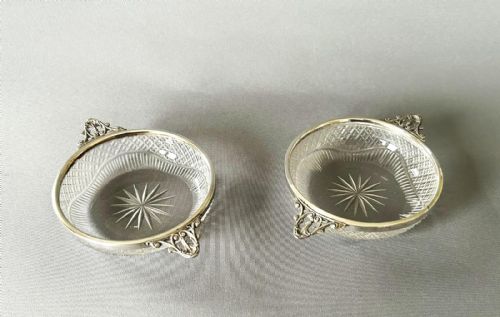
A pair silver dishes covers a broad functional spectrum, ranging from small table salts and bonbon dishes to large entree servers and butter shells.
Victorian and Edwardian examples dominate the current selection, often taking organic forms like shells or featuring pierced decorative baskets.
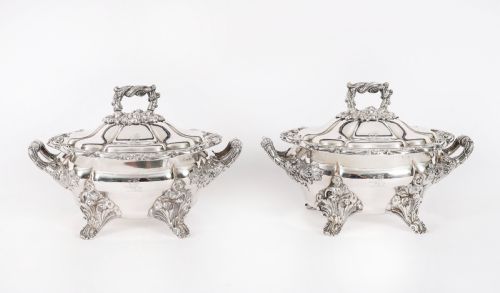
Georgian items bring earlier craftsmanship into the mix, typically manifest as pedestal dishes or silver-plated tureens intended for grand dining arrangements.
Materials and construction methods
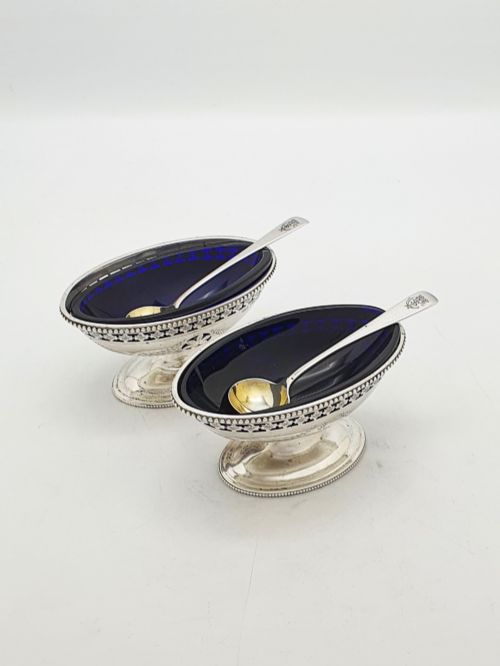
Makers utilised sterling silver and silver plate over copper or base metals, frequently incorporating cobalt or cut glass liners into open salt cellars.
Techniques varied from cast shell motifs with detailed dolphin feet to pierced lattice work and engine turned patterns on Art Deco bowls.
Sheffield plating and electroplate methods developed through the nineteenth century, allowing workshops to produce durable entree tureens and serving dishes.
Listings span multiple eras from the 18th century through the Georgian, Victorian, and Edwardian periods into the early 20th century, utilising both sterling silver and silver plate.
Distinctions in manufacture and design
The weight of the metal and the crispness of the chasing separate standard domestic items from pieces produced by notable silversmiths.
Original matching liners and fitted presentation cases elevate the completeness of a set.
Subtleties in handle design, such as reeded edges or cast figural details, indicate the level of care invested in the original workshop.
William Plummer·William Comyns·Fenton Brothers·Viners·Edward and John Barnard·Samuel Hennell·Henry Matthews·Roberts and Belks·William Devenport·Mappin and Webb·Levi and Salaman·Martin Hall and Co
The Pair Silver Dishes Glossary
- Sterling silver
- An alloy containing a high proportion of pure silver mixed with small amounts of other metals to increase durability. This standard is marked on many British pieces.
- Bonbon dish
- A small open vessel intended for holding sweets, confectionery or small nuts. These frequently feature decorative piercing or swing handles.
- Salt cellar
- A small receptacle placed on the dining table to hold seasoning. Many antique examples incorporate blue or cobalt glass inserts.
- Entree dish
- A larger lidded vessel designed to keep food warm at the table. These often appear in silver plate from the Victorian and Edwardian eras.
- Sheffield plate
- An early form of composite material produced by fusing a sheet of silver to a thicker copper base. It predates standard electroplating.
Pair Silver Dishes: Frequently Asked Questions
How were salt cellars used?
Salt cellars held loose salt on the dining table before shaker bottles became common.
Dinners would dip their food or use small spoons to take salt from the open glass-lined vessels.
What is the difference between sterling and plate?
Sterling silver contains solid precious metal throughout the object, marked with official assay office hallmarks.
Silver plate uses a base metal foundation with a thin outer layer of silver applied through fusion or electroplating.
How do I care for antique silver dishes?
Wash silver dishes by hand using warm water and mild soap, drying them immediately with a soft cloth.
Avoid abrasive cleaners that can wear down thin plating or damage chased surface details.
Why do some dishes have glass inserts?
Glass liners protected the silver metal from corrosive substances like salt and vinegar.
Cobalt or clear glass provided a contrasting interior colour while keeping the metal safe from pitting.