

Pair Silver Candle Stands
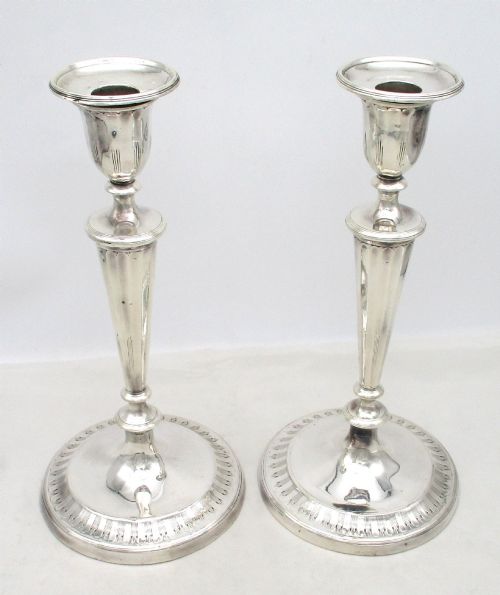
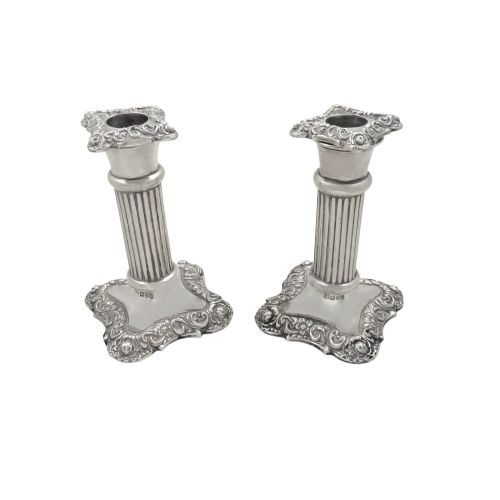
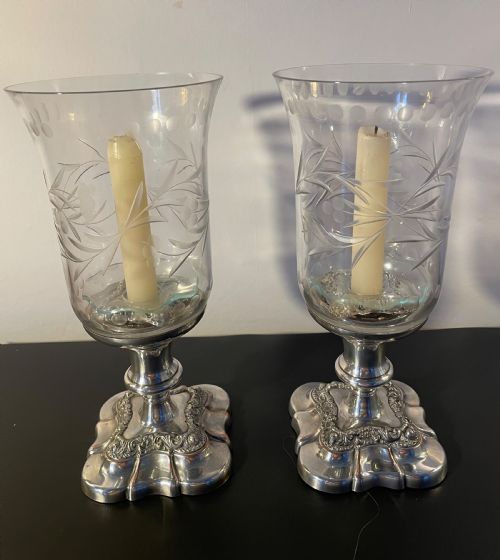
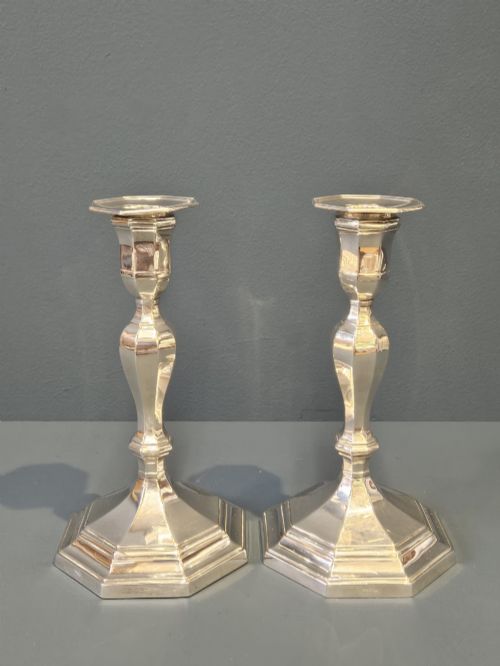
Pair silver candle stands bring symmetry and illumination to a room, ranging from grand Georgian styles to slender Edwardian designs.
Pair Silver Candle Stands
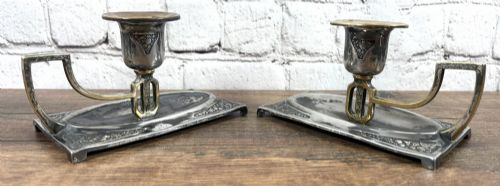
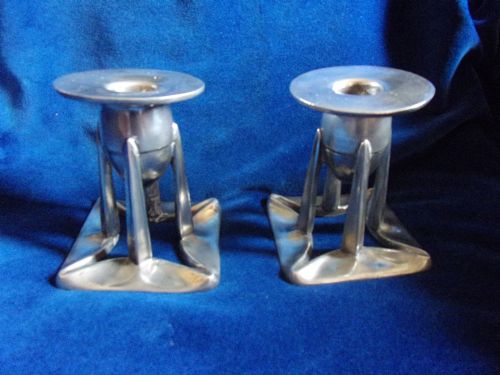
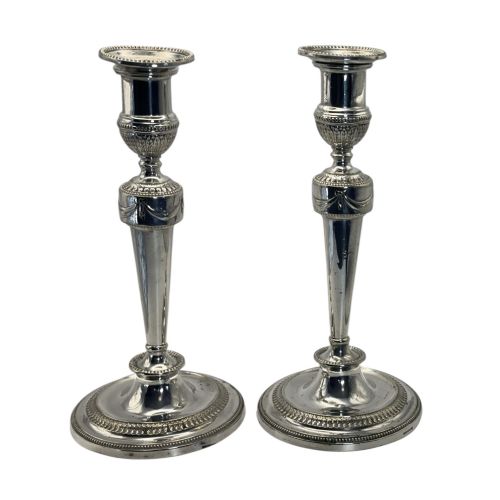
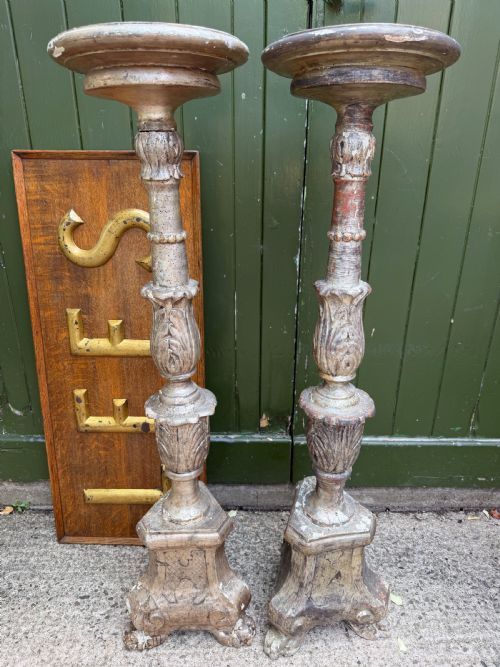
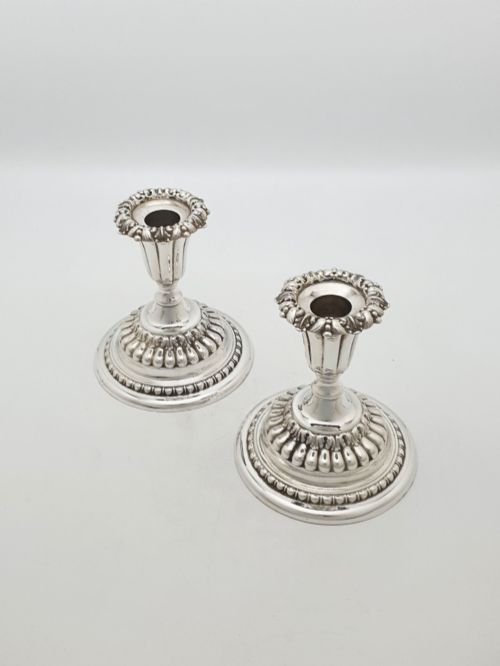
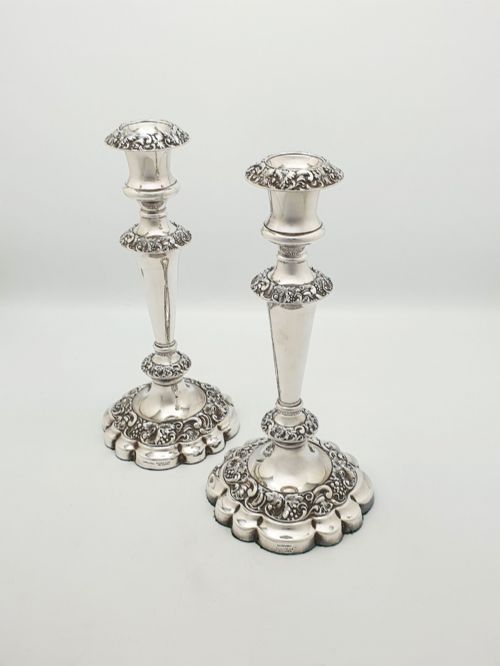
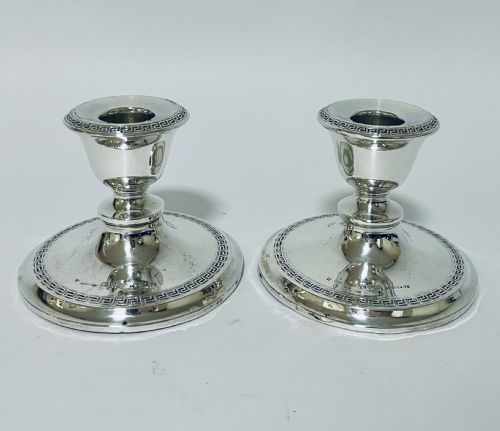
When searching for pair silver candle stands, buyers encounter a diverse selection spanning from the eighteenth century through the Edwardian era and into the twentieth century. These matching lighting accessories appear as standard candlesticks, low table forms, multi-branch candelabra, and tall carved torcheres. Most items on this page manifest in silver plate, sterling silver, or pewter, reflecting domestic lighting needs across multiple historical periods.
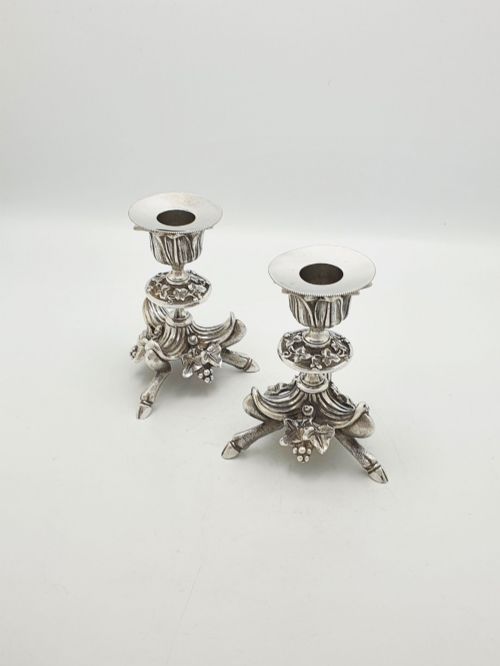
The selection ranges from classical columnar shapes to whimsical figural designs and Arts and Crafts metalwork. Pieces from the Victorian and Edwardian periods dominate the available selection, often adopting Georgian revival aesthetics or distinctive Art Nouveau contours. Buyers also discover continental European silver and Italian carved wooden altar-style examples within the broader inventory.
Materials and construction methods
Construction relies heavily on metals, with sterling silver and silver plate applied over base metals or incorporated into electroplated nickel silver. Sheffield plate and standard silver plating techniques provide the reflective lustre seen on nineteenth and early twentieth-century examples.
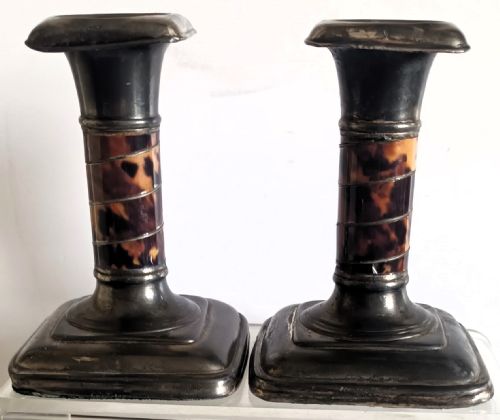
Alternative materials include pewter, copper, and carved wood finished with silver leaf or silvered surfaces. Artisans frequently integrated enamel accents into pewter designs or combined pewter with tortoiseshell to achieve decorative contrast.
Some Victorian pewter candlesticks even incorporated tortoiseshell panels, proving that tortoises had a brief and unexpected role in domestic illumination.
Factors determining quality
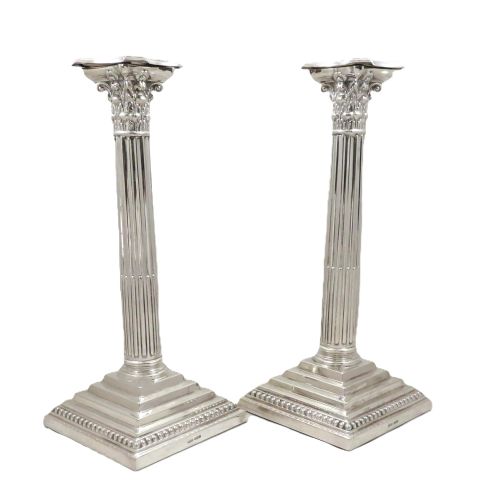
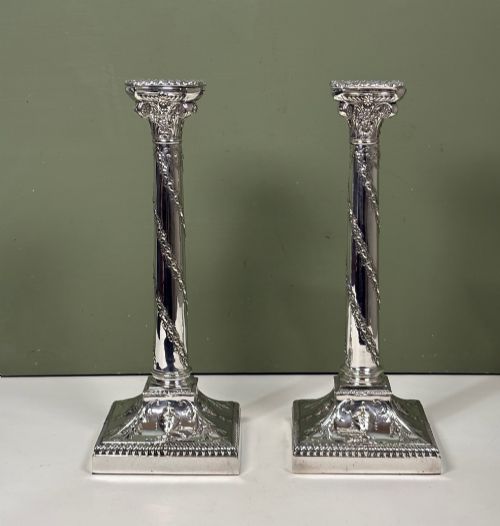
Quality reveals itself in the crispness of chased or cast ornamentation, particularly on classical Corinthian columns, rococo scrolls, and figural bases. Superior examples maintain precise proportion and balance across both matching components of the set.
The integrity of the surface finish dictates overall standing, whether concerning the preservation of heavy silver plating or the careful hand-detailing of Arts and Crafts pewter and copper work. Maker attribution and documented design provenance further separate standard utilitarian objects from exemplary cabinet pieces.
Mappin & Webb·WMF·Archibald Knox for Liberty & Co·Birmingham Guild of Handicraft
The Pair Silver Candle Stands Glossary
- Sterling silver
- A silver alloy containing 92.5 percent pure silver by mass and 7.5 percent other metals, usually copper. This standard composition guarantees durability while maintaining a bright metallic appearance.
- Silver plate
- A layer of pure silver applied to a base metal such as copper, nickel, or brass. This technique offered a more affordable alternative to solid sterling silver during the nineteenth and twentieth centuries.
- Old Sheffield plate
- An early method of fusing a thin sheet of silver to a thicker copper ingot by heat and pressure. Items produced this way often reveal faint traces of copper showing through the worn silver edges.
- Corinthian column
- An architectural column style featuring an ornate capital decorated with acanthus leaves. Makers frequently adopted this classical motif for the stems of formal candlesticks.
- Tudric
- A trade name used by Liberty & Co. for a range of high-quality pewter alloy wares produced during the early twentieth century. These pieces frequently incorporate distinctive organic motifs associated with the Arts and Crafts movement.
Pair Silver Candle Stands: Frequently Asked Questions
How do I clean antique silver candlesticks?
Maintenance requires a soft cloth and specialised silver polish designed to remove tarnish without stripping thin plating layers. Regular gentle dusting prevents the accumulation of dirt in recessed chased ornamentation.
Harsh chemical dips should be avoided, particularly on plated items or pieces containing pewter, enamel, or tortoiseshell components. Preserving the natural patina enhances the visual appeal of older metalwork.
Were these stands used on tables or floors?
The inventory includes both tabletop candlesticks and tall floor-standing torcheres designed for ambient illumination. Table models range from miniature desk versions to substantial dining table centerpieces.
Floor-standing torcheres and altar sticks provided architectural height in larger reception rooms. Each form served specific functional requirements within period domestic lighting schemes.
What is the difference between candlesticks and candelabra?
Candlesticks feature a single nozzle designed to support one vertical taper candle at a time. Candelabra incorporate branching arms that hold multiple candles from a central stem.
Many examples on this page are low-branch table candelabra, which became popular for dining room settings. Both forms were manufactured in matching pairs to maintain formal symmetry.
How can I tell if a piece is sterling silver or plated?
Hallmarks stamped directly into the metal typically indicate solid sterling silver, showing symbols for the assay office, standard, and date. Silver plated items usually lack these official assay marks, sometimes displaying maker-specific trade stamps instead.
Close inspection around edges can reveal the underlying base metal showing through worn silver plate. Professional testing methods confirm the exact metallic composition when marks are absent.