

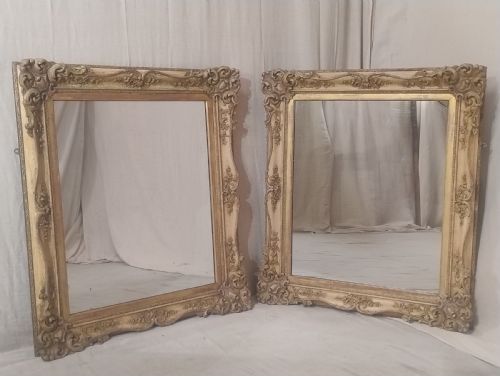
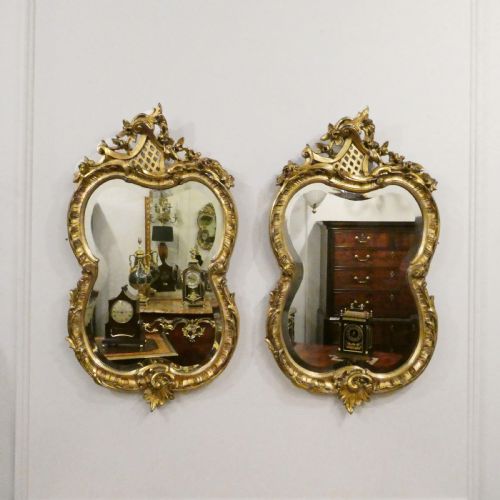
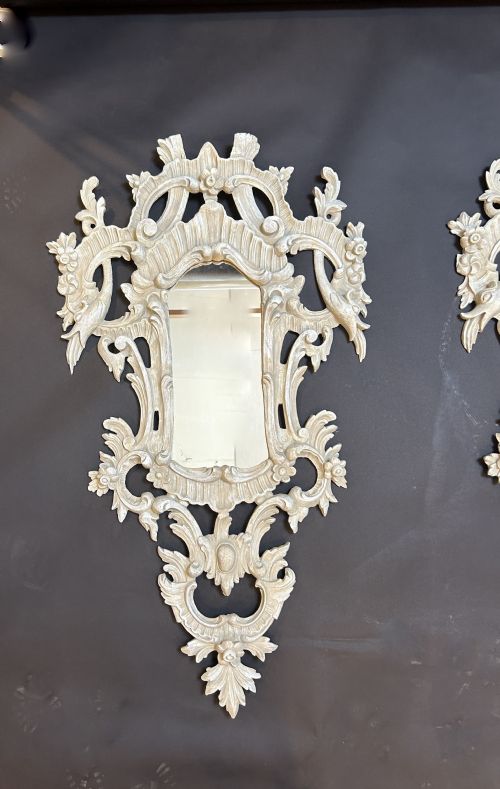


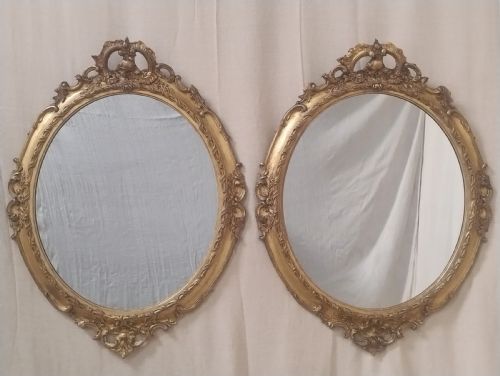
Pair Rococo Mirrors
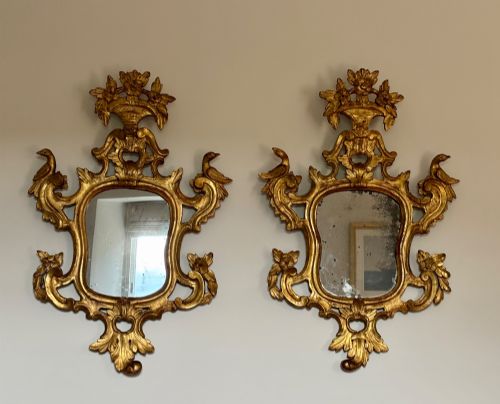
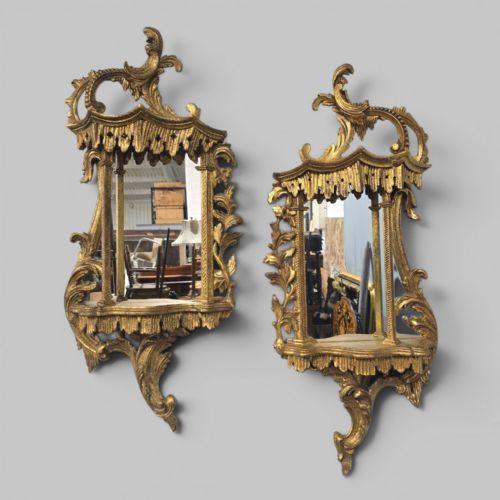
Pair rococo mirrors bring asymmetrical curves and gilded flourish to an interior, catching light across scrolling frames.
Pair Rococo Mirrors
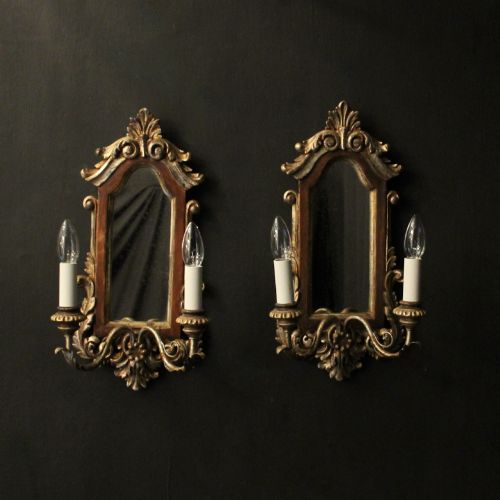
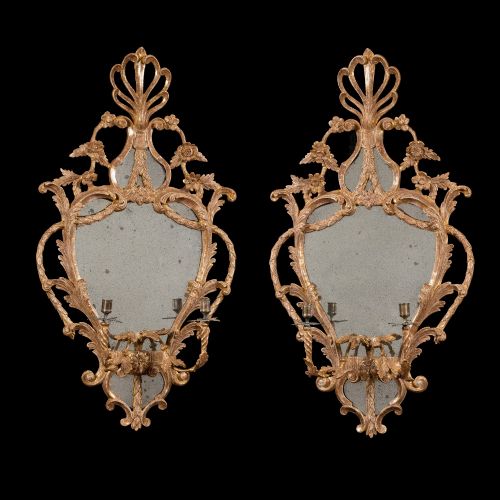
When you search for pair rococo mirrors, you encounter matched sets designed to hang symmetrically in formal rooms. These objects span wall mirrors, girandoles, and mirrored wall sconces.
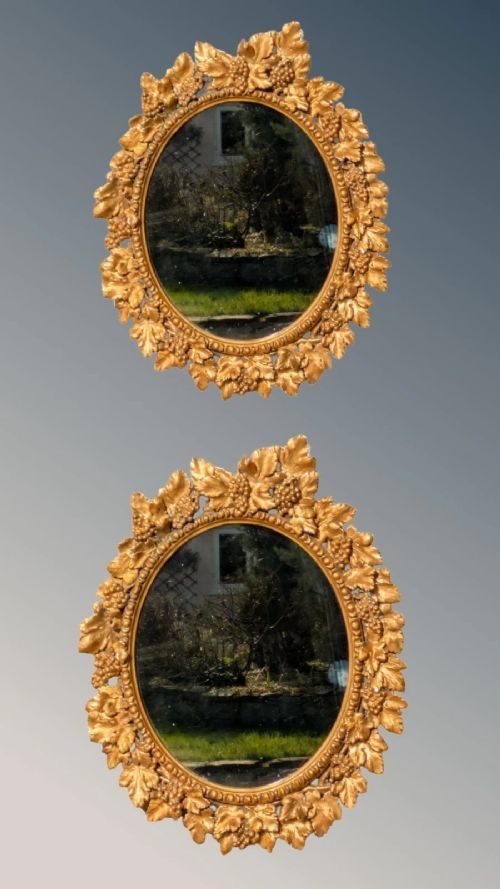
The versions met most often on this page date from the 18th and 19th centuries, drawing on Italian, French, and Georgian revivals. They appear in carved giltwood, gesso, and occasional brass or bronze frames.
Makers and workshops across Italy, France, and Britain produced these items to reflect candlelight and amplify interior space. Collectors select them for domestic display in reception rooms and hallways.
Materials and construction
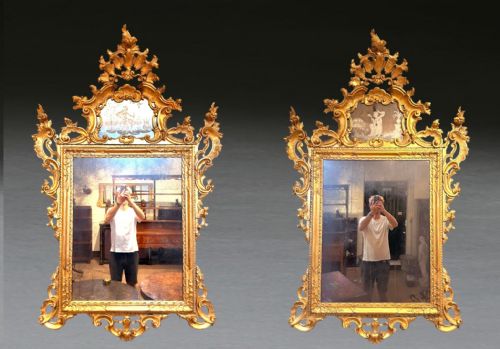
Carvers shaped soft woods like pine before applying layers of gesso to build up the intricate relief. Artisans then gilded these surfaces using gold leaf or applied metallic finishes to create a reflective sheen.
Glass plates were silvered by hand, resulting in subtle imperfections and depth within the mirror glass. Frames frequently incorporate brass or bronze elements for candle arms on girandoles.
Vine leaves and swirling C-scrolls let artisans smuggle entire miniature forests into domestic drawing rooms.
Assessing quality and craftsmanship
The depth and clarity of the wood carving dictate the distinction between standard production and superior execution. Crisp undercut foliage and sharply defined scrolls indicate skilled hand work.
The integrity of the original gilding and the preservation of the antique mirror glass influence the character of each piece. Frames retaining their initial preparation layers demonstrate careful historical survival.
The Pair Rococo Mirrors Glossary
- Giltwood
- Wood carved and coated with gold leaf or metal powder. This surface finish defines the appearance of many formal frames.
- Girandole
- A wall mirror fitted with branched candle holders attached to the frame. These fixtures multiplied the illumination in candlelit rooms.
- Gesso
- A plaster mixture applied to carved wood to create a smooth ground for gilding. It allows artisans to shape sharp decorative details.
- Overmantel
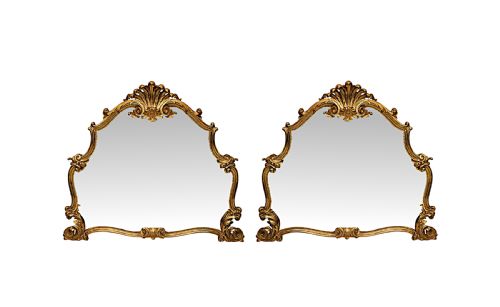
- A large mirror designed to hang above a fireplace mantelpiece. These pieces often feature horizontal proportions.
- Rococo Revival
- A 19th-century stylistic movement emulating the asymmetrical C-scrolls and natural motifs of the 18th-century French court.
Pair Rococo Mirrors: Frequently Asked Questions
Where should I hang pair rococo mirrors?
These pieces suit placement above sideboards, mantelpieces, or flanking a central doorway to create symmetrical balance in a room.
Ensure the wall fixings support the weight of heavy timber and gesso frames securely.
How do I identify 18th-century pieces?
Look for hand-carved details in native timbers beneath the gesso, alongside heavy mercury glass plates with oxidised edges.
Older frames show distinct tool marks and wear patterns from centuries of careful cleaning.
What is a girandole mirror?
A girandole integrates candle arms directly into the mirrored frame structure to reflect illumination around the interior.
These arms are frequently cast in brass or carved from wood to match the primary frame.
How do French and Italian styles differ?
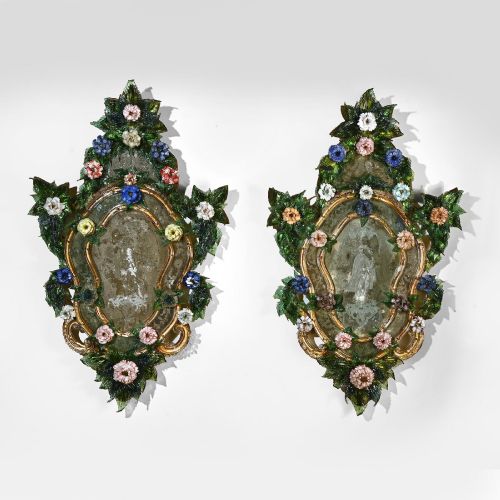
French designs lean towards balanced floral sprays and C-scrolls, while Italian versions often display bolder Florentine or Venetian polychrome flourishes.
Venetian examples frequently incorporate Murano glass elements into the frame construction.