


Gilt Cartouche Mirrors
These gilt cartouche mirrors bring exuberant scrollwork and brilliant reflection to a room, driven by the enduring appeal of Rococo design.
Gilt Cartouche Mirrors
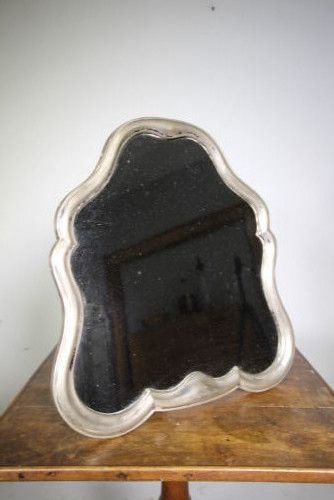
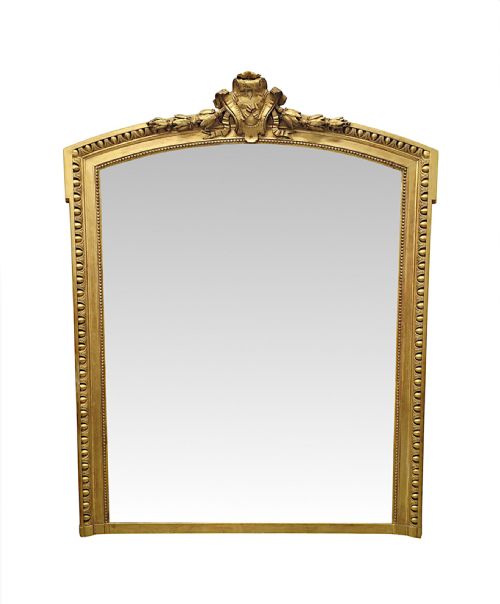
When you search for gilt cartouche mirrors, you encounter wall mirrors and overmantel mirrors defined by their distinctive asymmetrical or scroll-framed cartouche shapes. The examples seen here range across the eighteenth century, the nineteenth century, and into the nineteen-twenties, drawing heavily on Italian Rococo, French Rococo, and Regency traditions.
You are most likely to meet nineteenth-century revival pieces alongside genuine eighteenth-century Italian originals. These items appear as single wall pieces, overmantel centrepieces, or matched pairs suitable for formal spaces.
How they were made
The construction of these pieces relies on carved wood and gesso frameworks built to support intricate scrollwork and asymmetrical cartouche outlines. Artisans applied layers of gold leaf, silver leaf, or liquid gilding directly onto the prepared wooden surfaces to achieve a luminous metallic finish.
Many incorporate original mirror glass plates, often displaying natural foxing and age spots that evidence long histories of domestic use.
What varies in quality
Quality in these mirrors rests primarily on the depth and crispness of the wood carving within the cartouche frame. Hand-carved nineteenth-century revival work and eighteenth-century Italian originals display sharp undercut details in the gesso and wood, whereas later mass-produced alternatives appear softer and more uniform.
The integrity of the original gilding and the preservation of antique mirror plates further separate standard decorative examples from pieces with superior historical survival.
The Gilt Cartouche Mirrors Glossary
- Cartouche
- An ornamental frame resembling a scroll or a sheet of paper with scrolled edges, frequently placed centrally on these mirrors.
- Gesso
- A plaster-like mixture applied to wood surfaces as a smooth base for subsequent gilding.
- Giltwood
- Timber that has been coated with gold leaf or metal leaf to simulate solid gold decoration.
- Foxed plate
- Mirror glass displaying dark spots and discoloration caused by the degradation of the silver backing over time.
- Rococo
- An ornate decorative style characterised by asymmetry, scrollwork, and naturalistic plant motifs.
Gilt Cartouche Mirrors: Frequently Asked Questions
Where should I hang a cartouche mirror?
These mirrors suit formal reception rooms, hallways, and above mantels where their decorative frames serve as a primary focal point.
Ensure the wall fixings support the considerable weight of carved wood and glass.
How do I identify an eighteenth century mirror?
Eighteenth-century pieces typically exhibit hand-carved wooden frames beneath the gesso, combined with heavily aged glass plates.
Construction joints and tool marks visible on the reverse provide further clues to their age.
Are pairs common in these mirrors?
Matched pairs appear occasionally among Italian and French designs, often intended to hang symmetrically flanking a fireplace or doorway.
Single wall mirrors remain more frequently encountered.
What is the difference between gesso and carved wood?
Carved wood forms the structural base and primary relief of the frame, while gesso provides the smooth surface layer for detail.
Intricate decorative flourishes are frequently moulded in gesso over a simpler wooden core.