


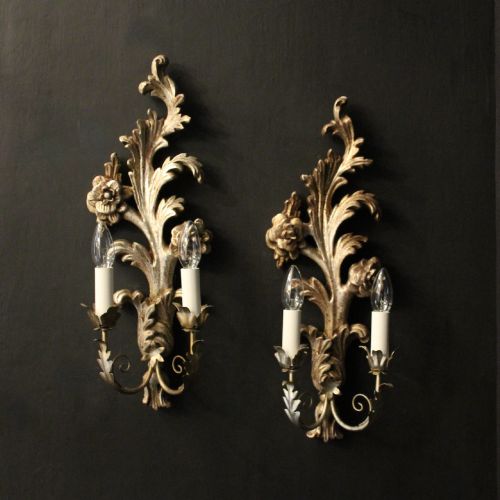
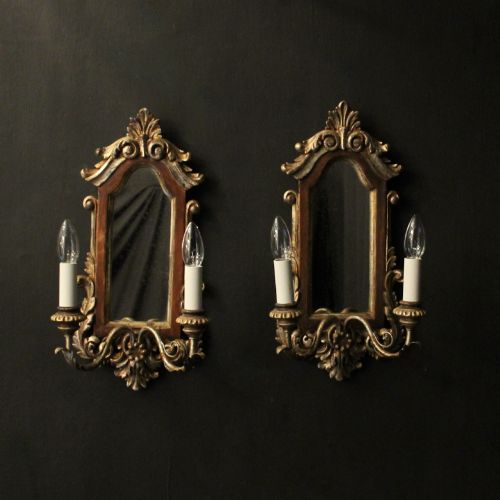
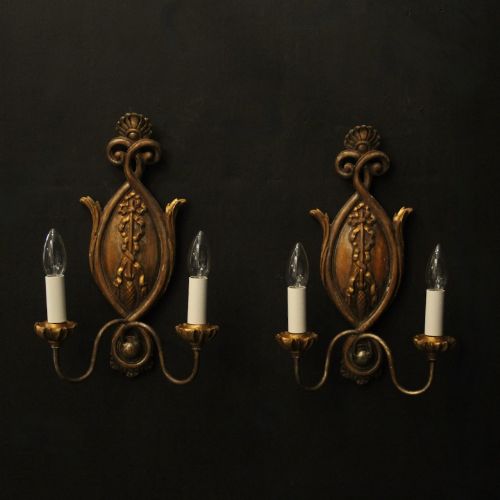
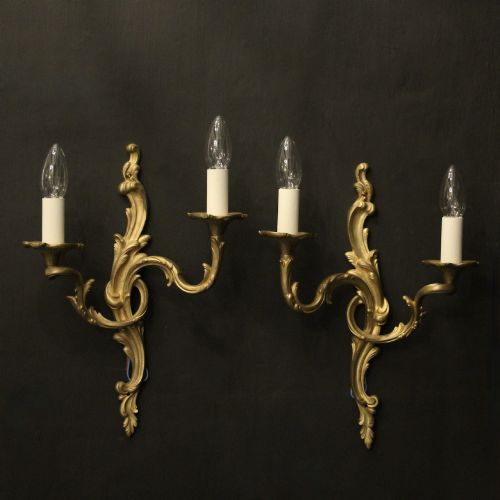
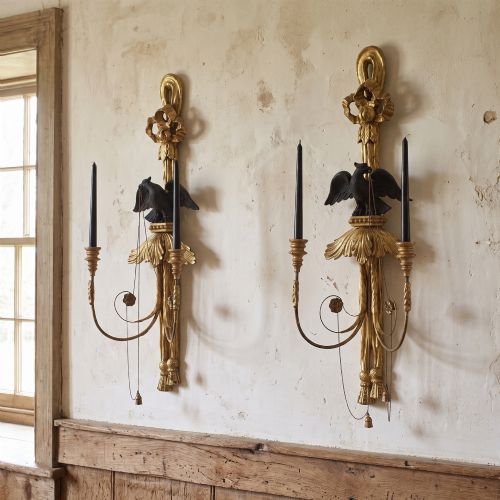
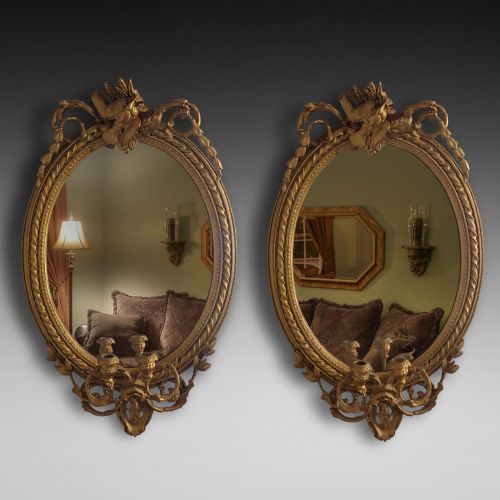
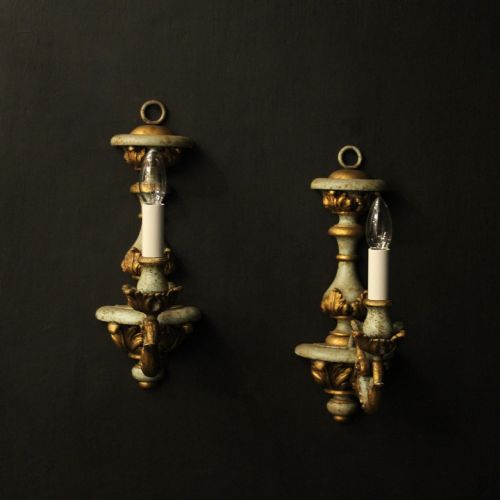
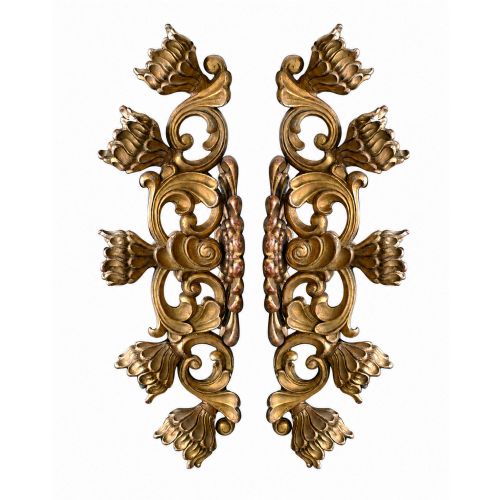
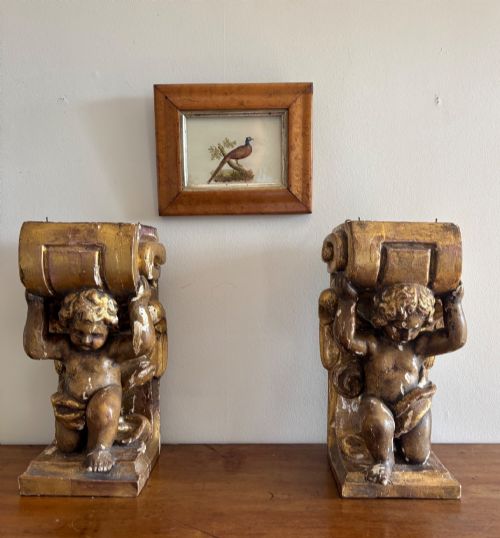
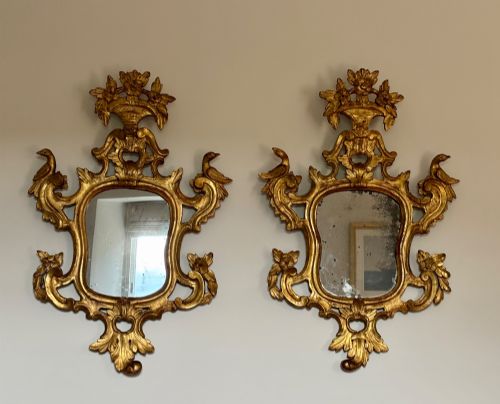
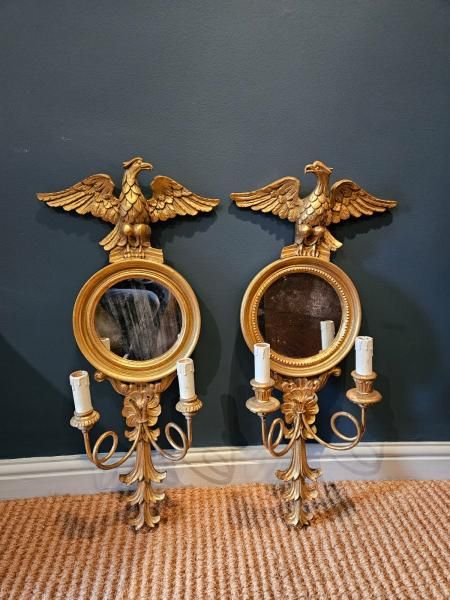
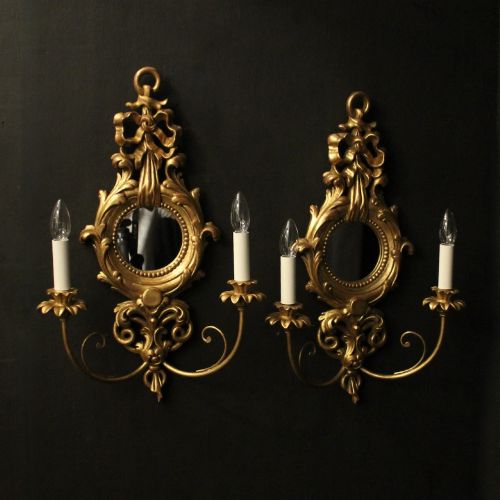
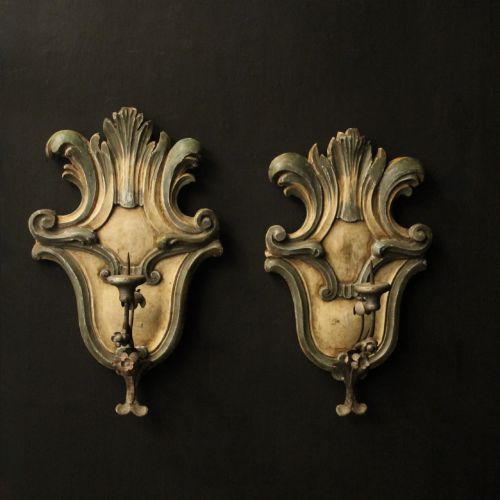
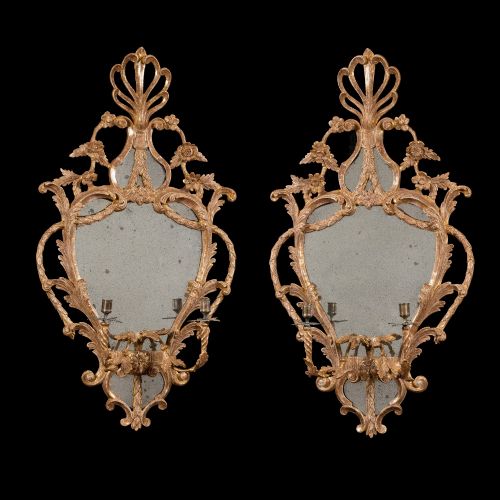
Pair Carved Wall Sconces
These pair carved wall sconces bring sculptural presence and soft illumination to a room, sourced from centuries of European craftsmanship.
Pair Carved Wall Sconces
Pair carved wall sconces deliver matched lighting and ornamental symmetry to interior walls, taking forms such as girandoles, brackets, and mirrored sconces. When buyers search for pair carved wall sconces, they encounter items shaped by Italian and French design traditions.
The selections span the eighteenth, nineteenth, and twentieth centuries, encompassing Victorian, Regency, and Revival styles. Florentine and French Rococo iterations dominate the groupings, featuring twin or triple arms for candles and electric bulbs.
How they were made
Carved wood provides the structural base for many pieces, shaped by hand into scrolls, putti, and foliage. Giltwood and gesso finishes are applied to the timber, creating reflective surfaces that catch candlelight.
Gilded bronze, brass, and ormolu form the metal components on French models, paired with glass and Murano elements. Polychrome decoration appears alongside silver giltwood, employing layered pigments and metal leaf.
Materials appearing across the current inventory include giltwood, carved wood, gesso, brass, bronze, glass, and gold leaf.
What varies in quality
The depth and crispness of the hand-carving determine the refinement of the piece, separating deep, undercut foliage from softer, moulded plaster work. The application of gold leaf and the preservation of original gilding dictate the visual richness of the surface.
Structural integrity of the wooden arms and the matching symmetry of the pair influence the overall execution. Integration of original mirror plates and glass components adds complexity to the construction.
The Pair Carved Wall Sconces Glossary
- Girandole
- A branched wall light or sconce incorporating a mirrored backplate to multiply the reflection of light. These fixtures often feature elaborate carved frames in giltwood.
- Giltwood
- Timber coated with a thin layer of gold leaf over a prepared gesso ground. This technique creates a durable, luminous metallic finish on decorative woodwork.
- Putto
- A representation of a naked male child, frequently winged, seen in Renaissance and Baroque art. These figures appear carved in relief on Italian and French brackets.
- Ormolu
- Finely chased and gilt bronze used for decorative mounts and lighting fixtures. The technique relies on an amalgam of mercury and gold applied to brass or bronze.
- Gesso
- A plaster mixture spread over wood as a smooth base for gilding and paint. It allows artisans to carve intricate details before applying gold leaf.
Pair Carved Wall Sconces: Frequently Asked Questions
How do I hang heavy carved sconces?
Wall fixings require direct anchoring into masonry or solid timber studs to support the weight of carved wood and metal arms. Metal brackets on the reverse distribute the load securely against the wall surface.
Professional installation is recommended for older pieces, particularly those incorporating heavy mirror plates or multiple glass branches. Check that the wall plugs match the specific building material of your room.
How do I clean giltwood safely?
Dusting requires a very soft, dry brush to prevent abrasion to the delicate gold leaf layers. Moisture and chemical cleaners damage historic gilding instantly.
Avoid touching the metallic surfaces directly, as natural oils from skin dull the reflective finish over time. Professional conservationists handle deep cleaning of fragile antique gesso.
How can I tell French styles apart from Italian?
French designs lean towards symmetrical ribbons, ormolu mounts, and refined Rococo curves associated with Parisian salons. These pieces frequently utilise gilt bronze alongside carved wood.
Italian works, particularly from Florence and Venice, display bolder Baroque scrollwork, polychrome pigments, and extensive use of gilded wood and mirror backs. Cherubs and pricket candle holders feature prominently in Italian pieces.